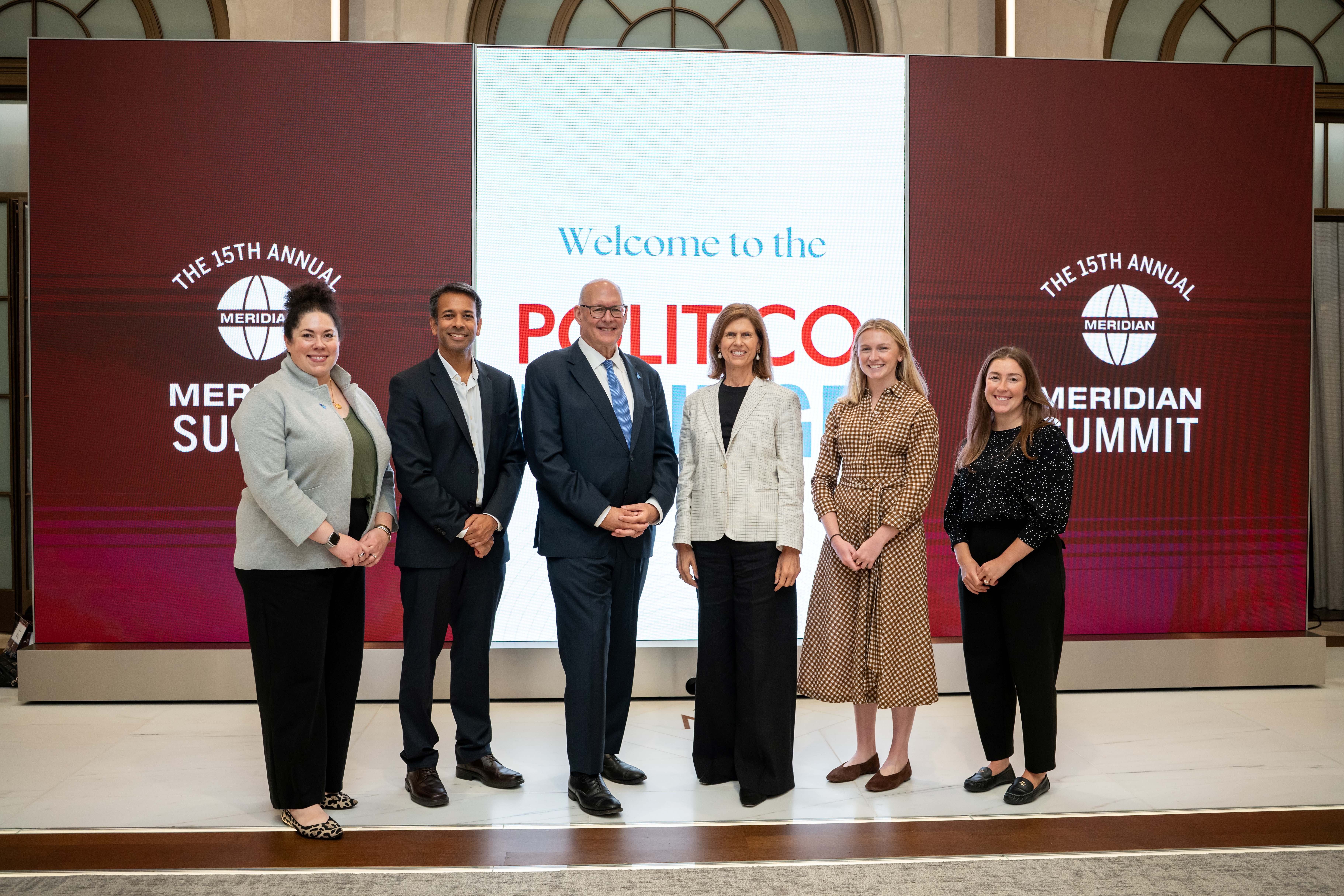
The 15th Annual Meridian Summit brought together leaders from government, business and the diplomatic community at the U.S. Chamber of Commerce in Washington on Oct. 16, 2026, to examine America's role in shaping the future of global leadership.
As the United States marks its 250th anniversary, the Summit explored how American influence extends beyond traditional diplomacy through economic partnerships and technological innovation. Discussions featured government officials, corporate executives and international policy experts, including Ambassador Mike Waltz, Rep. April McClain Delaney and Ross Perot, Jr.
See more on social: #MeridianSummit
Video not loading? watch here.Speakers:
T.H. David Bohigian | CEO, Meridian International Center
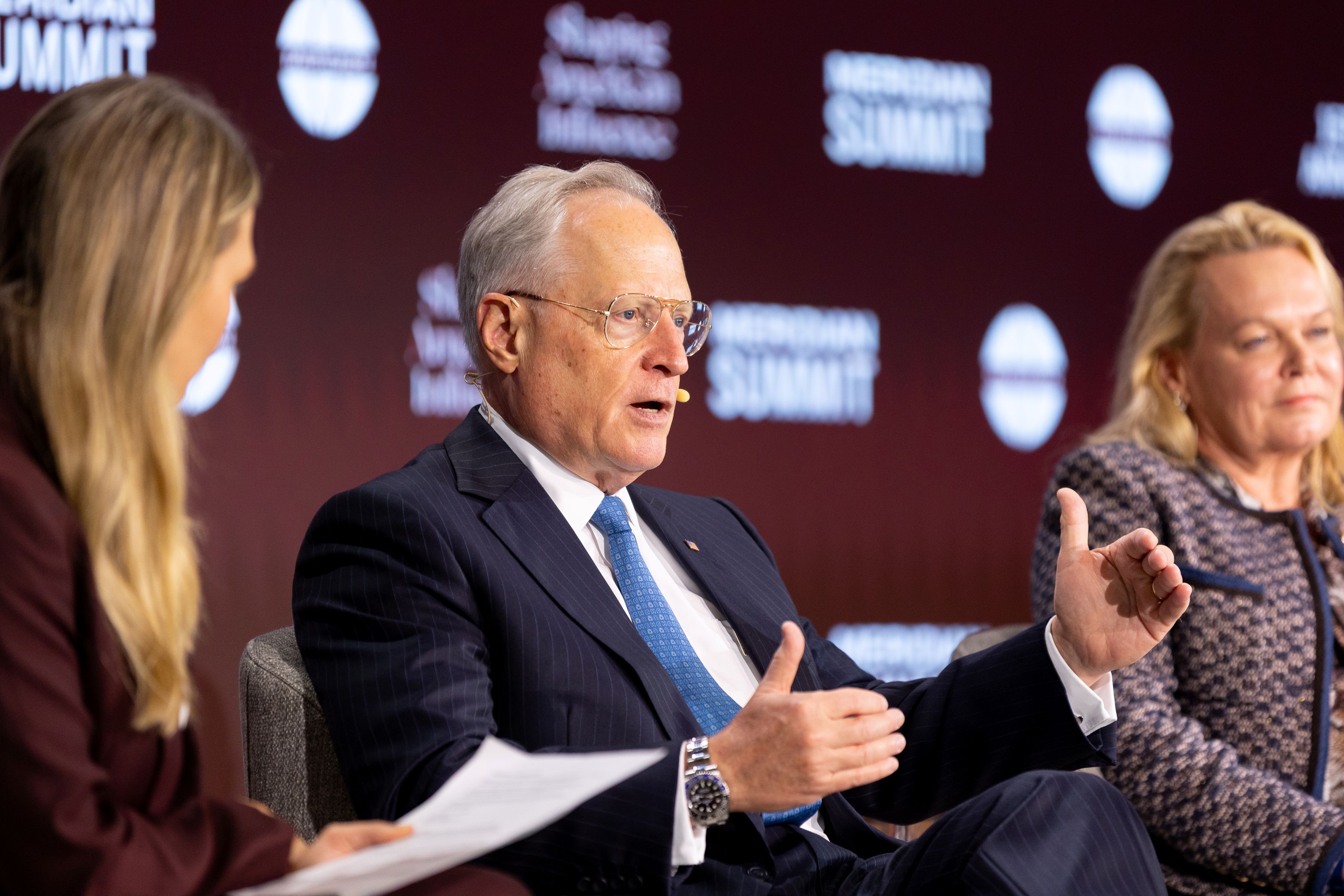
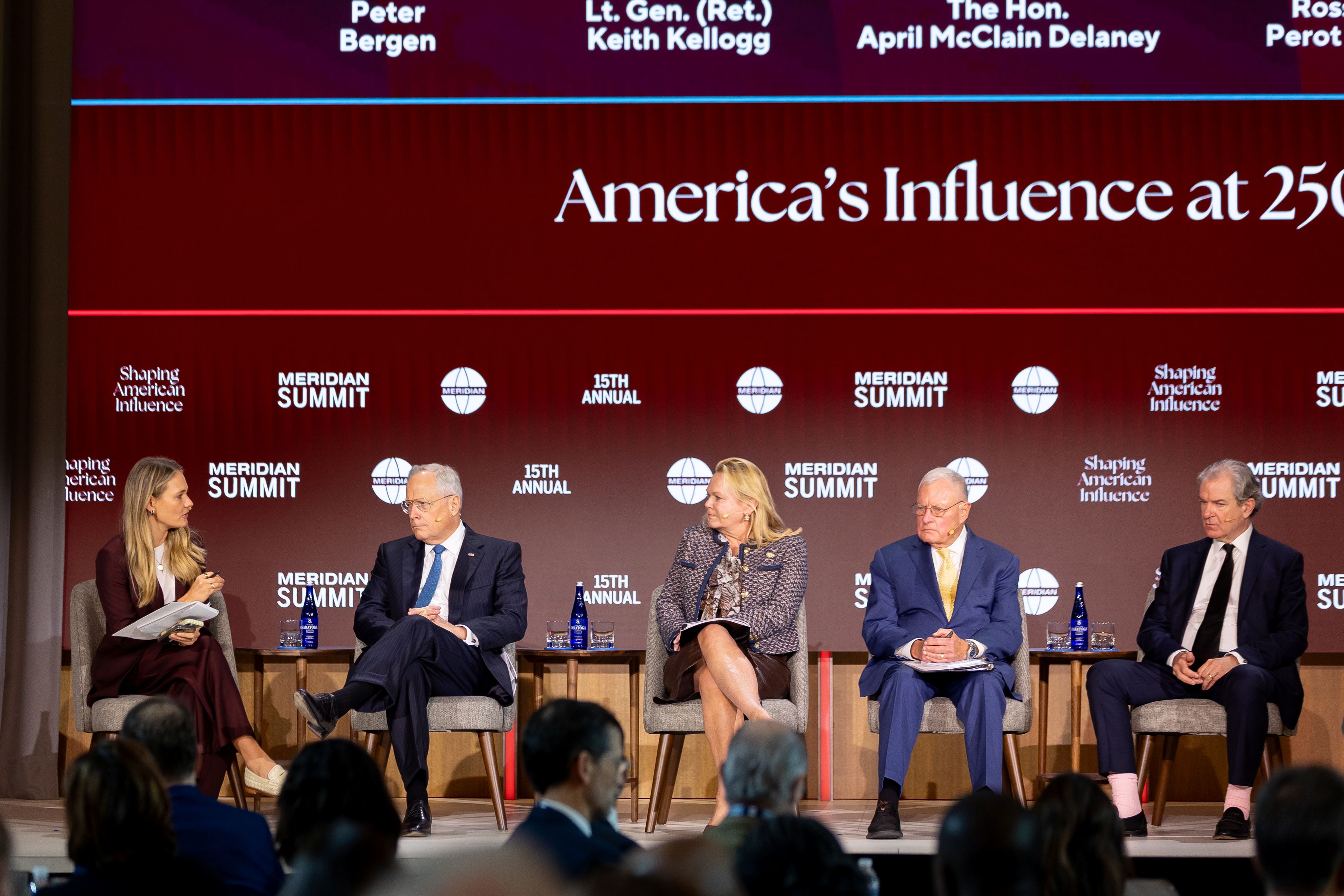
The 2026 Meridian Summit opened with a panel discussion on America’s Influence at 250, which examined how the United States can translate its strengths into influence in an increasingly competitive world. The panel featured Ross Perot Jr., Chairman of the U.S. Chamber of Commerce Board of Directors, Rep. April McClain Delaney, U.S. Representative (MD-06), Lt. Gen. (Ret.) Keith Kellogg, Advisory Board Chair, BGR Group, and Peter Bergen, Vice President for Global Studies and Fellows, New America, moderated by Kylie Atwood, National Security Correspondent. The discussion focused on what sustains American influence: a strong economy, technological leadership, clear strategic goals, and allies that trust U.S. commitments.
Speakers:
Peter Bergen | Vice President for Global Studies & Fellows, New America
Lt. Gen. (Ret.) Keith Kellogg | Former Assistant to the President and Special Presidential Envoy for Ukraine; Advisory Board Chair, BGR Group
Congresswoman April McClain Delaney | U.S. Representative (MD-06)
Ross Perot, Jr. | Chairman of The Perot Companies; Chairman of Hillwood; Chairman of the U.S. Chamber of Commerce Board of Directors
Kylie Atwood | National Security Correspondent, CNN (Moderator)
As trade, technology, and geopolitics become increasingly interconnected, commercial diplomacy is an essential instrument of American economic competitiveness and global influence. This panel at the 15th Annual Meridian Summit explored how government and business can work together to strengthen international partnerships, support U.S. companies abroad, and navigate an increasingly uncertain global environment. The panel featured Conor McQuaid, Chairman and CEO of Pernod Ricard USA, Steve Morrissey, Vice President – International Regulatory and Policy, United Airlines, Joshua Walker, Chief International Affairs Officer, U.S. Chamber of Commerce, and was moderated by Cally Baute, Chief Commercial Officer, POLITICO. The discussion examined how policy predictability, resilient supply chains, international connectivity, and technological innovation shape the ability of American businesses to compete globally.
Speakers:
Joshua Walker | Senior Vice President, Chief International Affairs Officer, U.S. Chamber of Commerce
Conor McQuaid | Chairman & CEO, Pernod Ricard North America
Steve Morrissey | Vice President, International Regulatory and Policy, United Airlines
Cally Baute | Chief Commercial Officer, POLITICO (Moderator)
Awardee:
Conor McQuaid | Chairman & CEO, Pernod Ricard North America
Speaker:
Deborah Lehr | Chair of the Board of Trustees, Meridian International Center
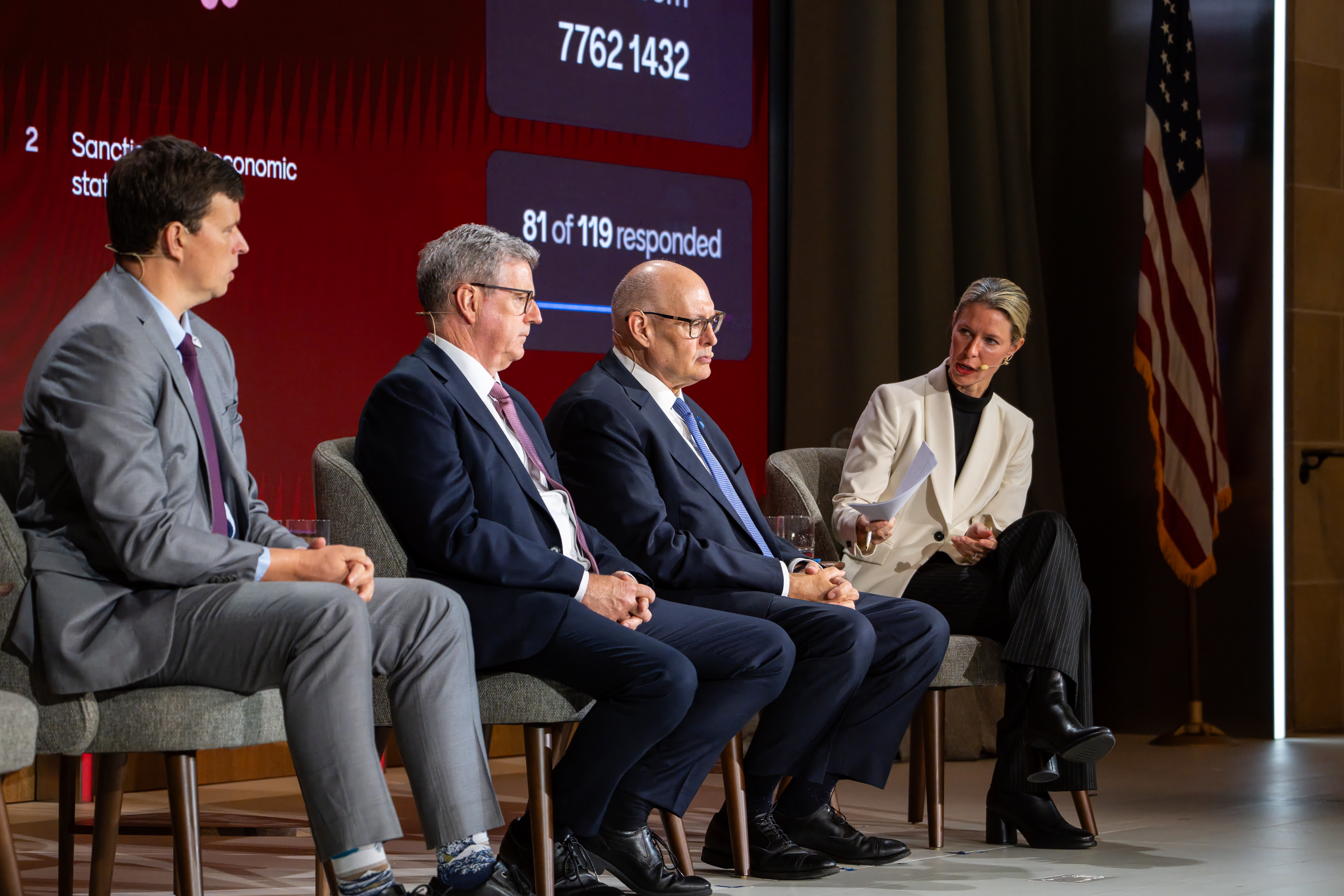
Technological breakthroughs are reshaping how countries compete, build partnerships, and deliver economic and social benefits, but scientific discovery and technological capacity alone do not guarantee global influence. On October 16, Meridian International Center hosted The Technology Frontier, a panel at the 15th Annual Meridian Summit, Shaping American Influence. Kellee Wicker, Vice President of Meridian’s Center for Technology, Innovation, and Space, moderated a conversation with Maryland Secretary of Commerce T.H. Harry Coker, Jr.; Combiz Abdolrahimi of ServiceNow; Kim Majerus of Amazon Web Services; and Rick R. Suárez of AstraZeneca. The panel discussed how U.S. leadership in AI, biotechnology, and other strategic technologies translates into influence abroad, and what it will take to keep that lead.
Speakers:
Combiz Abdolrahimi | Vice President and Global Head of Government Affairs and Public Policy, ServiceNow
Kim Majerus | Vice President, US Public Sector Education, State & Local Government, Amazon Web Services (AWS)
T.H. Harry Coker, Jr. | Secretary, Maryland Department of Commerce
Rick R. Suárez | Senior Vice President, US President and Head of US BioPharmaceuticals Business Unit, AstraZeneca
Kellee Wicker | Vice President of the Center for Technology, Innovation, and Space, Meridian International Center (Moderator)
Ambassador Mike Waltz, U.S. representative to the United Nations, joined Deborah Lehr, Chair, Board of Trustees at Meridian for a conversation examining the United States’ role in the world, the future of the United Nations, and the administration’s growing focus on the Western Hemisphere. Ambassador Waltz outlined a vision for American diplomacy that pairs international engagement with greater accountability from allies and multilateral institutions. He argued that the United Nations remains an essential diplomatic forum, but must become leaner, more focused, and better equipped to prevent conflict.
Speaker:
Ambassador Mike Waltz | U.S. Representative to the United Nations
Deborah Lehr | Chair of the Board of Trustees, Meridian International Center (Moderator)
Speaker:
David Bohigian | CEO, Meridian International Center
Steve Morrissey | Vice President, International Regulatory and Policy, United Airlines
Scott Kirby | CEO, United Airlines
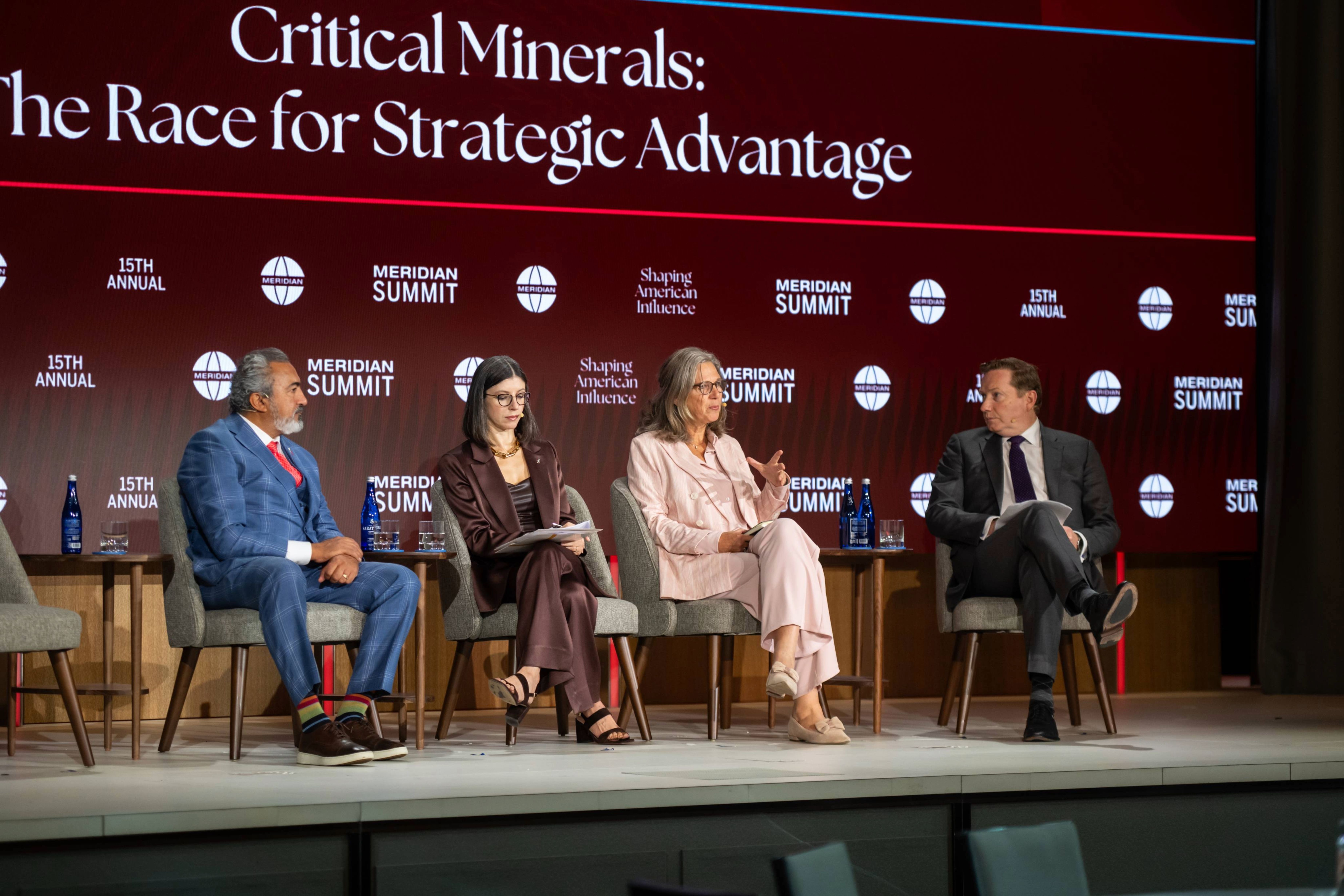
Critical minerals are not simply an industrial input, but a foundation of economic competitiveness, technological leadership, and national security. Through collaboration and strategic investments, the United States with likeminded partners can reduce dependencies, expand refining and processing capacity, mobilize private capital, and invest in innovation and recycling. Panelists explored how critical minerals are shaping the contest for technological leadership worldwide. The expert panel included Congressman Ami Bera (CA-06), Dr. Alina Polyakova, President and CEO of the Center for European Policy Analysis, and Her Excellency Birgitta Tazelaar, Ambassador of the Kingdom of the Netherlands moderated by Joe Quinn Executive Director, Center for Strategic Industrial Materials, SAFE.
Speakers:
Congressman Ami Bera, M.D. | U.S. Representative (CA-06)
Dr. Alina Polyakova | President & CEO, Center for European Policy Analysis
H.E. Birgitta Tazelaar | Ambassador of the Kingdom of the Netherlands to the United States of America
Joe Quinn | Executive Director, Center for Strategic Industrial Materials, SAFE (Securing America's Future Energy) (Moderator)
Speaker:
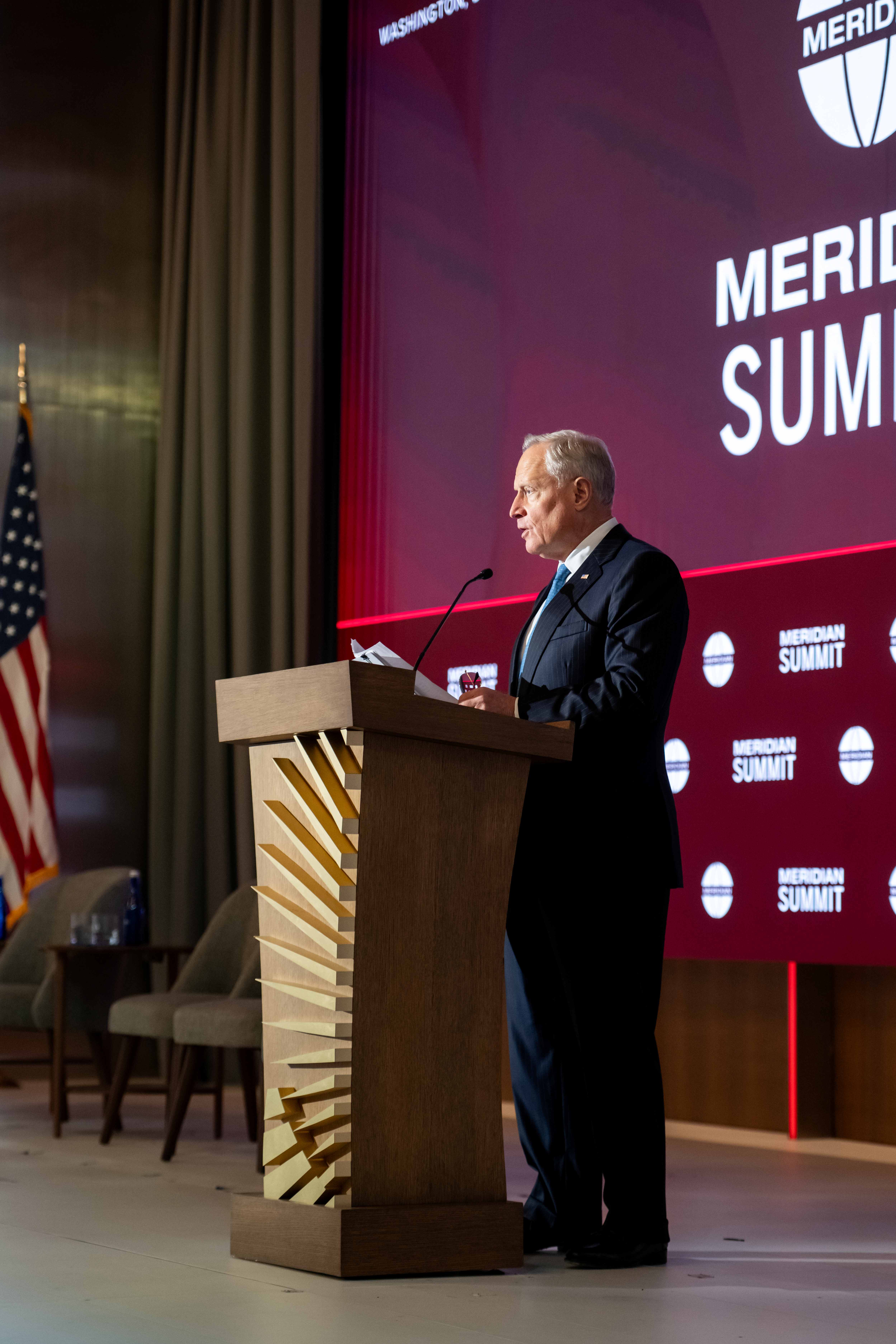
Ross Perot, Jr. | Chairman of The Perot Companies; Chairman of Hillwood; Chairman of the U.S. Chamber of Commerce Board of Directors
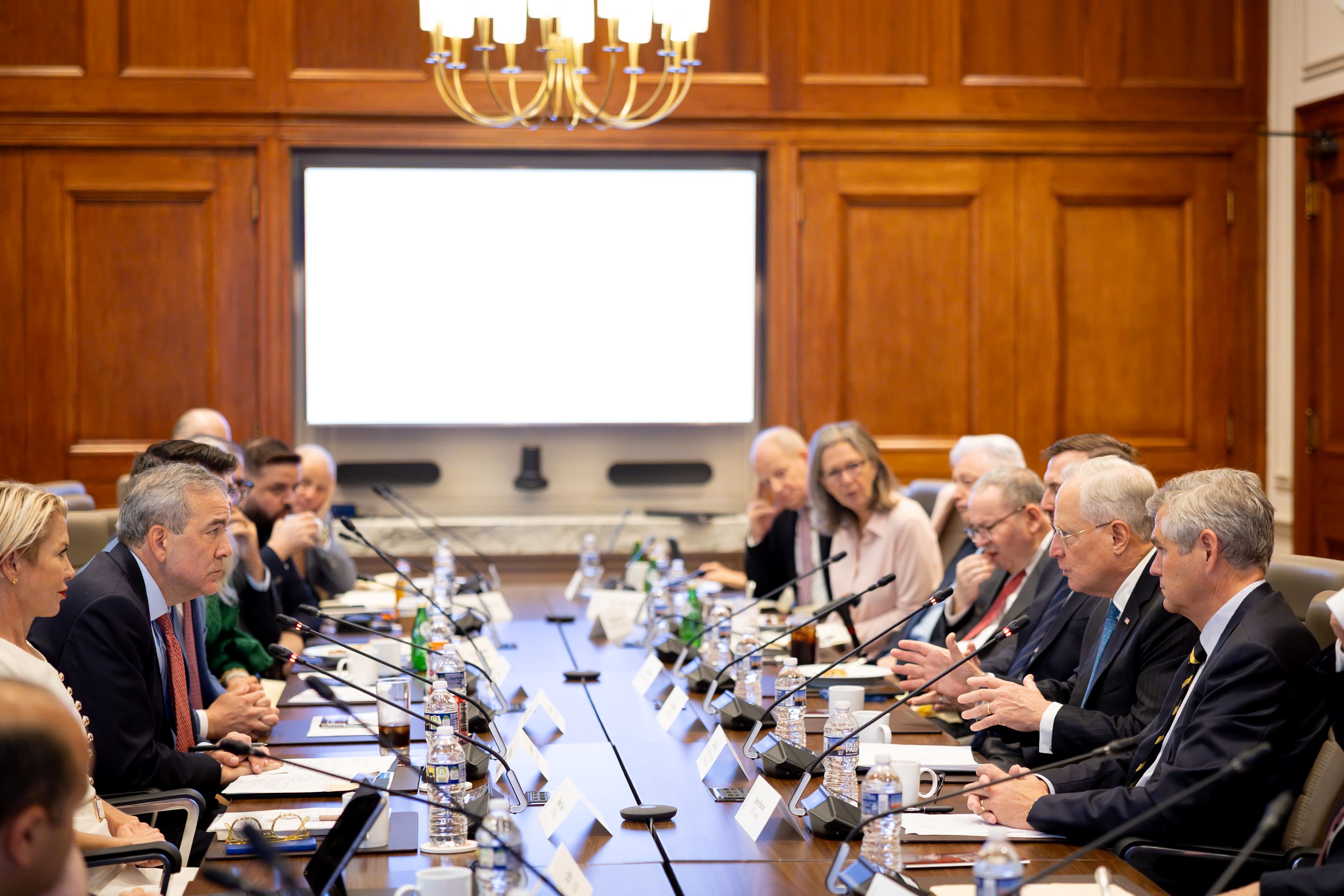
On the sidelines of the 15th annual Meridian Summit held on October 16, 2026, Meridian convened an Executive Briefing “The New American Defense Economy: Who Will Build the Arsenal of the Future?” examining how recent conflicts are reshaping military power and the defense economy. The discussion featured Alek Jovovic, Deputy Director, Center for the Industrial Base and Senior Fellow for the Defense and Security Department at the Center for Strategic and International Studies, alongside Brianne Todd, Professor of the Practice, Near East South Asia Center for Strategic Studies and the National Defense University. The conversation explored how the United States can strengthen its industrial base, accelerate innovation and sustain military readiness amid increasingly complex global threats.
Speakers:
Brianne Todd | Professor of the Practice, Near East South Asia Center for Strategic Studies, National Defense University
Alek Jovovic | Deputy Director, Center for the Industrial Base, Senior Fellow, Defense and Security Department, Center for Strategic and International Studies
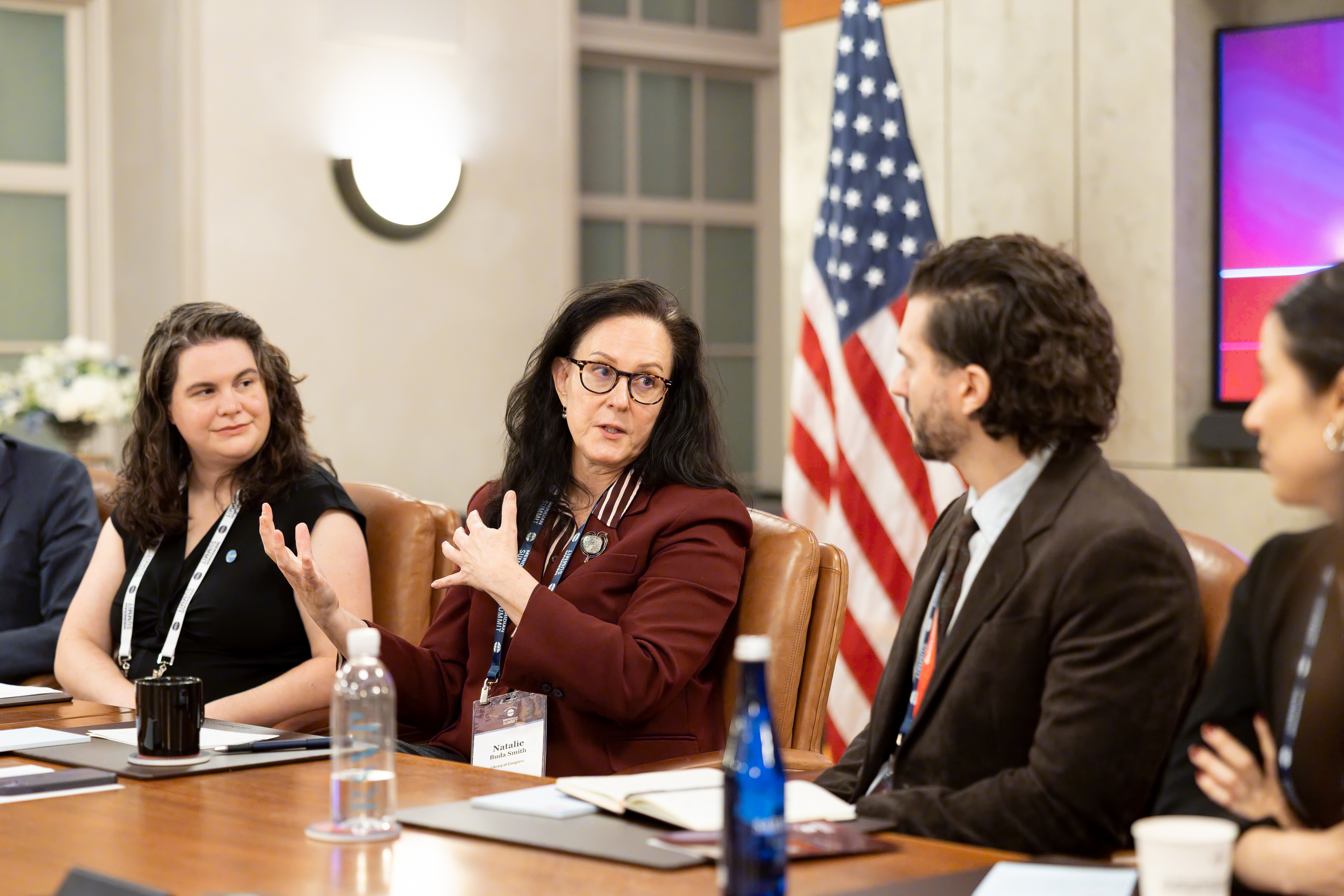
On the sidelines of the 2026 Meridian Summit, in an executive briefing titled "Leading in the Age of AI," Natalie Buda Smith, Director of AI and Innovation at the Library of Congress, joined Dr. Elizabeth M. H. Newbury, Senior Director for the Center for Technology, Innovation, and Space at Meridian, for a conversation with senior executives on how leaders can responsibly adopt artificial intelligence while maintaining trust, expertise, and institutional integrity. Drawing on Smith's experience leading AI innovation at the Library of Congress, as well as insights from Meridian's Tech Labs community, the discussion explored how organizations can foster experimentation, empower employees to shape technological change, build confidence in emerging technologies, and ensure that AI serves as a complement to human judgment rather than a replacement for it. Participants also examined the leadership challenges associated with deploying AI at scale, from workforce adoption and data governance to preserving trust in AI-enabled decision-making.
Speakers:
Dr. Elizabeth Newbury | Senior Director, Center for Technology, Innovation and Space, Meridian International Center
Natalie Buda Smith | Chief Artificial Intelligence Officer, Library of Congress
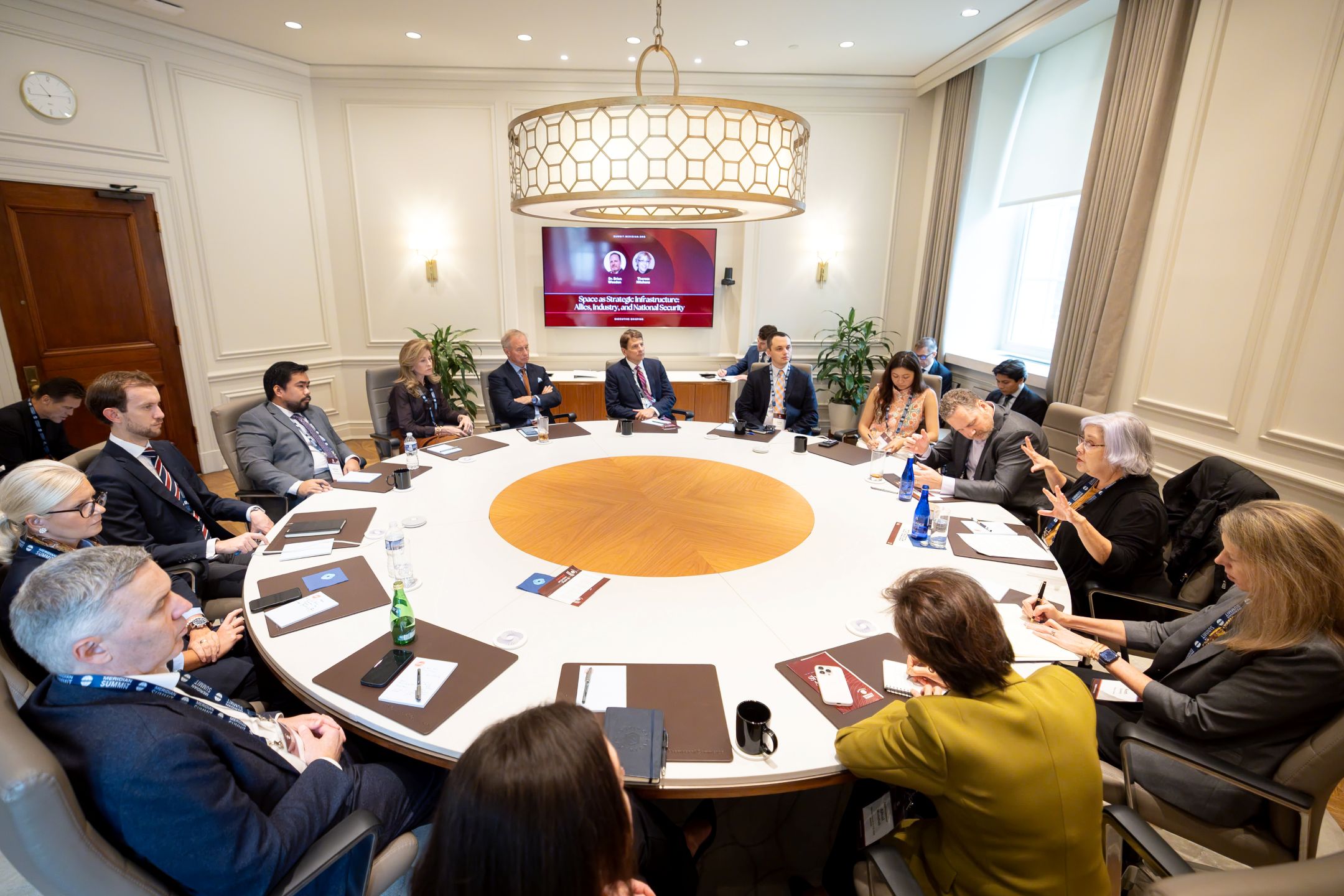
On the sidelines of the 2026 Meridian Summit, in an executive briefing titled “Space as Strategic Infrastructure: Allies, Industry, and National Security,” Dr. Brian Weeden, Director of Civil and Commercial Policy at the Center for Space Policy and Strategy, and Theresa Hitchens, Senior Space Reporter at Breaking Defense, joined an audience of executive leaders for a discussion on how space policy and infrastructure has become indispensable to national security, economic resilience, and strategic competition. The conversation explored the growing role of commercial providers, the importance of allied cooperation in space, emerging questions surrounding military operations and deterrence, and the governance challenges that arise as space-based capabilities become critical infrastructure underpinning both modern economies and defense operations.
Speakers:
Dr. Brian Weeden | Director of Civil and Commercial Policy, Center for Space Policy and Strategy
Theresa Hitchens | Senior Space Reporter, Breaking Defense
On the sidelines of the 15th annual Meridian Summit held on October 16, 2026, Meridian convened an Executive Briefing “Reglobalization: Building Resilient Supply Chains in a New Era of Global Commerce” on how public-private partnerships can strengthen supply chain resilience and global competitiveness. The discussion, featuring opening remarks from Lance Mangum, Vice President, Government Affairs at FedEx Corp, Mahnaz Khan, Vice President of Policy for Critical Supply Chains at Silverado Policy Accelerator, and moderated by Daniel Desrochers, International Trade Reporter at POLITICO, examined the growing convergence of trade policy, economic security and national security, with particular attention to logistics, critical minerals and advanced manufacturing.
Speaker:
Lance D. Mangum | Vice President, Government Affairs, FedEx Corp.
Mahnaz Khan | Vice President of Policy for Critical Supply Chains, Silverado Policy Accelerator
Daniel Desrochers | International trade reporter, POLITICO (Moderator)
| 15th Annual Meridian Summit |
|---|