

Diplomacy at 250: A Canvas of Connection and the Enduring Power of Japan–U.S. People-to-People Ties
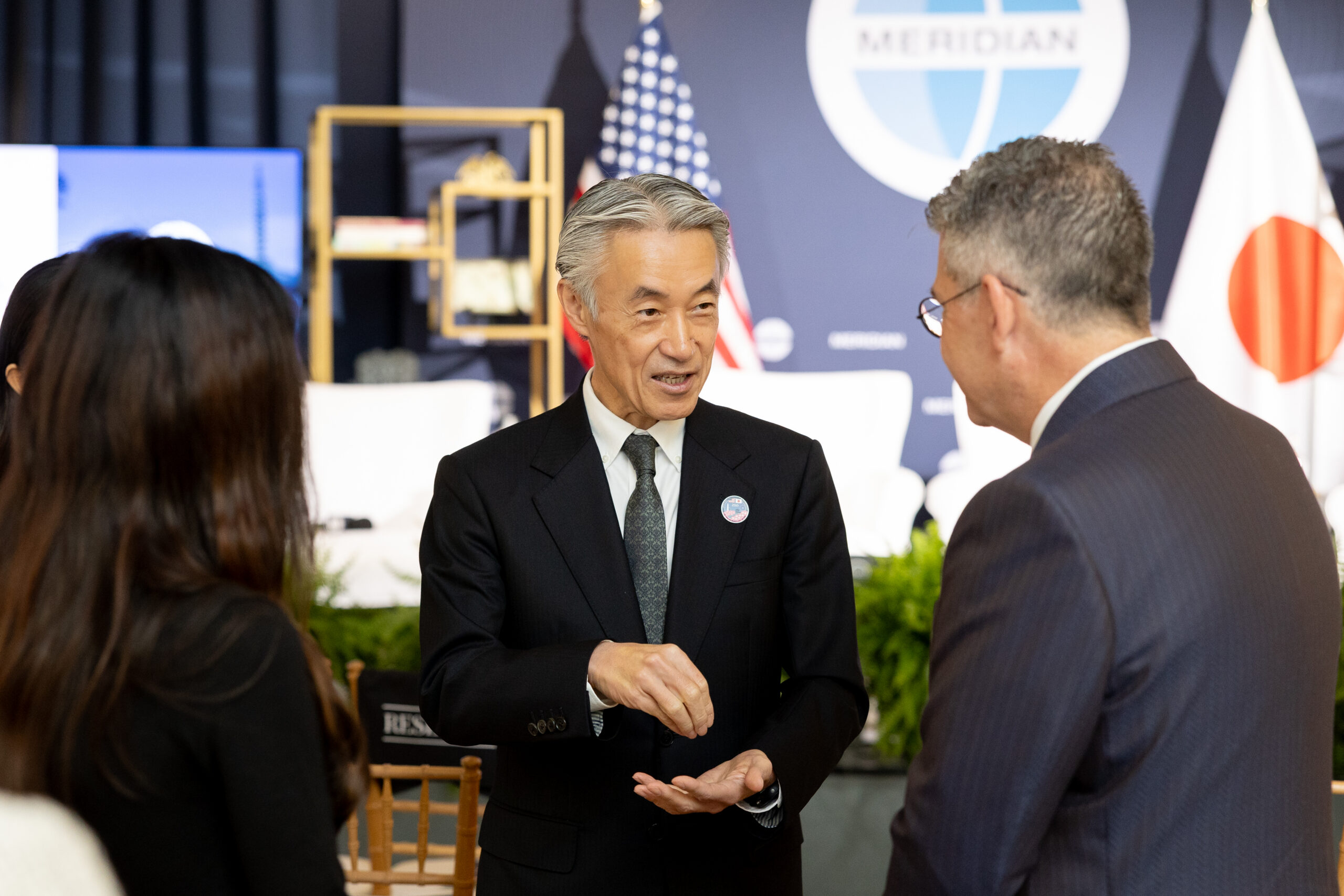
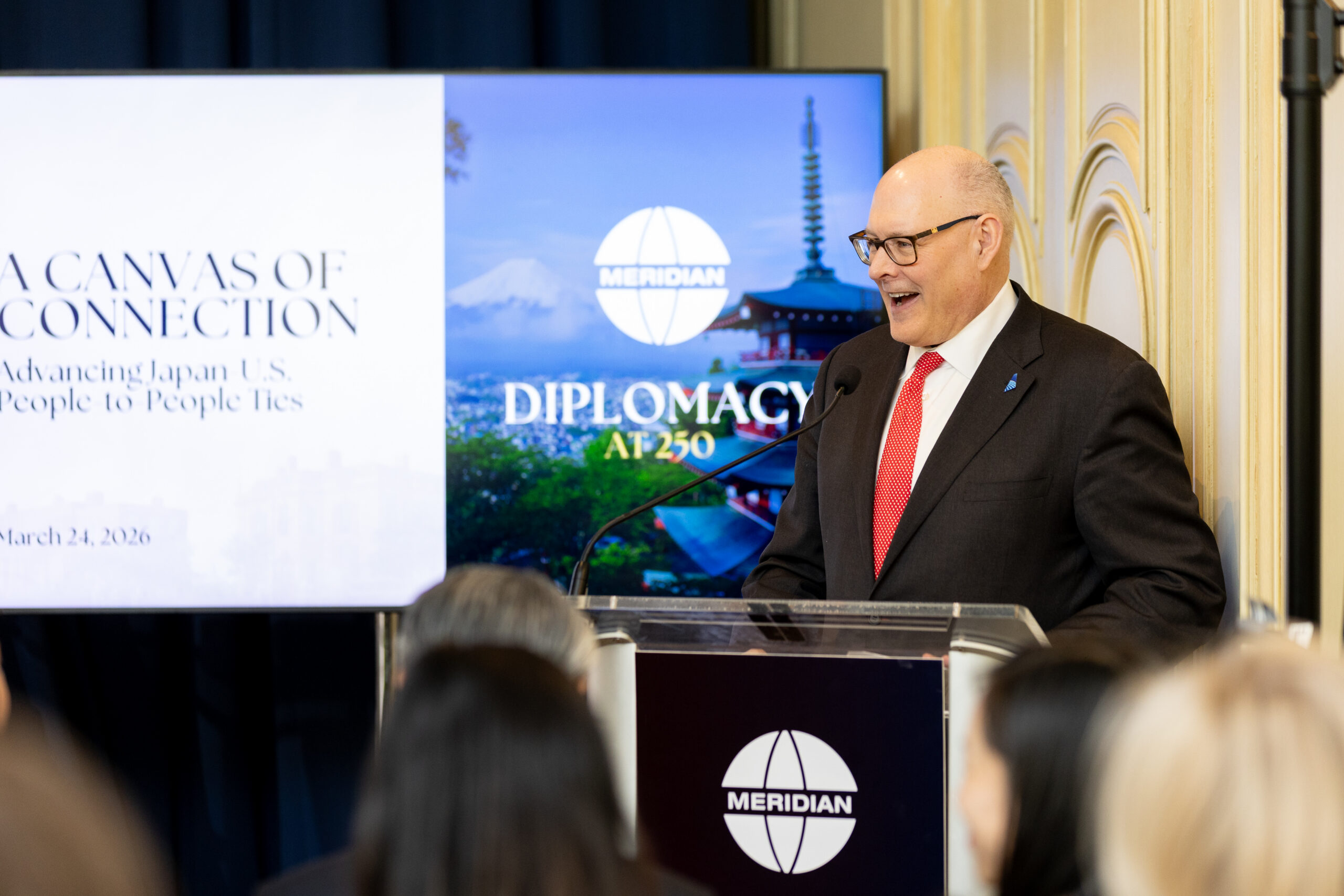
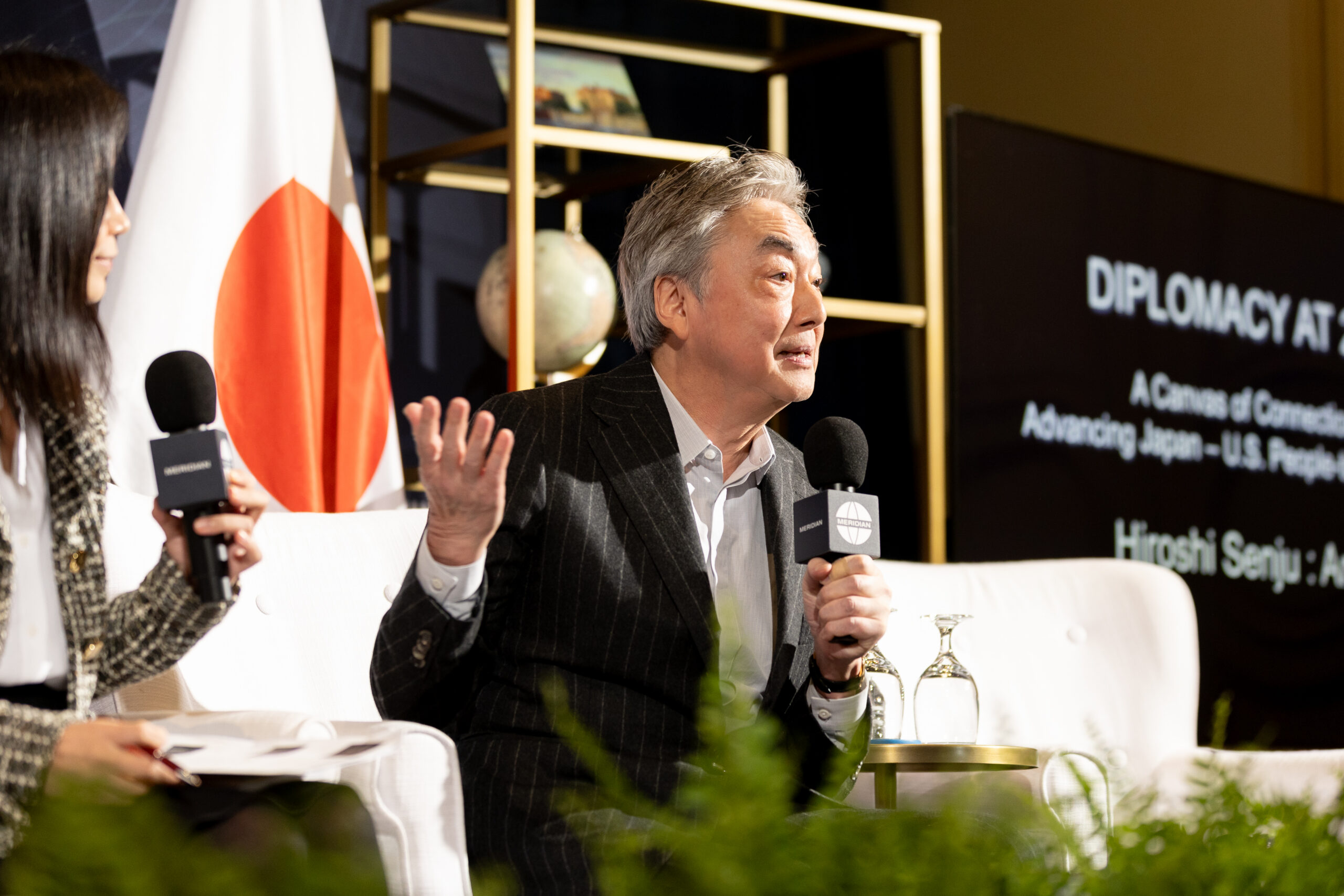
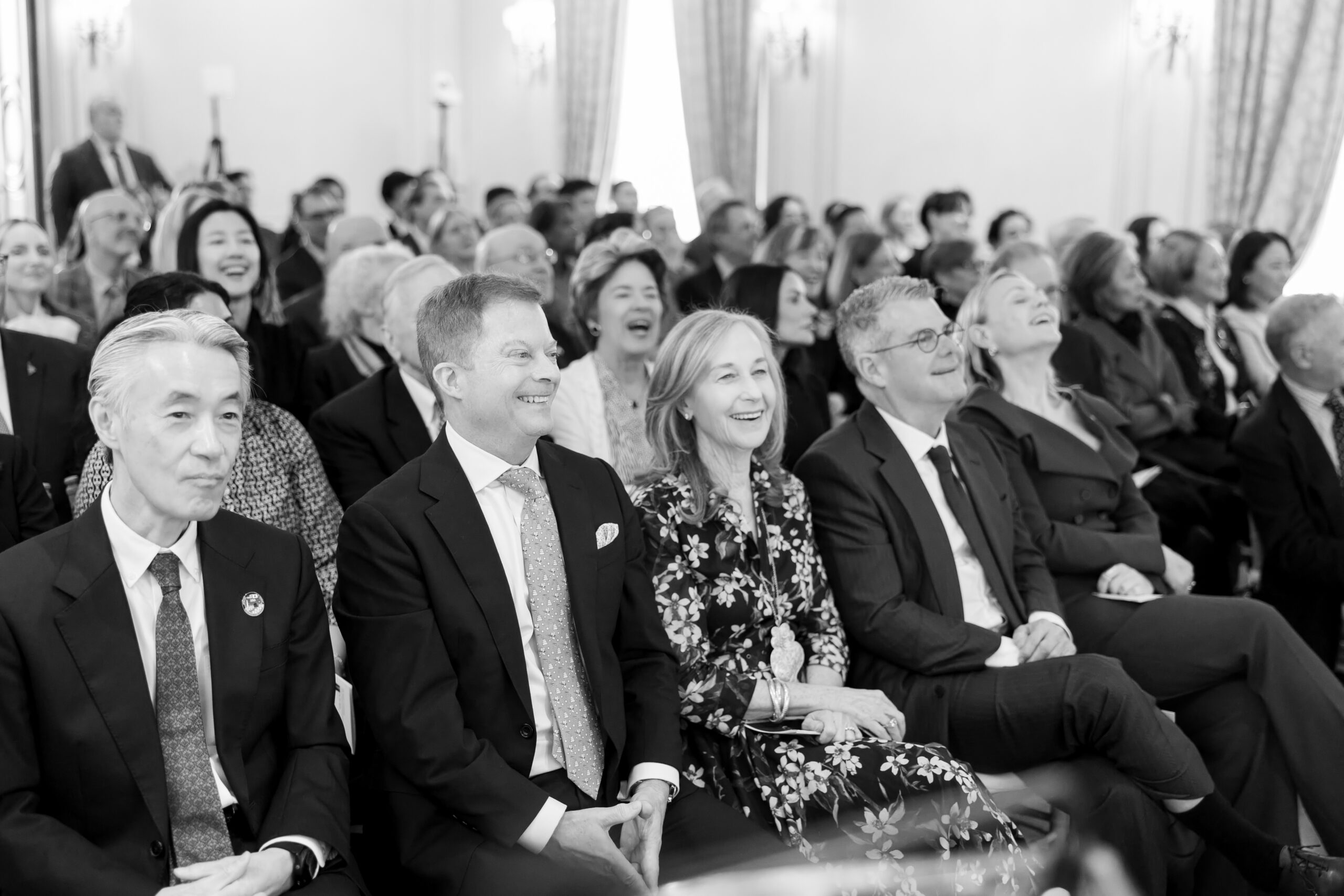
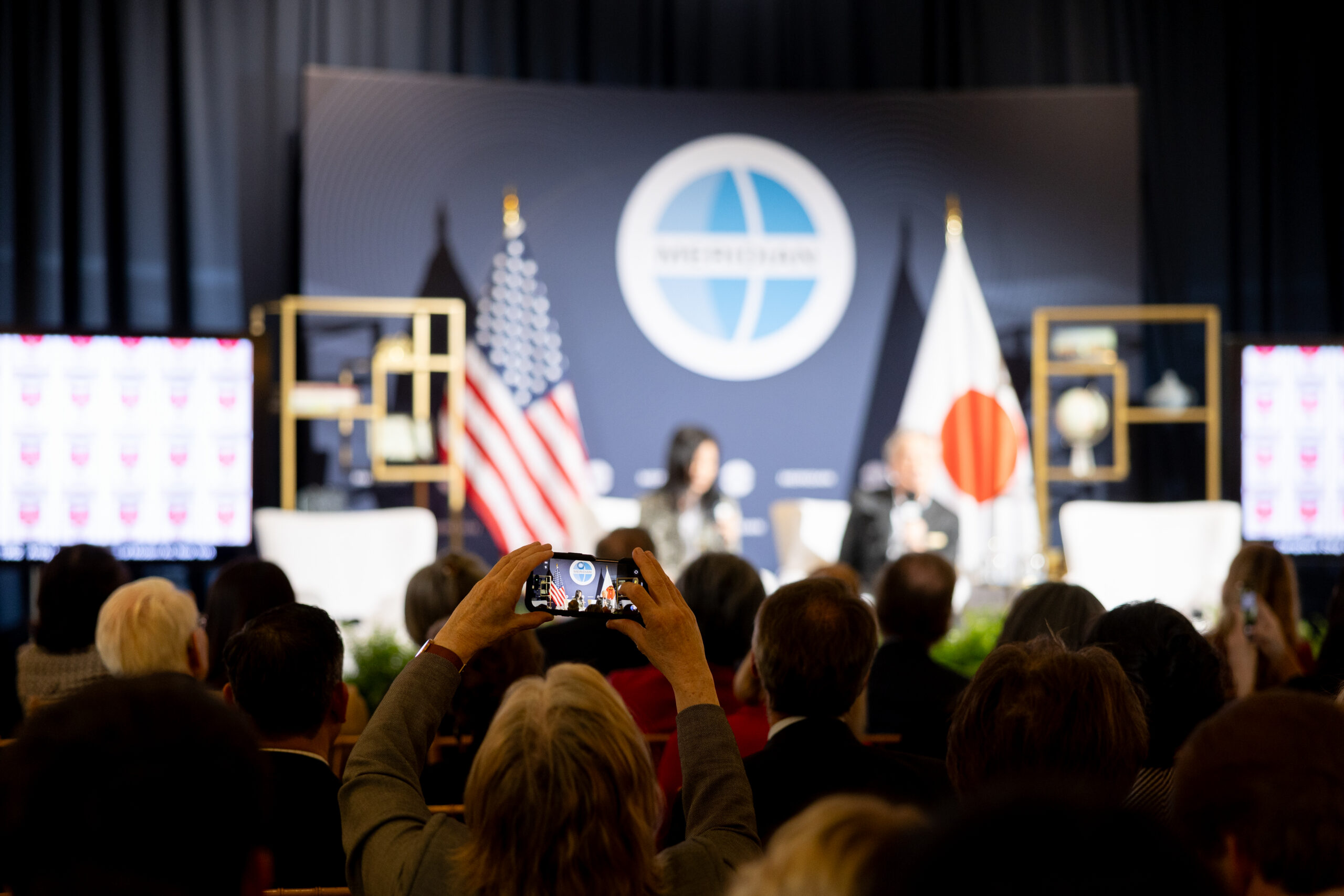
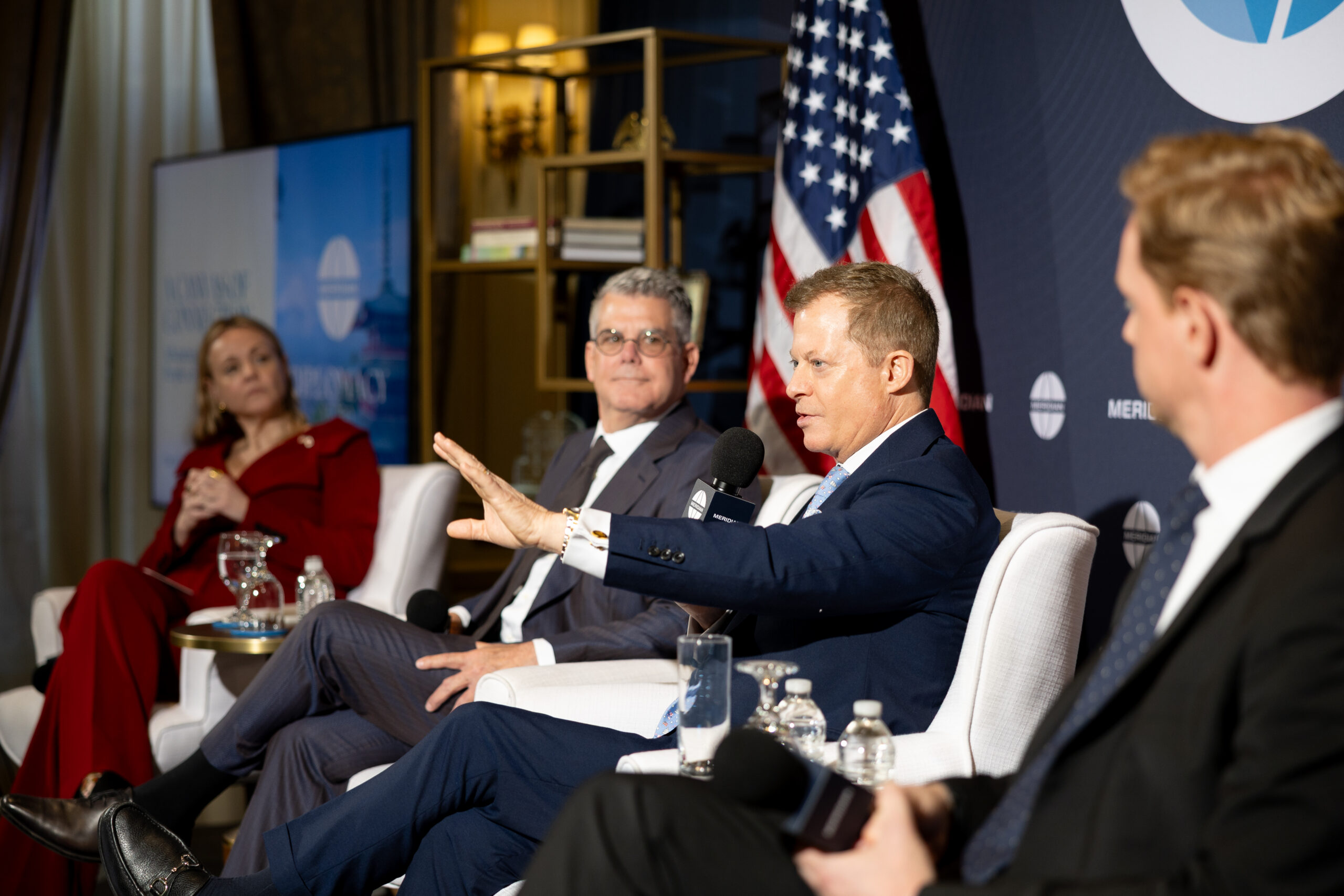
On March 24, 2026, Meridian International Center, in partnership with the Embassy of Japan in the United States, convened A Canvas of Connection: Advancing Japan–U.S. People-to-People Ties as part of its Diplomacy at 250 Embassy Salon Series. With opening remarks from His Excellency Shigeo Yamada, Ambassador of Japan to the United States; Steve Morrissey, Chair of the Meridian Corporate Council and Vice President of International Regulatory & Policy at United Airlines; keynote remarks from renowned Japanese painter Hiroshi Senju; and a panel conversation with Ambassador William Grayson, Commissioner General of the USA Pavilion in Osaka; Dr. Frank Feltens, Associate Director of Curatorial Affairs at the National Museum of Asian Art; Trey Trahan, architect of the USA Pavilion; and Dr. Leslee Michelsen, Director of International Expositions at the U.S. Department of State; the program brought together diplomats, cultural leaders, and practitioners to examine how art and exchange continue to strengthen the bilateral relationship at a moment when both countries are reflecting on major milestones and the future of the alliance.
Here Were the Top Takeaways from the Program:
1. Cultural diplomacy gives the alliance public meaning.
The Japan–U.S. relationship is often discussed through security, trade, and strategic coordination, but the event made clear that its resilience also depends on the public-facing symbols that give the partnership emotional and civic weight. Ambassador Yamada remarked that art is “communication through imagination and beauty” underscoring that cultural exchange is not ornamental; it is one of the ways nations build trust that endures beyond any single policy cycle. Similarly, Japan’s gift of 250 additional cherry trees to Washington, he noted, is more than a gesture of goodwill; it is a living symbol of friendship that deepens the public visibility of the relationship, reinforcing the idea that diplomacy becomes durable when it is experienced in shared public space.
2. Art works as a diplomatic “technology,” not just a cultural product.
Hiroshi Senju illustrated how artists can help translate historical memory and national identity into a language that crosses borders. Through his reflections on his Waterfall series, experimentation, tradition, and harmony, he connected art-making to the broader diplomatic challenge of finding common ground without erasing difference, showing why artistic exchange remains a meaningful instrument of people-to-people ties. In that sense, positing art as a form of statecraft: a way to shape perception, build familiarity, and sustain a relationship that must be understood not only by leaders but also by the public that ultimately inherits it.
3. Enduring partnerships depend on the institutions that keep exchange regular and reciprocal.
Beyond individual symbols or one-time gestures, the evening highlighted the importance of the museums, diplomatic posts, corporate partners, and cultural institutions that make Japan–U.S. engagement continuous rather than episodic. The presence of the National Museum of Asian Art, the U.S. Department of State, the Embassy of Japan, and Meridian’s corporate partners underscored that people-to-people ties endure when they are supported by organizations that can sustain exchange over time. That institutional infrastructure matters because it turns friendship into a practice, not just a sentiment.
4. World Expos remain one of the clearest tests of how a country tells its story abroad.
The conversation around the USA Pavilion at Expo 2025 showcased that world expositions are not just exhibitions; they are strategic arenas where nations present values, priorities, and aspirations in highly visible form. The pavilion’s architecture was discussed as intentionally balancing cultural respect with a distinctly American voice, as public diplomacy succeeds when it feels authentic to the host context while still projecting confidence. World Expo Osaka serves as a reminder that the quality of a nation’s storytelling can shape how it is received long after the event itself ends.
5. The U.S.–Japan partnership remains strongest when culture and strategy work in tandem.
Bilateral relationships can be the most persuasive when formal alliance commitments are matched by visible, human-scale evidence of friendship and cooperation. Formal commitments provide the backbone of the relationship, while art, architecture, and exchange give it resilience, public meaning, and generational continuity. As the U.S. and Japan look ahead to major anniversaries and continue to navigate an increasingly complex international environment, the lesson is that the strongest alliances are those that invest in both strategic coordination and the human ties that sustain it.
Project summary
| Diplomacy at 250: A Canvas of Connection and the Enduring Power of Japan–U.S. People-to-People Ties | May 2027 | |
|---|---|
| Program Areas: | Sports and Culture |
