

Meridian Council Salon: The AI Economy and the Future of Work
Artificial intelligence is rapidly redrawing the boundaries of global economic competitiveness, influencing everything from productivity and supply chain resilience to labor markets, organizational culture, and national development strategies. As governments and industries accelerate adoption, the convergence of automation, workforce expectations, and geopolitical competition is creating a new era in which economic opportunity, social stability, and national security are increasingly interlinked.
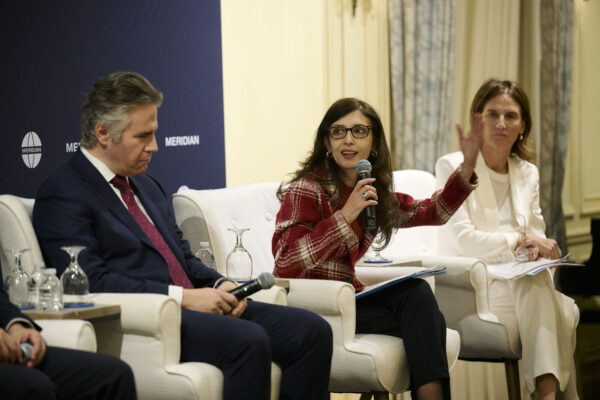
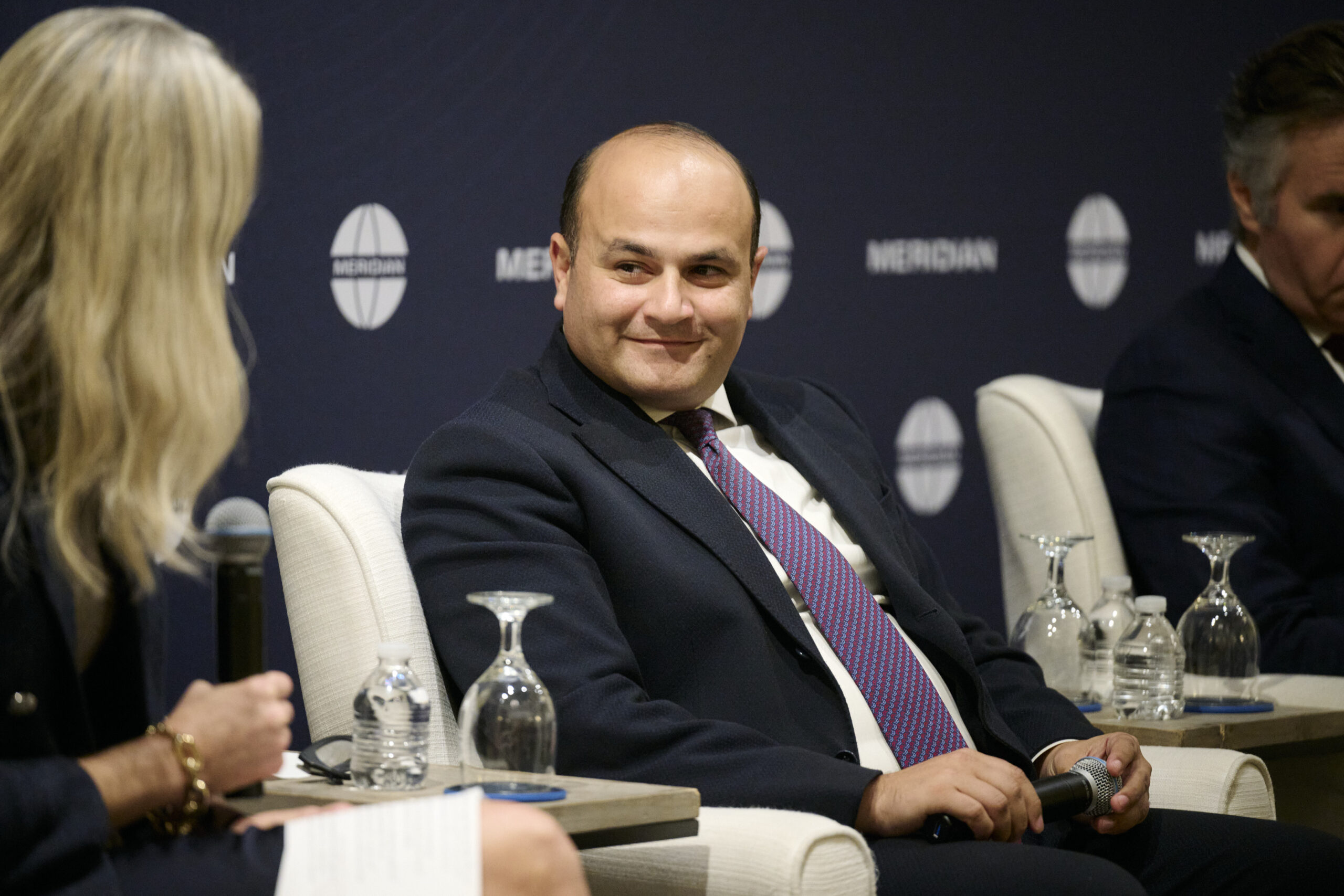
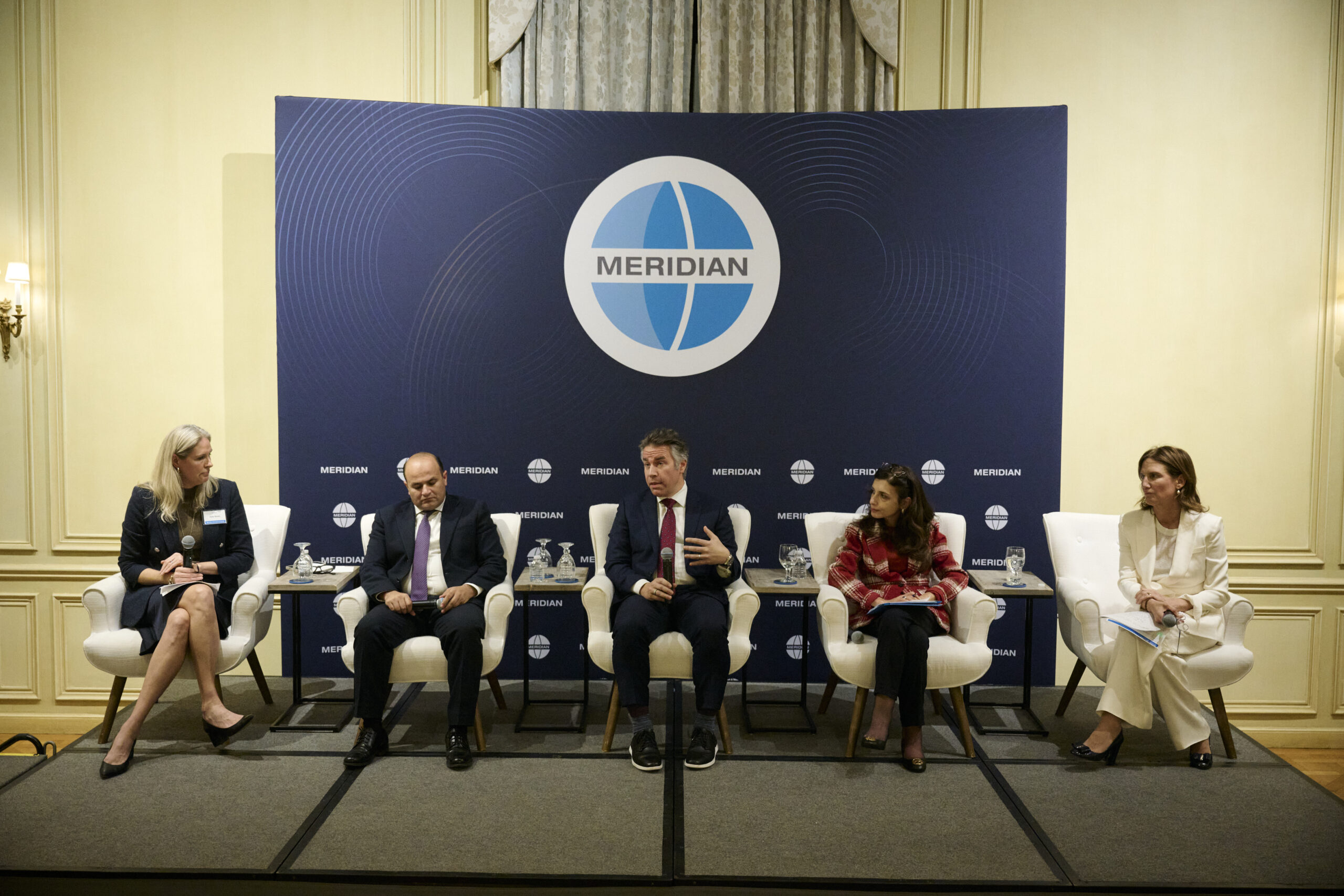
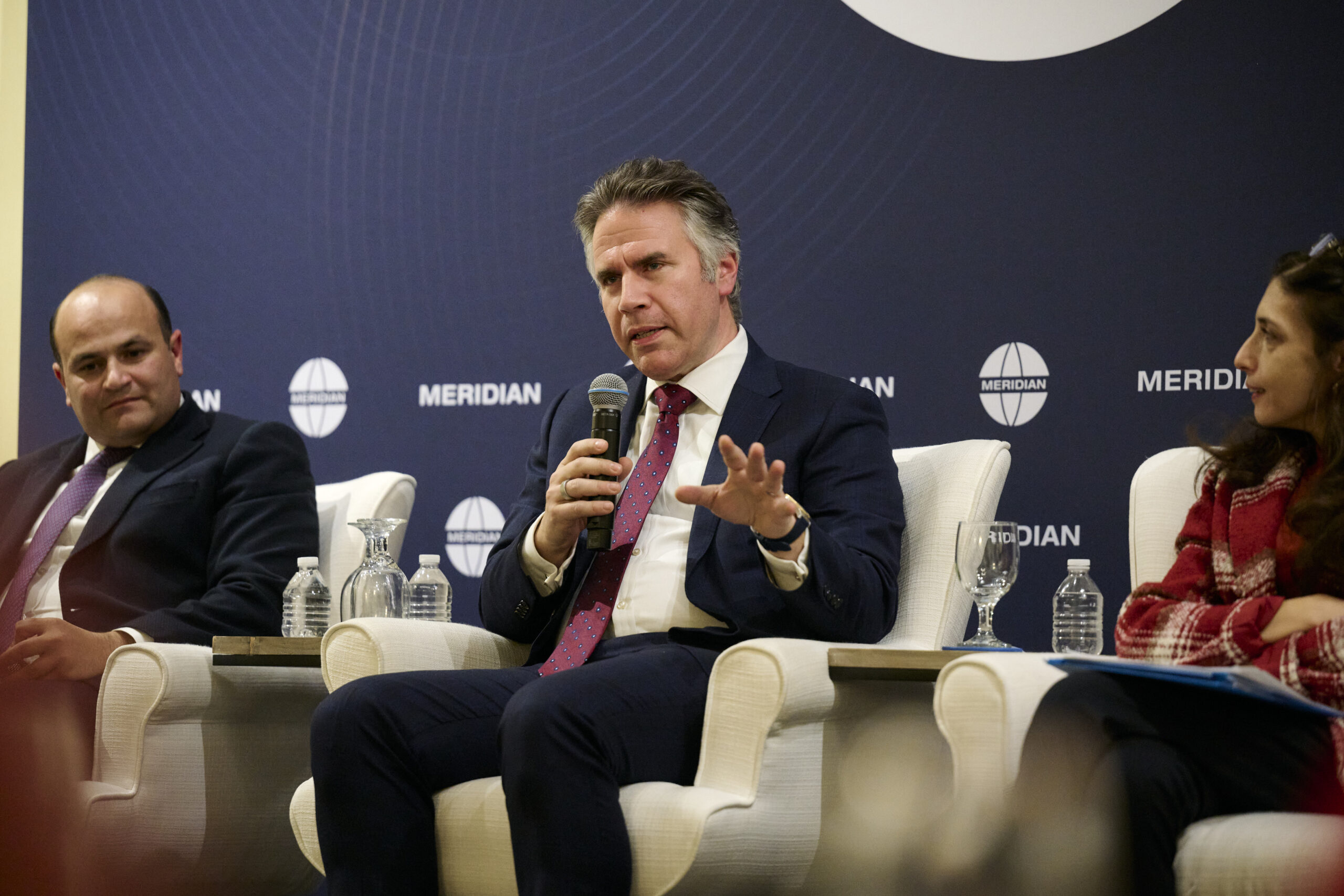
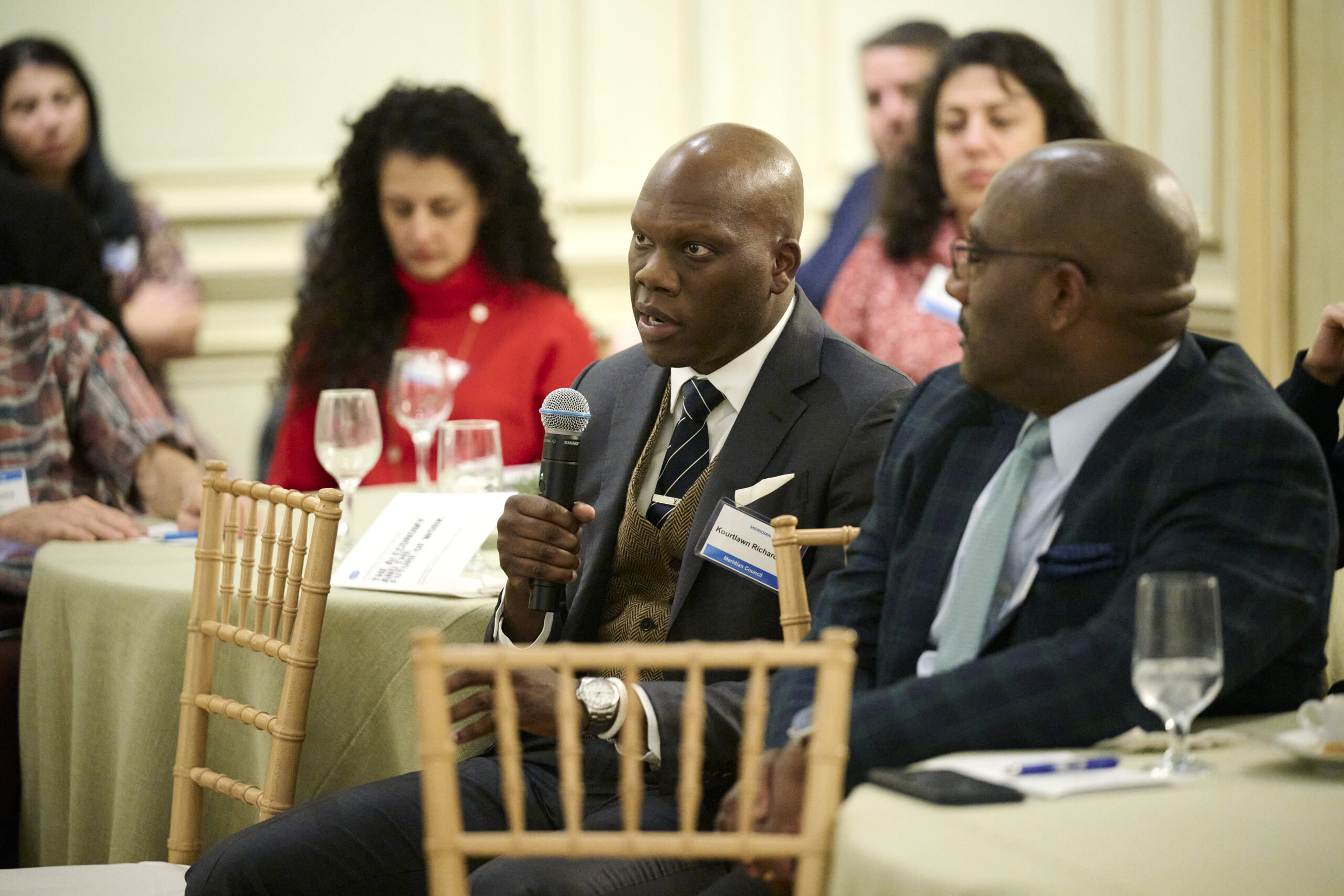
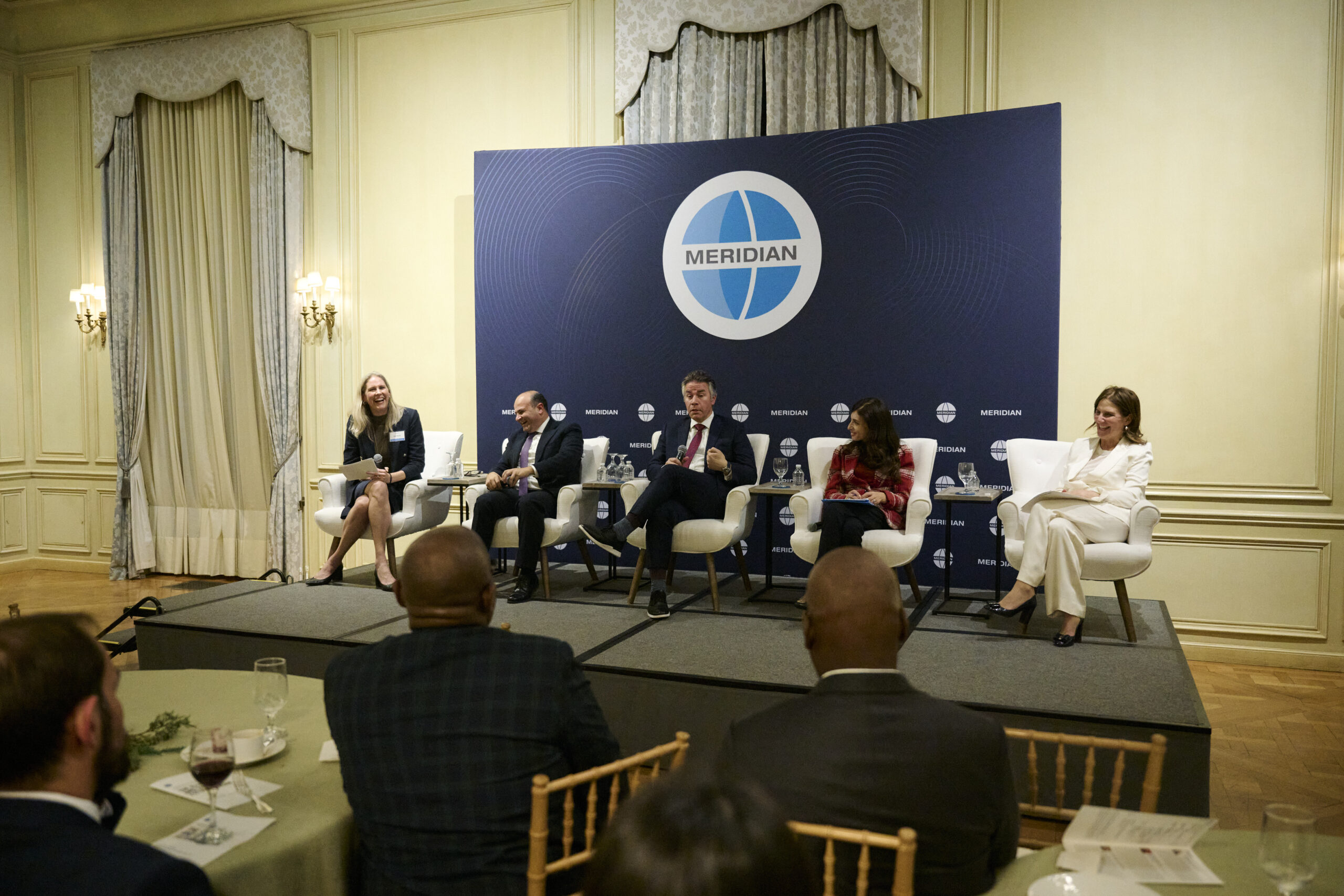
On December 3, 2025, H.E. Narek Mkrtchyan, Ambassador, Embassy of Armenia; Brunilda Minarolli Peci, Minister Plenipotentiary & Deputy Chief of Mission, Embassy of Albania; T.H. Sarah Morgenthau, President & CEO, “I Have a Dream” Foundation and former Special Representative for Commercial and Business Affairs at the U.S. Department of State; and Nick Tzitzon, Vice Chairman, ServiceNow, joined Meridian to examine how technological innovation is restructuring the global workforce. The conversation focused on inequality and social cohesion, the lag in public sector adoption, and the strategic choices facing both large economies and smaller states seeking greater participation in the digital economy.
Here are the top takeaways:
1. AI Is Outpacing Workforce and Organizational Readiness
The accelerating diffusion of AI is enhancing productivity, enabling new business models, and opening pathways for smaller economies to integrate more quickly into global value chains. Yet labor and management systems built around slower technological cycles are struggling to keep pace, leaving many organizations structured for 20th-century industrial needs while employers increasingly require digital fluency, data literacy, and AI-augmented decision-making skills at every level. This mismatch is not just a talent issue; it reflects deeper human fears and challenges in change management. Workers often experience AI as a threat to identity and job security, while senior leaders tend to view it as a growth opportunity, widening a trust gap that can stall adoption unless leadership invests in communication, experimentation, and psychological safety.
2. Human-centered Leadership, Soft Skills, and the Augmentation Narrative
AI transformation is as much about culture and leadership as it is about technology. Organizations that normalize experimentation, reward learning, and elevate leaders who visibly use AI tools are better positioned to convert technical potential into productivity gains, while cultures rooted in risk aversion and rigid incentives struggle to adapt. At the same time, most roles are more likely to be augmented than replaced by AI, keeping human judgment, creativity, and complex decision-making at the center of high-stakes work. This dynamic elevates “AI-proof” capabilities such as empathy, collaboration, problem-solving, and narrative and communication skills, which become key differentiators in AI-rich environments and are essential to how leaders build trust and guide teams through change.
3. Skills-Based Hiring and New Pathways to Opportunity
Across advanced economies, demand for AI-ready talent is outpacing supply, particularly in mid-career and frontline roles where workers face a growing mismatch between their training and evolving employer expectations. Many education and training systems remain optimized for traditional credentials rather than continuous learning, modular skills acquisition, or applied technological experience. In response, employers are experimenting with skills-based, credential-free hiring, micro-credentials, short-cycle skilling programs, and partnerships with community colleges, nonprofits, and government agencies. These models are prompting a reassessment of the four-year degree as the primary pathway to mobility and, when designed with equity in mind, can expand access to AI-enabled opportunities for underrepresented and economically disadvantaged communities.
4. Public Sector Modernization and National Competitiveness
The U.S. public sector is lagging behind the private sector and some peer governments in AI adoption, constrained by slow procurement, fragmented standards, and limited incentives for experimentation. These barriers affect service delivery, regulatory agility, and workforce planning, leaving agencies with processes and tools misaligned to the speed and complexity of AI-driven change. Modernizing government capabilities is therefore central to competitiveness, as public institutions set regulatory baselines, steward public trust, and shape citizens’ daily experience of technology. Executive upskilling, cross-sector talent exchanges, and deeper public–private collaboration—through shared sandboxes, pilots, and training partnerships—are emerging as essential strategies to ensure that AI in the public sphere enhances rather than erodes trust and resilience.
5. Small States, Digital Sovereignty, and AI’s Democratizing Potential
AI is offering smaller economies an opportunity to leapfrog traditional development pathways by enabling more efficient public services, digital governance, and innovation-driven growth. Investments in digital identity platforms, cloud infrastructure, and remote work ecosystems can allow local talent to participate in global markets without relocating while strengthening state capacity. Beyond development, small states are using AI to amplify diplomatic reach, participate more actively in multilateral rule-setting, and reinforce digital sovereignty through “pilot country” regulatory roles and carefully structured partnerships with global technology firms. Diaspora engagement and international micro credentialing initiatives connect local ecosystems to global expertise and markets, underscoring AI’s potential not only to exacerbate inequality but also to democratize access to economic opportunity when paired with inclusive design and intentional policy choices.




Project summary
| Meridian Council Salon: The AI Economy and the Future of Work | |
|---|---|
| Impact Areas: | Artificial Intelligence and Cybersecurity |
| Program Areas: | Diplomatic Engagement |
