

Strengthening Global Satellite Supply Chains
As satellite networks play a larger role in communications, logistics, security, and economics, the health of the space industrial base has become central to global stability and growth. Now is the time to strengthen that foundation; disruption in space infrastructure can ripple across industries, slow innovation, and expose supply chain vulnerabilities. A more resilient industrial base helps ensure that the benefits of space reach businesses, workers, and communities reliably and at scale.
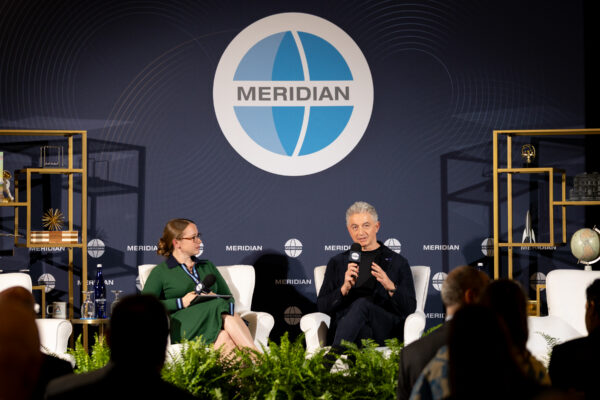
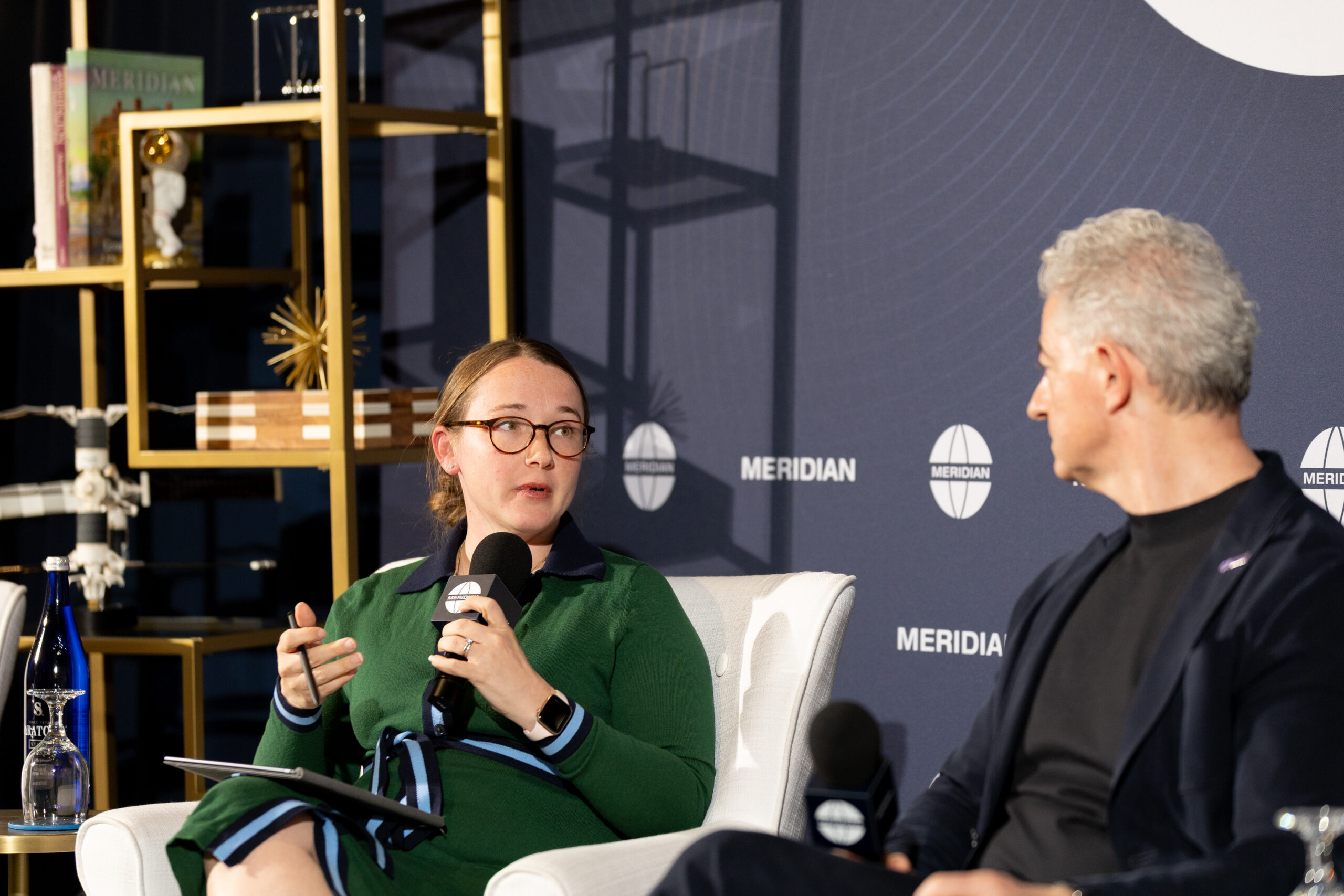
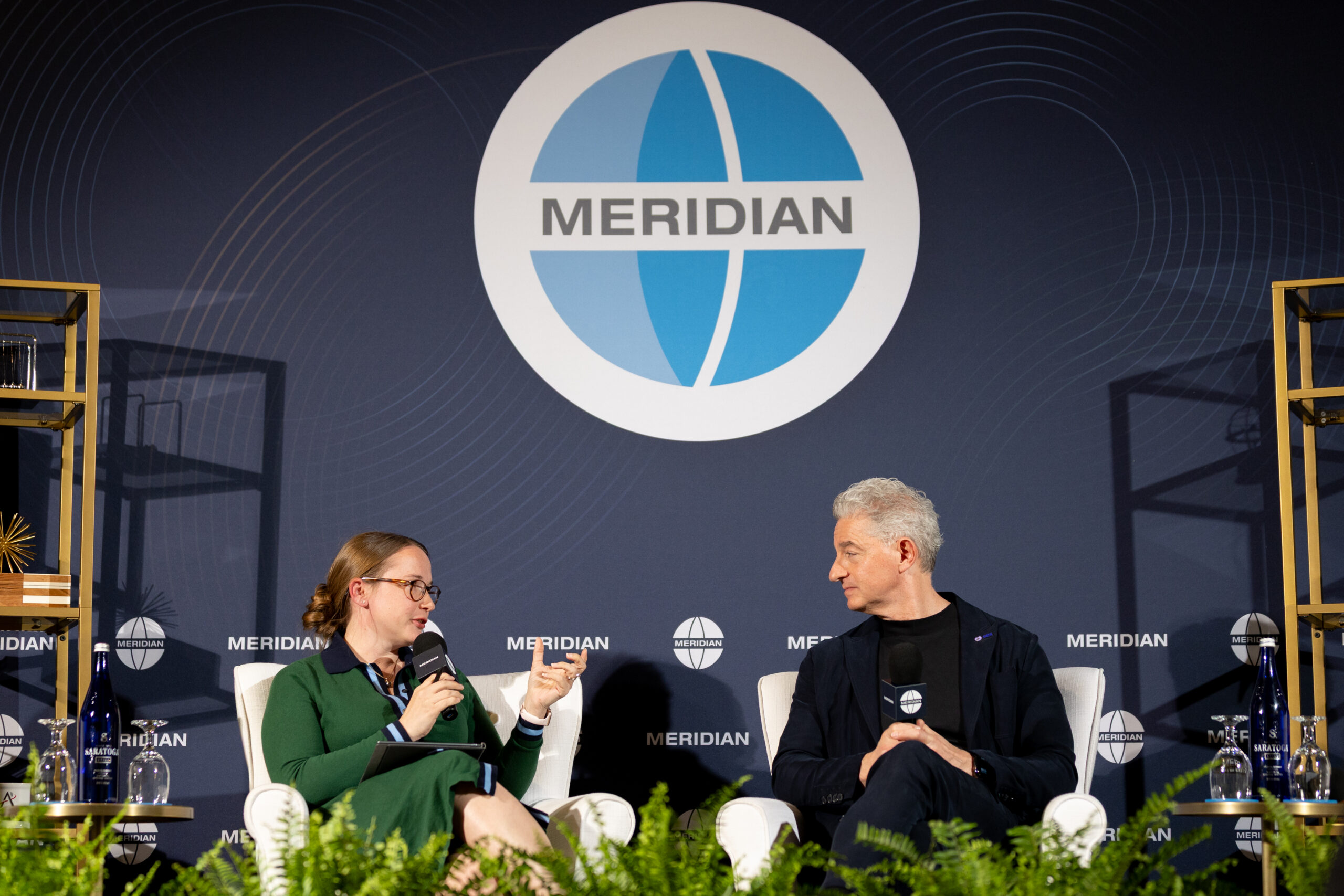
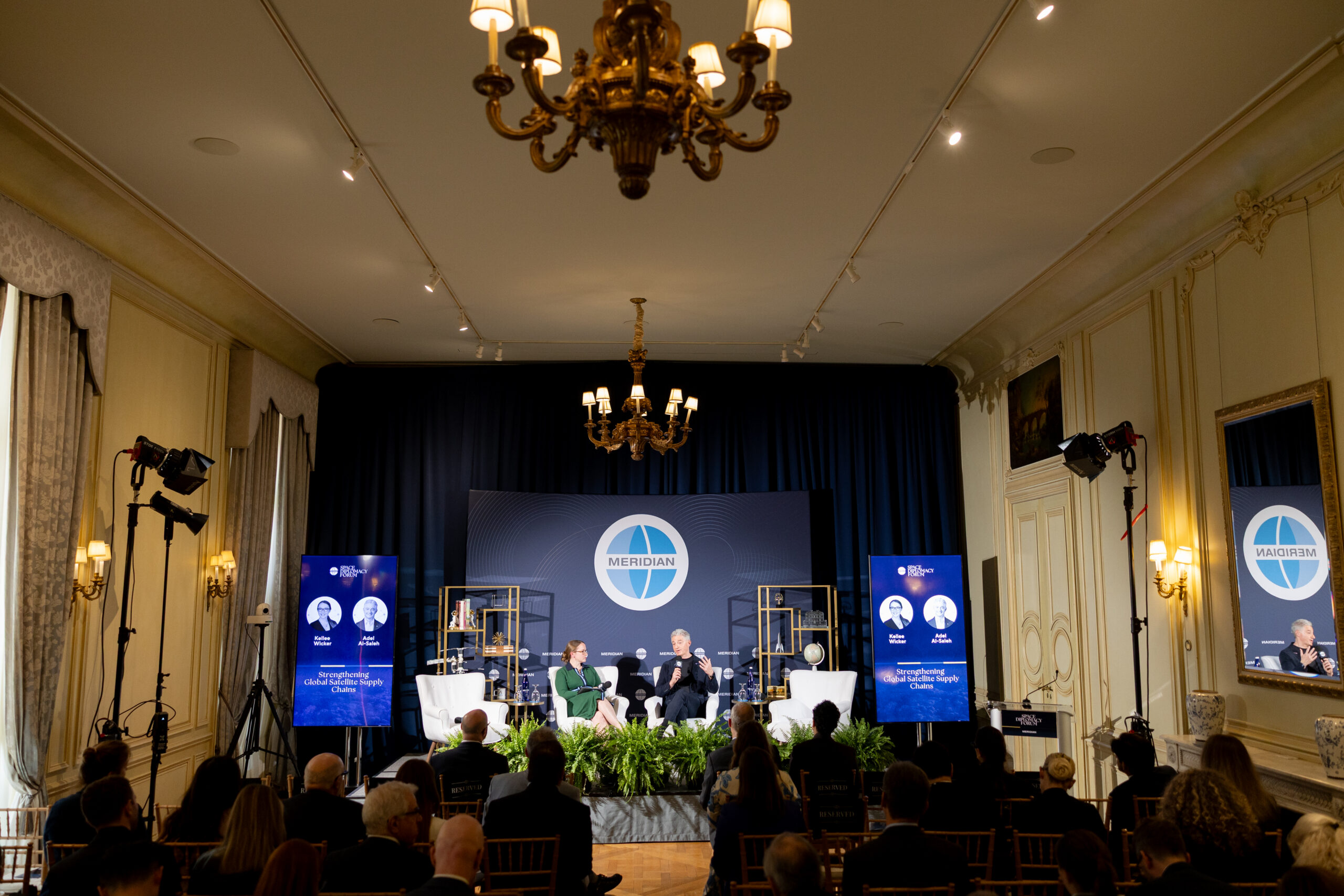
This fireside conversation explored how global operators are adapting to fragmented networks, faster innovation cycles, and growing geopolitical risk, while continuing to expand connectivity and support both commercial and public-interest missions. Featuring Kellee Wicker (Vice President, Center for Technology, Innovation, and Space, Meridian International Center) and Adel Al-Saleh (CEO, SES), the discussion highlighted how adaptability now depends on multi-orbit architecture, diversified industrial partnerships, trusted government relationships, and a broader understanding of satellites as both critical infrastructure and diplomatic tools. As Wicker framed the discussion, the central challenge is “building resilience into the supply chain and working internationally across continents, clients, and providers.”
Here Were the Top Takeaways from the Program:
1. The satellite production ecosystem remains fragile, even as demand for connectivity grows
Al-Saleh was direct that the industry is still operating from a vulnerable industrial base, noting that “space supply chain has been single-threaded in many different critical components.” Because large programs require long contracting cycles and advance planning, supply disruptions can create serious downstream risk for constellation development and operations.
At the same time, demand continues to accelerate, pushing operators to find new ways to standardize components and reduce dependence on narrow supplier bases. Wicker opened the conversation by asking where the sector is “genuinely resilient, and where maybe there’s some fragility we should address,” and the answer was clear: robustness of the system is improving, but the industrial backbone of space is still catching up to the scale of demand.
2. Satellite infrastructure is both a commercial asset and a public-interest lifeline
Beyond commercial performance, Al-Saleh emphasized that connectivity remains fundamental to bridging the digital divide and supporting crisis response. He described SES’s purpose as “space to make a difference,” noting that the company works across Africa, the Amazon, and Southeast Asia to connect remote communities that terrestrial networks cannot easily reach.
In discussing deployments like Chad, Wicker highlighted the importance of moving “past just the short-term emergency response to sustained connectivity,” especially in communities facing displacement or fragile infrastructure. Al-Saleh explained that satellite networks support both emergency and long-term development needs, from hospitals and schools to economic growth in underserved regions. This framing positioned supply chain resilience, not just as a business concern, but as a prerequisite for humanitarian response, inclusion, and development.
3. Multi-orbit architecture is becoming a core resilience strategy
Stability is not just about suppliers; it is also about system design. Al-Saleh argued that “if you’re building a network, a resilient network, you need multi-orbit, because one will fail, one will be attacked,” explaining that the ability to move data and waveforms across different orbital layers is the real source of redundancy.
Rather than relying on a single orbital model, SES uses a combination of GEO, MEO, and other systems to balance latency, coverage, economics, and mission diversity. Wicker connected this directly to SES’s new Meosphere effort, asking whether iterative deployment and partnership design could improve adaptability over time. The conversation made clear that future supply chain resilience will be inseparable from architectural durability in orbit.
4. New commercial partnerships are forcing legacy operators to move faster
The industry is rapidly changing under pressure from new entrants and new economics. Al-Saleh observed that legacy procurement and development cycles are no longer competitive, saying, “the pace of innovation of these existing players and the cost points of these existing players are no longer competitive.” By partnering with newer firms like K2 Space, SES is attempting to compress development timelines, reduce cost, and introduce more flexibility into how satellites are built and upgraded.
Wicker pressed this point by asking what SES’s new investment model “says about where the industry is heading,” and the answer was toward faster, more modular, and more collaborative supply models. The fireside made clear that incumbents are no longer simply defending legacy positions; they are being forced to reinvent themselves to remain relevant.

Project summary
| Strengthening Global Satellite Supply Chains | March 2026 | |
|---|---|
| Program Areas: | Technology, Innovation, & Space |
