

State-Led Commercial Diplomacy and Foreign Investment in America Event
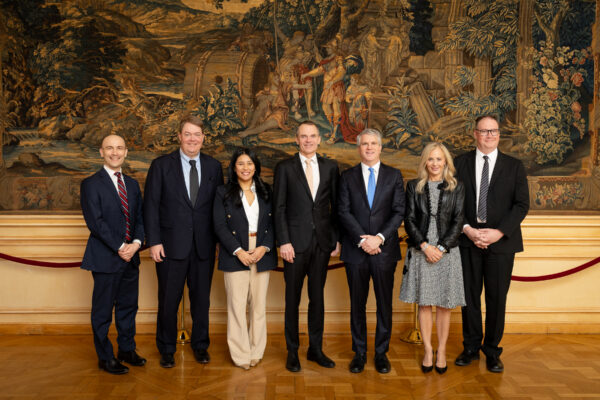
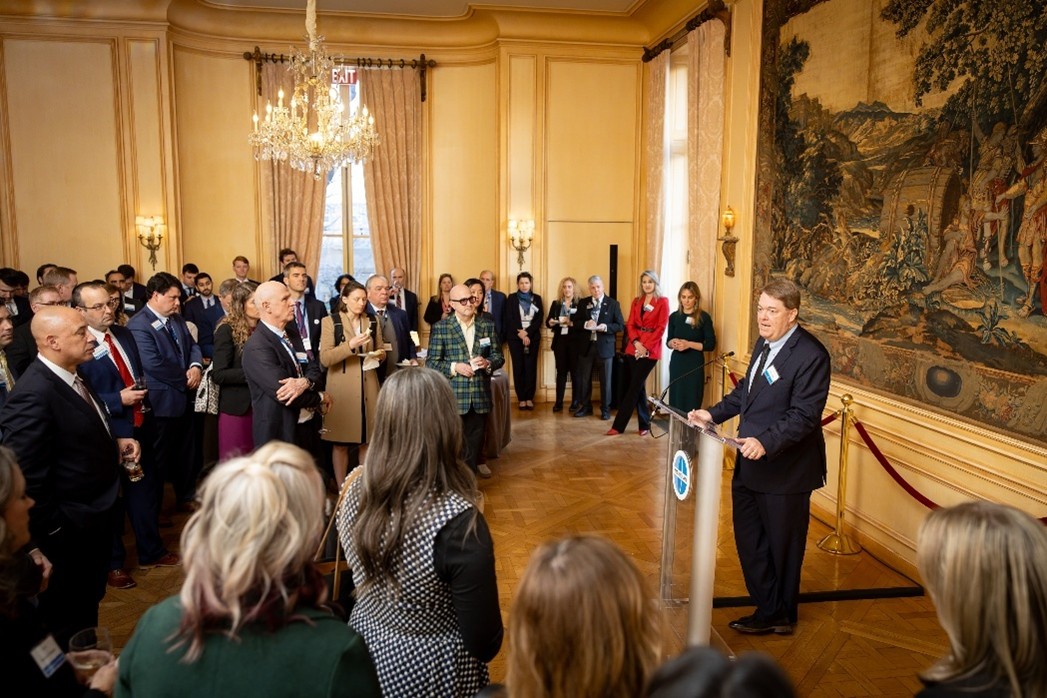
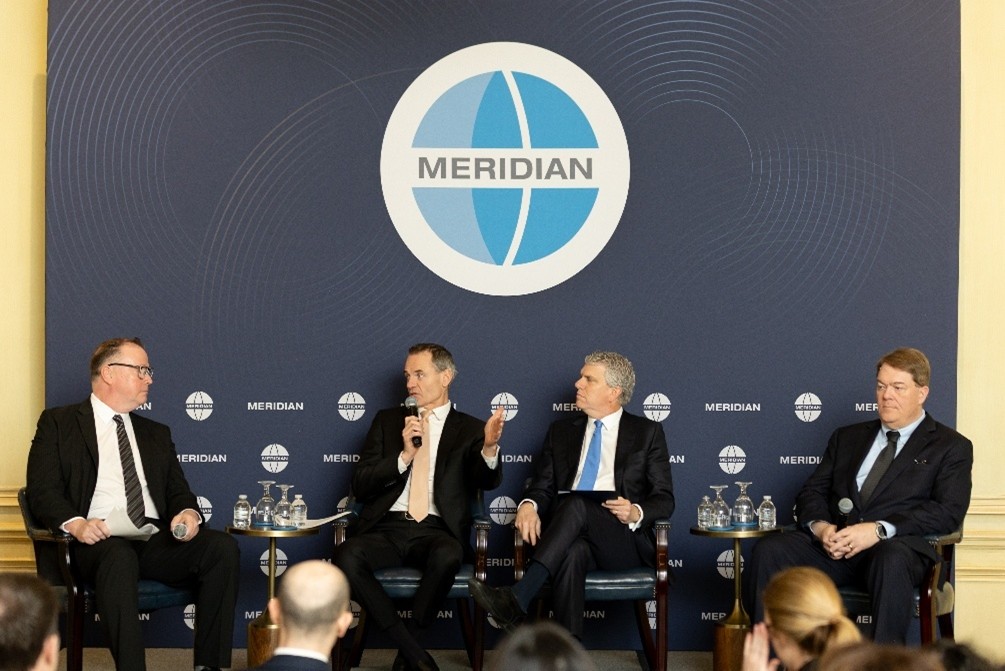
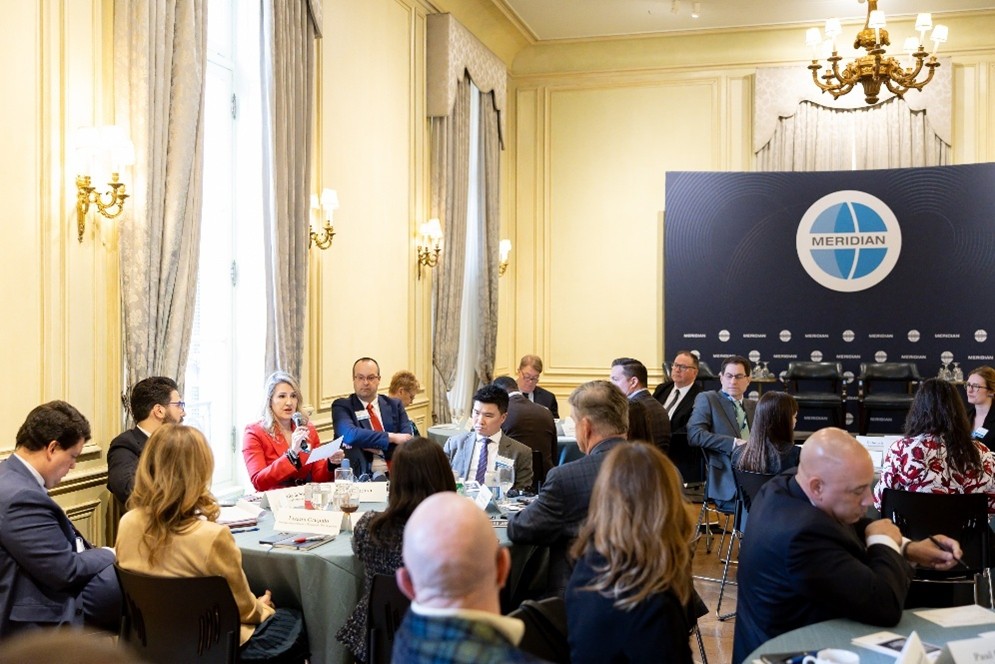
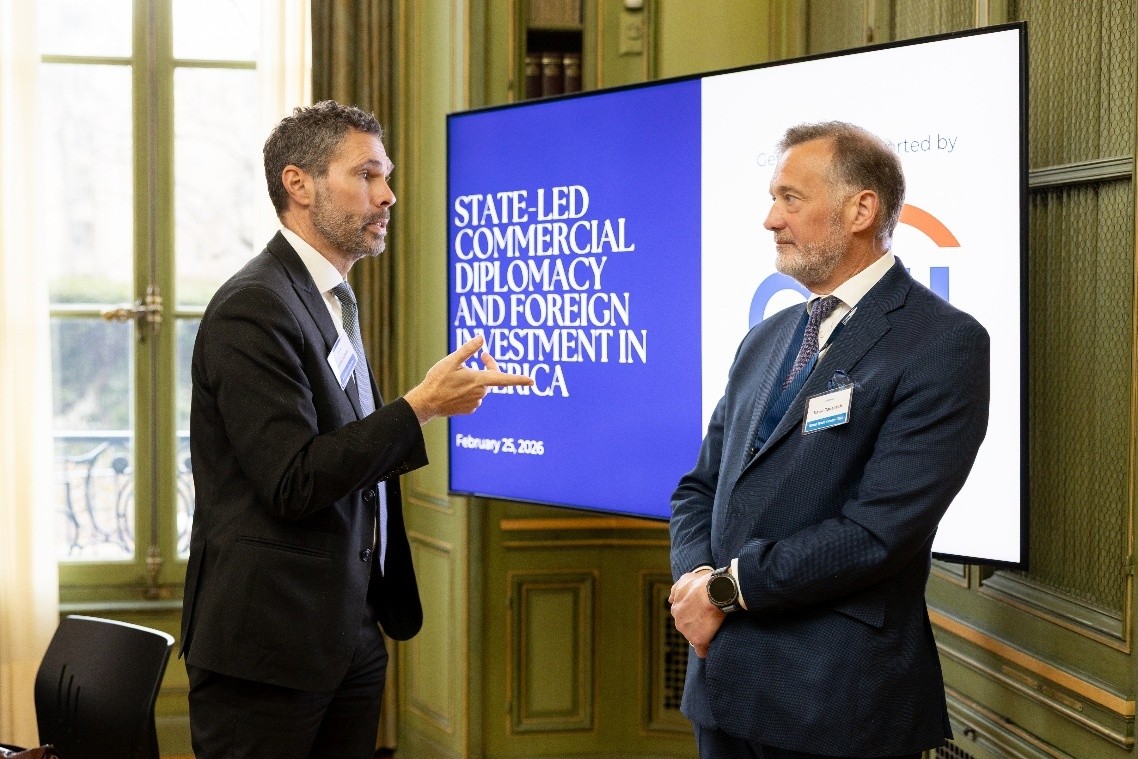
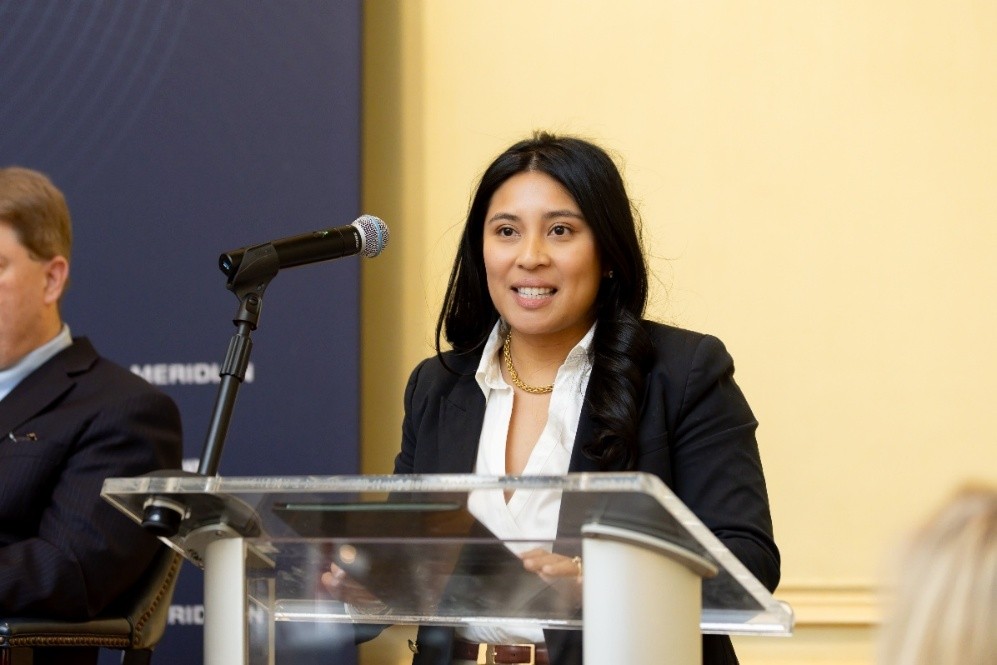
On February 25, Meridian International Center, in partnership with State International Development Organizations (SIDO), convened more than 30 U.S. state trade directors, trade diplomats from a dozen foreign embassies, corporate leaders, and federal officials for an event on State-Led Commercial Diplomacy and Foreign Investment in America.
Generously supported by Citi, the program featured a panel discussion and facilitated table conversations exploring the evolving trade and foreign direct investment environment and how U.S. states can enhance their corporate and diplomatic engagement. Participants underscored that while federal policy sets parameters, trade and foreign direct investment (FDI) promotion is deeply rooted in local and state leadership.
Here Were the Top Takeaways from the Program:
1. Trade Policy Shifts Are Redirecting Where and How Investments Land across the United States
New Framework Agreements negotiated with U.S. trading partners, combined with tariffs and tighter national security screening, have increased foreign investment commitments tied to supply chain resilience, domestic capacity, and reduced geopolitical exposure.
Inbound investment commitments from partners such as Japan, South Korea, and the United Arab Emirates are concentrating on sectors with long investment horizons and strategic value—including energy generation, AI and data centers, nuclear technology, advanced manufacturing, aerospace, shipbuilding, batteries, and biotechnology.
Foreign companies navigating the "which state, which sector, which entry strategy" question need direct access to state ecosystems. While trade and investment policy is set in Washington DC, execution increasingly rests with states and local economic development leaders.
2. The Practice of Commercial Diplomacy Is Adapting, Centering on U.S. States
Foreign missions in the United States—trade diplomats in embassies in Washington DC and consulates across the country—have increased their commercial diplomacy focus locally: building state-level connections, facilitating introductions to businesses in their home countries, and leading trade missions locally.
Embassies are developing nationwide commercial strategies. For instance, Denmark’s 50-state strategy has already yielded agreements with four U.S. governors across party lines. Major investments, such as Emirates Global Aluminium’s $4 billion investment in Oklahoma, are being facilitated by direct governor-ambassador connections.
3. States Are Differentiating Themselves With Distinctive Sector-Specific Pitches
U.S. states must be ready and equipped to engage directly with international diplomatic partners. State trade directors, economic development organizations, and even governor’s representatives in Washington DC are cultivating these bilateral partnerships.
Beyond relationships, broad “we’re open for business” messaging is losing ground to tightly defined value propositions tied to existing industrial ecosystems, such as Arkansas in aerospace and defense, Iowa in agricultural products and technology, and Alabama in maritime industries and battery production.
Each U.S. state must articulate their unique value proposition: strength in specific industry verticals, skilled workforce, innovation ecosystems, infrastructure, energy affordability, and other competitive incentives.
4. Deepening Relationships and Prioritizing Markets
With federal trade-promotion funding tightening, states are maximizing limited resources through market prioritization, joint trade-show presence, shared international offices, and regional branding. Long-term representation and partnerships, such as Illinois' office in Belgium dating back to 1968 and the Wisconsin-Hessen sister state partnership from 1978, demonstrate the durability investors look for.
Deepened relationships and prioritization increase returns from trade shows and trade missions—especially by enabling pre-vetted B2B meetings and pre-coordination. Networks such as SIDO provide stronger connective infrastructure to support state-led economic engagement.
States also explore cross-border regulatory alignment, giving foreign firms faster workforce mobility—an advantage that directly affects site selection decisions. For instance, Georgia and North Carolina are among six U.S. states recognizing UK engineering credentials through the UK-U.S. Engineering Mutual Recognition Agreement (MRA).
5. State-Led Commercial Diplomacy Is Central to U.S. Economic Security
Today's FDI decisions are increasingly about filling supply chain gaps, friendshoring, and increasing resilience. As partners to businesses seeking to onshore the manufacturing of key components and sourcing critical inputs—including rare earths—from allied nations, U.S. states are key players in national security.
These state-driven diplomatic relationships and corporate engagement signal a new playbook. U.S. state leaders need to be equipped to navigate geopolitical instability impacting trade relationships. They also need to communicate to constituents the value of international partnerships that strengthen job creation and economic resilience.
Faster execution of large trade and investment agreements requires direct partnerships between federal agencies and states to facilitate major projects. Platforms from the U.S. Department of Commerce, such as SelectUSA and the Export Accelerator, provide states with platforms for increasing coordination and impact.




Organized in partnership with: 
With support from:
Project summary
| State-Led Commercial Diplomacy and Foreign Investment in America Event | April 2027 | |
|---|---|
| Program Areas: | State and Local Diplomacy |
