
Sports for Development

As Washington, DC unveils plans for a new stadium designed as a year-round global destination, the announcement reflects a wider movement in which cities are embracing sports as drivers of development, connection, and civic renewal. The vision of a venue that hosts major international events while remaining open to residents aligns with global examples showing how well-planned sports infrastructure can strengthen communities, boost local economies, and deepen social engagement. At the same time, long-term findings from international sports for development initiatives show that athletics can bridge divides, cultivate young leaders, and spark measurable behavior change far beyond the field. Round global destination, the announcement reflects a wider movement in which cities are embracing sports as drivers of development, connection, and civic renewal. The vision of a venue that hosts major international events while remaining open to residents aligns with global examples showing how well-planned sports infrastructure can strengthen communities, boost local economies, and deepen social engagement. At the same time, long-term findings from international sports for development initiatives show that athletics can bridge divides, cultivate young leaders, and spark measurable behavior change far beyond the field.
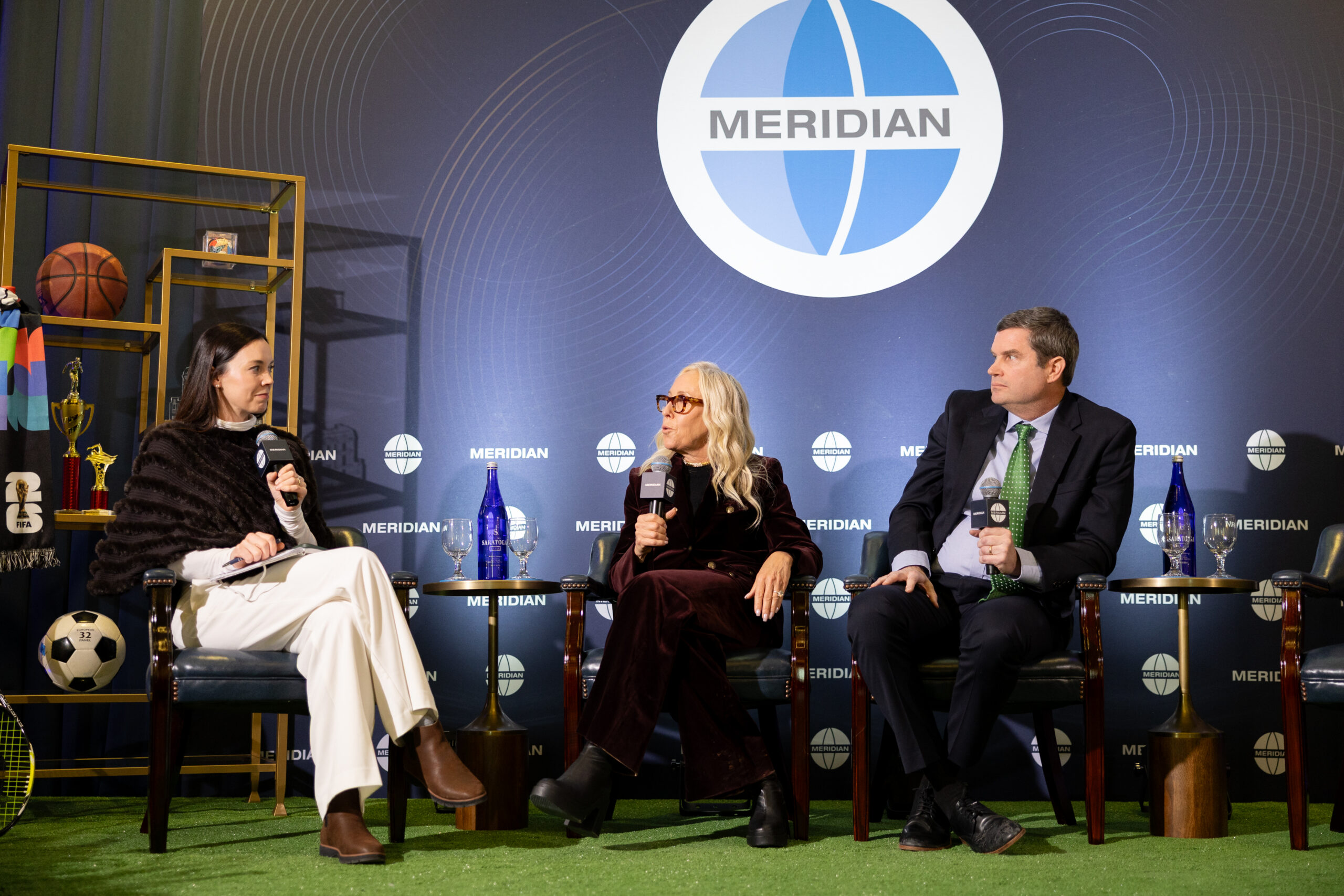
Together, these local investments and global insights point to a growing consensus—sports, when intentionally built into the civic fabric, are powerful engines for resilience, cohesion, and human development, whether in a new stadium in the nation’s capital or in communities navigating division across the world. Against this backdrop, Meridian convened sports leaders for the Sports for Development panel at the inaugural Meridian Sports Diplomacy Forum, bringing together voices from sports, philanthropy, and community development to examine how athletic programs can drive social impact at home and abroad.
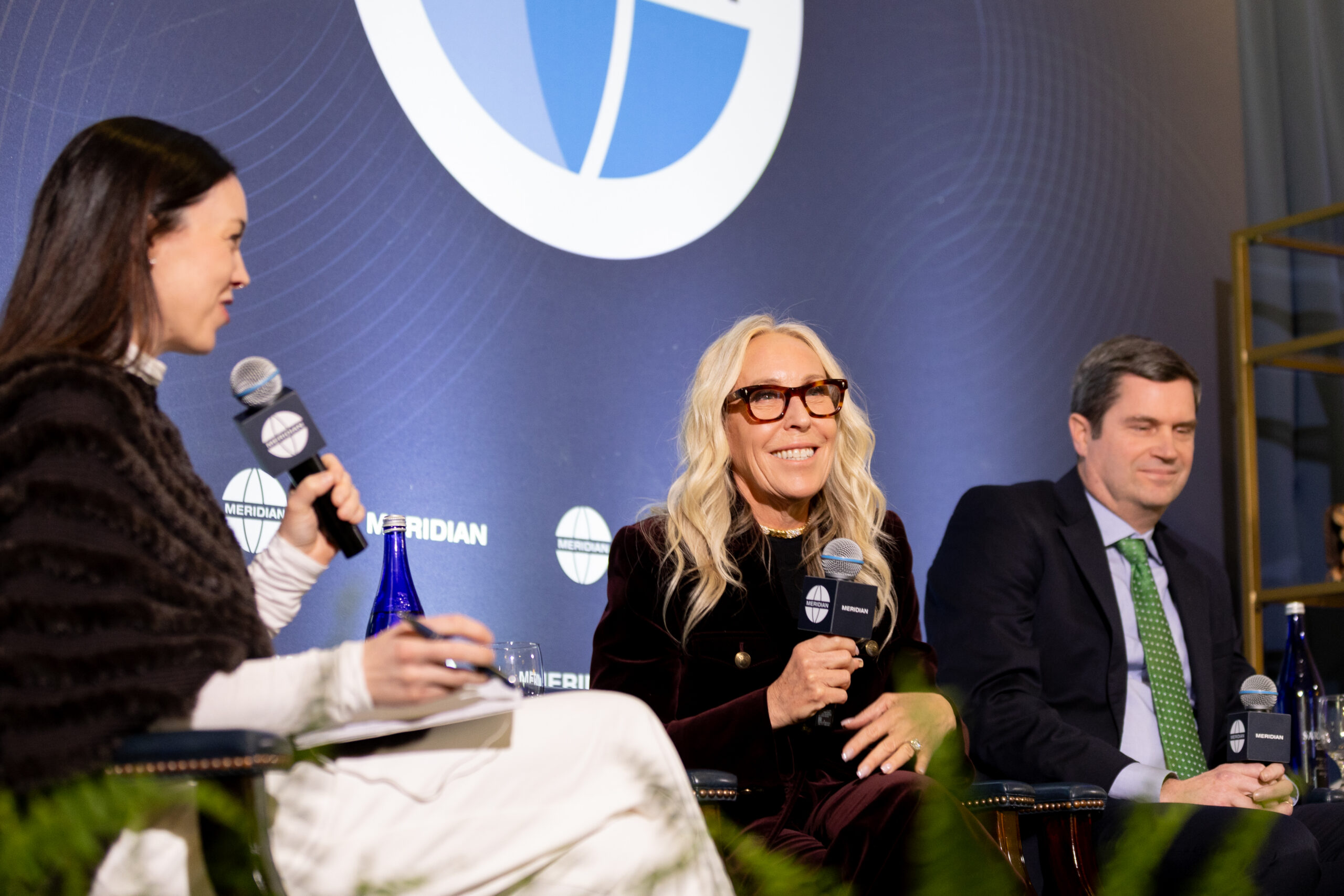
Featured speakers included Marjorie Harris, Co-Founder, Harris Philanthropies, and Brendan Tuohey, Co-Founder and President, PeacePlayers International. The panel was moderated by Eleanor Hawkins, Strategic Communications and Writer, Axios.
Here Were the Top Takeaways from the Program:
1. DC’s new stadium aims to become a must-see destination that fuels youth engagement, economic activity, and elevates Washington, DC’s global profile.
Washington, DC’s new stadium is being designed as far more than a home for major games—it's positioned to become a year‑round global destination that could reshape the city’s event landscape. Marjorie Harris emphasized that the stadium is central to DC’s ambitions to host the Olympics and bid for the 2031 Women’s World Cup, underscoring the pressure to design a facility worthy of the capital’s iconic surroundings. “It sits amongst giants… there are so many wonderful buildings and monuments… so it is a lot of pressure to come up with something that reflects a modernity but also respects what’s here and what came before us.” Beyond architectural considerations, planners aim to make the stadium accessible year-round for residents and tourists, through international sports, entertainment, and community programming.
2. Investing in youth is foundational to the long-term identity, impact, and relevance, of major franchises.
Major sports organizations have both a responsibility and a strategic advantage in putting youth development at the center of their community investment strategies. According to Tuohey, youth programming is not a peripheral benefit but the engine of long‑term community impact, emphasizing that “our mission is to use the sports to bridge divides and develop leaders” and that when young people play and learn together, “they can see the humanity in others… and become the type of leaders that we want and need in this world today.” Harris reinforced this perspective, arguing that stewarding professional teams comes with an obligation to invest deeply in young people, noting, “We have the privilege of being the steward of these sports teams. And with that comes the responsibility to give back to the community.” She added that youth sports build discipline, confidence, and connection during a time when digital distractions increasingly replace in‑person engagement.
3. Philanthropies need to adopt tailored, organization‑specific metrics instead of one‑size‑fits‑all evaluation.
Philanthropies must abandon one-size-fits-all evaluation models and instead adopt tailored, organization-specific metrics that reflect the realities of each program. When Harris’s foundation partners with an organization, they begin by understanding that group’s specific goals before defining customized KPIs, noting, “we try to figure out what they are trying to accomplish,” and that “when we write up our grant agreements, we put in there that we want to have certain KPIs.” These measures vary across programs, whether tracking consistent attendance in after school activities or monitoring longer-term outcomes such as staying in school or attending college. These metrics are not designed to penalize partners, but they work to make grantees feel supported. Size fits all evaluation models and instead adopts tailored, organizations with specific metrics that reflect the realities of each program. School activities or monitoring longer-term outcomes such as staying in school or attending college.
4. Longterm sports engagement can shift behaviors, open barriers, and build trust across historically divided communities.
Long‑term measurement is proving what advocates have long argued—sports programs can spark real behavioral change and breakthrough moments across divided communities. A seven‑year randomized control study tracking PeacePlayer participants in Israel and the West Bank documented measurable shifts in peacebuilding behaviors—showing that young people not only formed cross‑community friendships but were willing to stand up for one another in challenging social environments. Tuohey also pointed to Cyprus, where Peace Players’ programming enabled kids and families to cross the UN patrolled buffer zone “for the first time in 30 years,” marking a historic breakthrough in a region long defined by division.
5. Sport is not a luxury but an essential development tool.
Sport is no longer a luxury or “nice to have,” but an essential tool for human development and social cohesion. Programs like PeacePlayers International are proving through long‑term studies and on‑the‑ground outcomes that sports can transform behavior, build cross‑community relationships and even influence policy in divided societies. Youth sports offer discipline, mentorship, confidence, and real educational pathways, particularly in an era dominated by digital distractions. Sports are critical engines for leadership development, peacebuilding, and community strength, which position athletic programs as core to healthier, safer, and more resilient cities.