

Midterm Results Reshape Washington’s Political Landscape

The 2026 midterm elections have shifted the balance of power in Washington, raising questions about the future of congressional cooperation, domestic priorities, and American leadership abroad.
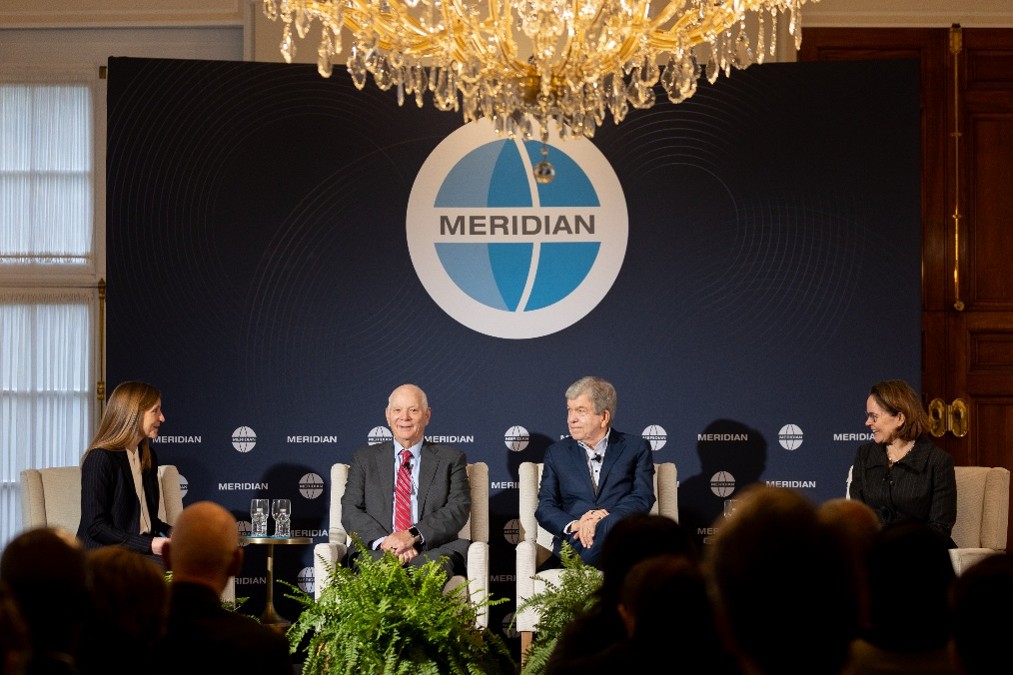
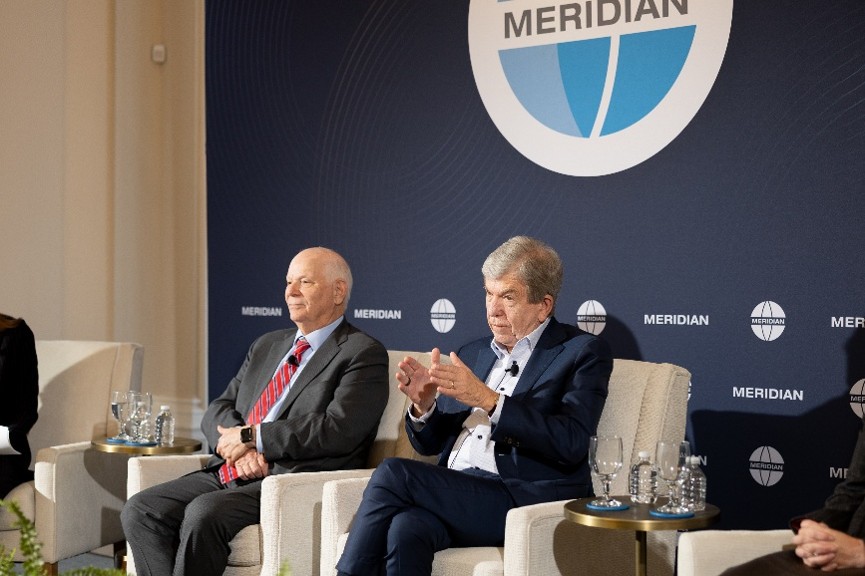
Meridian International Center's United Airlines Center for Diplomatic Engagement brought together former U.S. Senators Ben Cardin and Roy Blunt, and White House reporter for The Wall Street Journal, Annie Linskey, White House reporter for The Wall Street Journal, for a discussion moderated by Jennifer Kaplan of FTI Consulting. The conversation examined the issues driving voter decisions, the challenges facing the next Congress, and the implications for U.S. diplomacy and international engagement.
Here are five key takeaways:
1. Affordability emerged as a defining issue for voters.
Economic concerns played a central role in shaping the midterm results, reflecting voter frustration over the cost of everyday necessities. Senator Cardin highlighted the financial pressures facing American families, particularly grocery prices and health care costs. Senator Blunt noted that midterm elections often reflect dissatisfaction with the party in power, cautioning against interpreting the results as a broad endorsement of the opposing party. Both perspectives underscored the importance of responding to voters' economic priorities, particularly as an Associated Press voter poll highlighted the role of economic concerns in shaping voter decisions.
2. Bipartisan cooperation will be critical to legislative progress.
With Democrats set to control both chambers of Congress, the panel examined the prospects for governing under divided government. Senator Blunt anticipated limited legislative progress over the next two years, particularly as lawmakers navigate competing priorities and government funding decisions. Senator Cardin offered a more optimistic outlook, suggesting that congressional leaders could advance legislation by building bipartisan support around moderate proposals. Their perspectives highlighted the importance of cooperation in addressing national priorities, including affordability and economic concerns.
3. AI policy could see greater action at the state level.
As artificial intelligence becomes a growing concern for voters and policymakers, state governments may take the lead in shaping early regulatory approaches. Senator Blunt pointed to public concerns surrounding data centers, including their effects on local infrastructure, as an example of how AI is influencing political debates. According to the National Conference of State Legislatures, 39 states introduced legislation related to data centers and power in 2026. Senator Cardin emphasized the need for national and international guidelines to support responsible development. Both recognized AI's potential benefits while underscoring the importance of balancing innovation with public concerns.
4. Foreign assistance remains an opportunity for bipartisan engagement.
Despite competing domestic priorities, international engagement continues to have support across party lines. Senator Cardin highlighted his and Senator Blunt's involvement in the bipartisan Commission on the Future of Foreign Assistance, which is developing recommendations to strengthen the effectiveness and accountability of U.S. foreign assistance. While foreign policy may not be an immediate priority for the next Congress, the discussion reinforced the value of international partnerships and continued American engagement abroad.
5. Future electoral success may depend on appealing beyond traditional party bases.
The midterm results could influence how both parties approach candidate selection and voter outreach ahead of the next presidential election. Senator Blunt suggested that the results may encourage parties to prioritize candidates who can compete in general elections rather than focusing primarily on winning their party's nomination. Meanwhile, Senator Cardin emphasized the growing importance of voters who do not identify with either major political party. Journalist Annie Linskey added that a key takeaway from the election was not simply what Democrats won, but where they won, signaling that both parties may place greater emphasis on appealing to voters in the political middle as they look toward the next presidential election. With the Associated Press Voter Poll highlighting the role of moderate voters in key races, their observations suggested that building broader coalitions and responding to voter concerns could shape political strategies heading into 2028.


Project summary
| Midterm Results Reshape Washington’s Political Landscape | November 2026 | |
|---|---|
| Program Areas: | Technology, Innovation, & Space |
