
Meridian Salon: Cryptocurrencies, Digital Assets, and the Future of Economic Statecraft
Emerging financial technologies are reshaping global economic systems, transforming how capital moves, how financial power is utilized, and how the world competes. From stablecoins and tokenized assets to blockchain infrastructure, these innovations are now tied to questions of economic statecraft, national security, and global competitiveness.
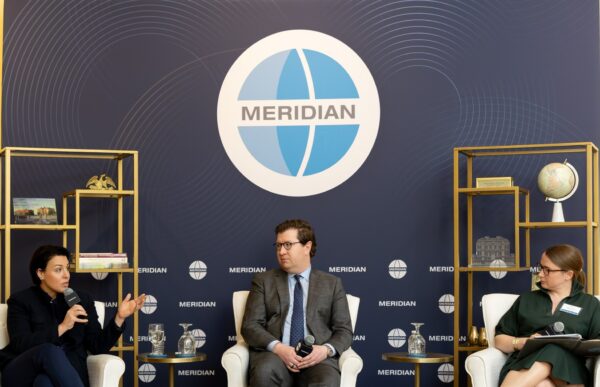
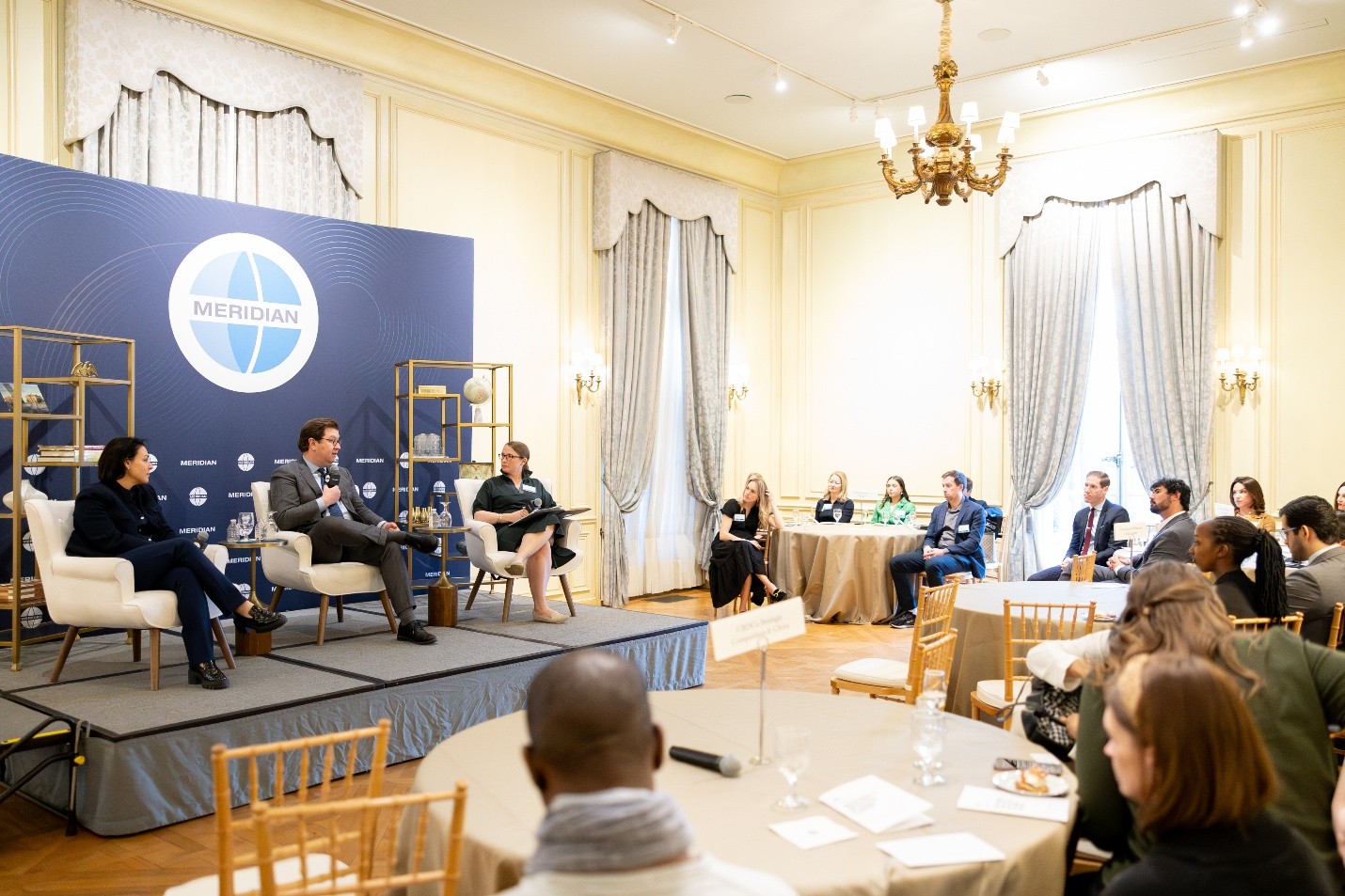
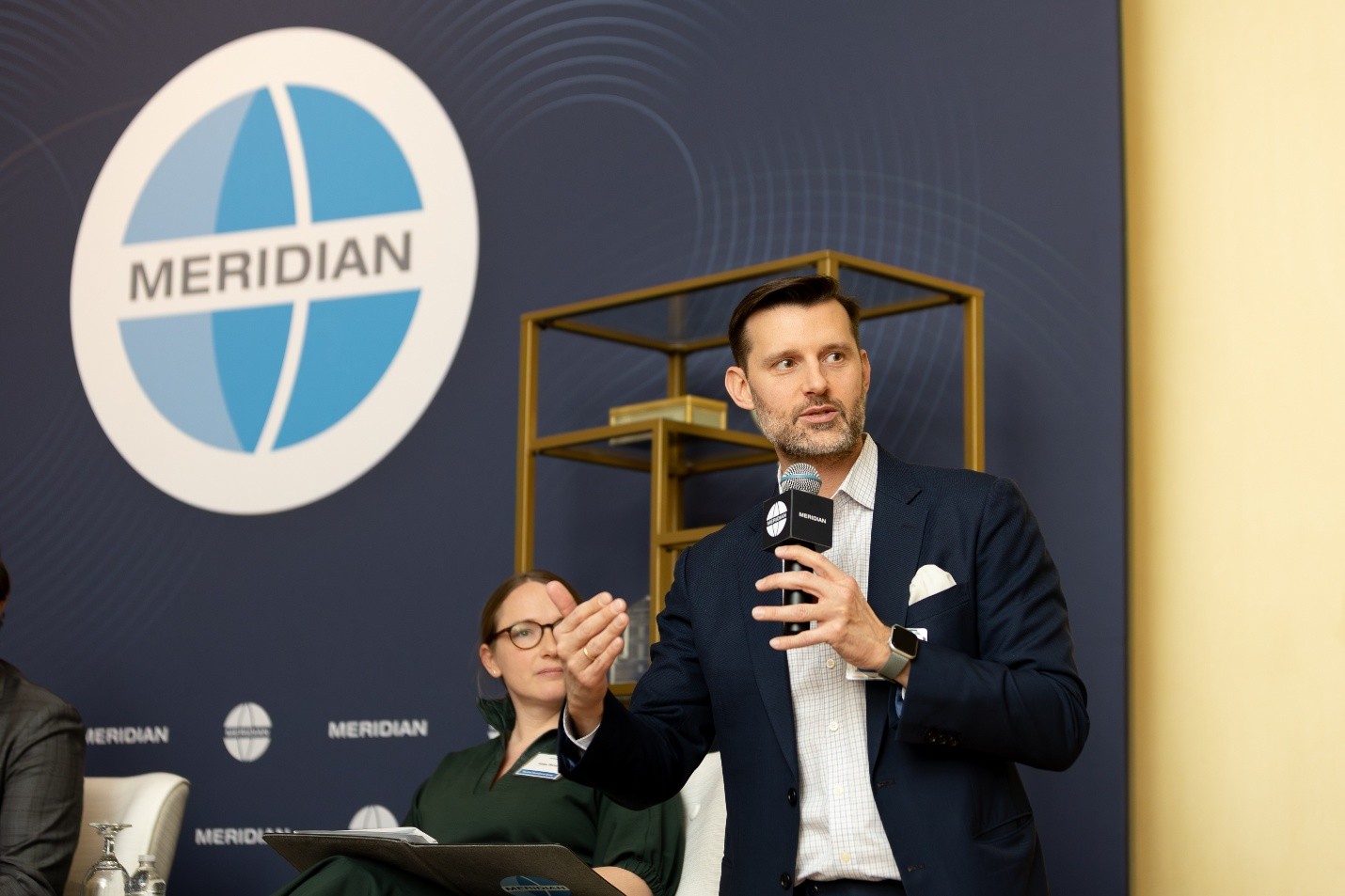
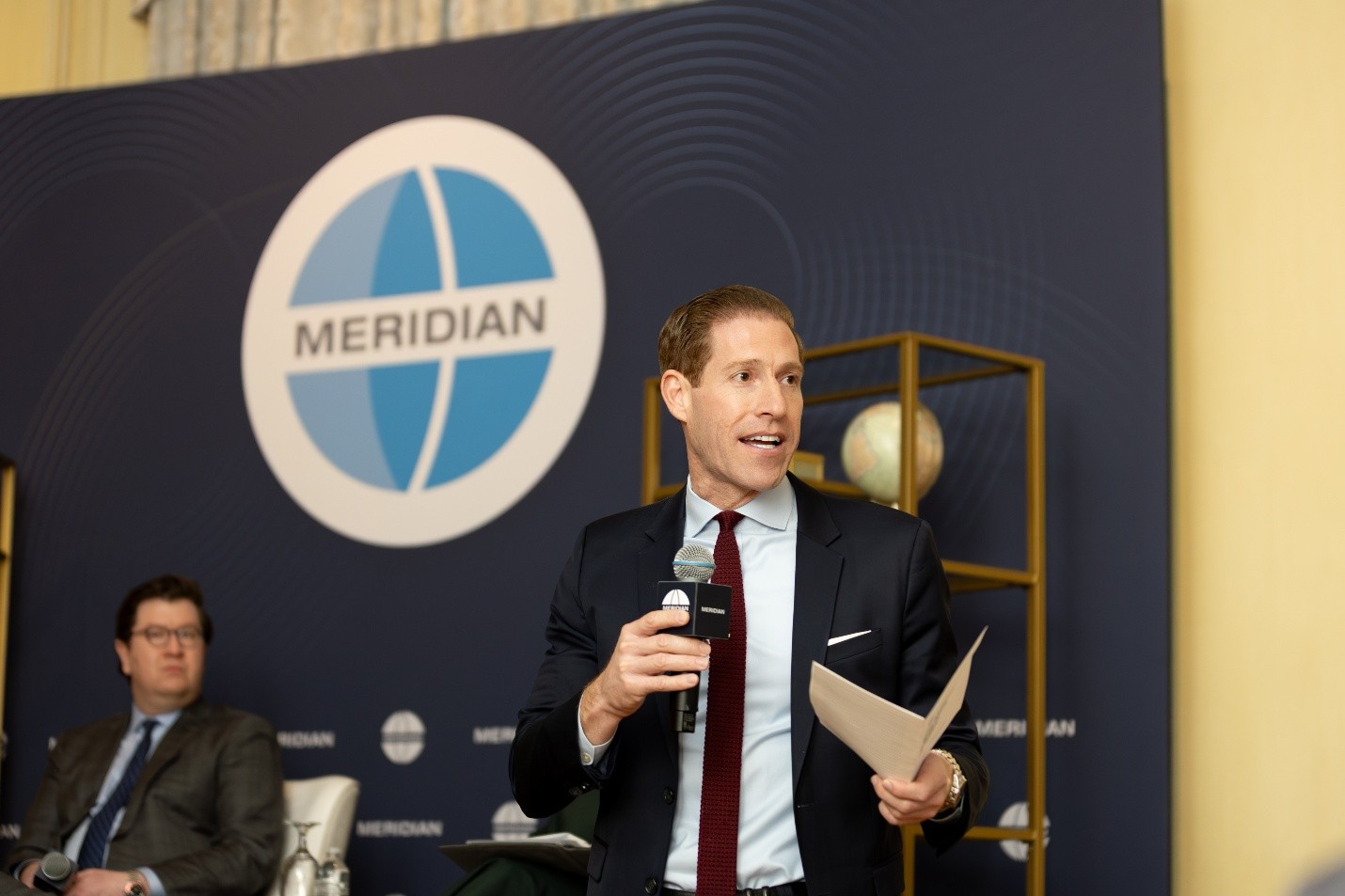
On March 19, 2026, Meridian convened policymakers, regulators, technologists, and industry leaders for a Salon on Cryptocurrencies, Digital Assets, and the Future of Economic Statecraft as part of the Meridian Salon series. Featuring Mr. Tyler Williams, Counselor to the Secretary for Digital Assets and Blockchain Technology Policy at the U.S. Department of the Treasury; and Ms. Lauren Belive, Head of Public Policy and Government at Ripple, moderated by Kellee Wicker, Vice President, Technology, Innovation, and Space, Meridian, the program explored how emerging financial technologies are reshaping global economic systems.
Through an opening panel followed by an interactive roundtable discussion, the conversation showed that digital assets are no longer a niche innovation—they are becoming a core component of global economic strategy, with direct implications for U.S. leadership, security, and competitiveness.
Here Were the Top Takeaways from the Program:
1.Dollar dominance remains a strategic priority—but is no longer guaranteed.
Dollar-backed stablecoins are extending the reach of the U.S. financial system, particularly in emerging markets where they are rapidly becoming a primary mechanism for payments and value storage. This dynamic presents a strategic opportunity, but not a permanent advantage. Without policy frameworks that enable innovation and competitiveness, the United States risks ceding ground to foreign alternatives that could erode the dollar’s central role.
2. National security considerations cut across all crypto policy debates.
Digital assets are now firmly embedded in national security discussions. From sanctions enforcement to competition with foreign central bank digital currencies, especially China’s, the architecture of digital finance is now tied to geopolitical influence. Weak or unclear U.S. approaches could have cascading effects on sanctions power, financial surveillance, and geopolitical influence.
3. Regulatory clarity is improving—but gaps remain.
Momentum is building toward clearer rules of the road, with recent coordination among U.S. regulators and legislative progress offering greater certainty, particularly around stablecoins. However, fragmentation persists. Questions around asset classification, developer liability, and interagency alignment continue to create friction, with real implications for whether innovation remains anchored in the United States or shifts abroad.
4. Crypto’s transparency is both a vulnerability and a strength.
While digital assets have been linked to illicit activity, participants emphasized that blockchain transparency can also serve as a powerful tool for traceability and enforcement. Continued collaboration between industry, regulators, and law enforcement was seen as essential to addressing risks while supporting responsible innovation.
5. The technology’s real-world applications extend far beyond finance.
The impact of digital assets is already extending into sectors such as agriculture, supply chains, and digital identity, where tokenization and faster settlement mechanisms are unlocking efficiency and reducing friction. In many cases, these technologies are compressing timelines from weeks to days, improving capital flows and enabling new forms of economic participation. What began as a financial innovation is quickly becoming foundational infrastructure.







About Meridian Salons
Meridian Salons convene Washington’s globally minded leaders for thoughtful, high-impact gatherings throughout the year. Designed to foster authentic engagement across diplomacy, business, media, policy, and culture, this evolving series brings together a diverse network of professionals who shape—and are shaped by—the global ecosystem. Set within the historic rooms of Meridian House and beneath the canopy of the Linden Grove, each Salon offers a distinct experience: from off-the-record discussions with prominent speakers to relaxed, social settings that spark candid dialogue and lasting connection. Conversations range from fresh takes on today’s headlines to cultural insights that reveal new ways of thinking.
In a city driven by what’s urgent, Meridian Salons make space for what’s essential: trust, dialogue, and relationships that transcend politics, borders, and sectors. Rooted in Meridian’s long-standing tradition of convening leaders, this series cultivates fresh perspectives, meaningful exchanges, and a vibrant community shaping the future—together.
Project summary
| Meridian Salon: Cryptocurrencies, Digital Assets, and the Future of Economic Statecraft | April 2027 | |
|---|---|
| Program Areas: | Corporate Diplomacy |
