

Lauder Institute Bespoke Corporate Diplomacy Training
As global markets become more fragmented, regulated, and politically contested, the line between business and diplomacy is disappearing.
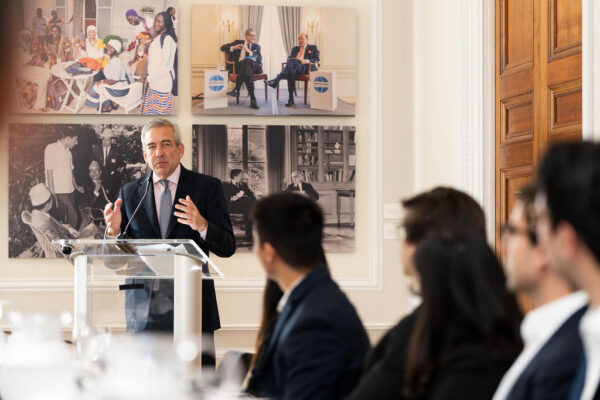
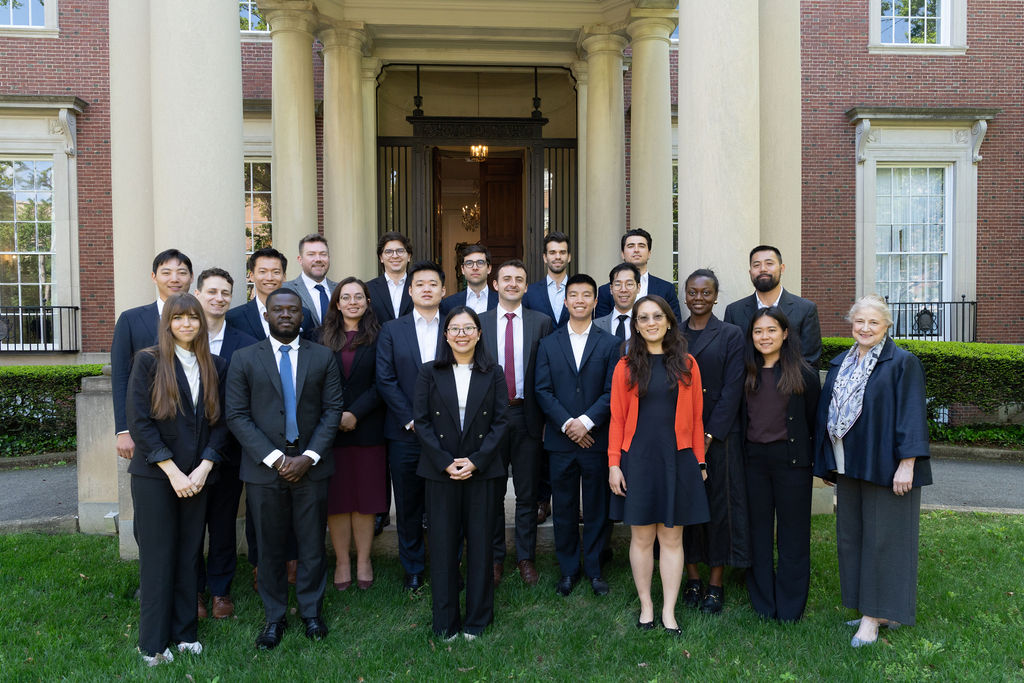
At Meridian International Center, graduate students from the Lauder Institute at the Wharton School of the University of Pennsylvania participated in a bespoke Corporate Diplomacy Training for Future Global leaders. Drawing on perspectives from leaders who have operated at the highest levels of government and global business—including The Honorable David Bohigian, The Honorable Francisco Sánchez, and The Honorable Manisha Singh—the program explored how companies navigate power, policy, and risk in practice.
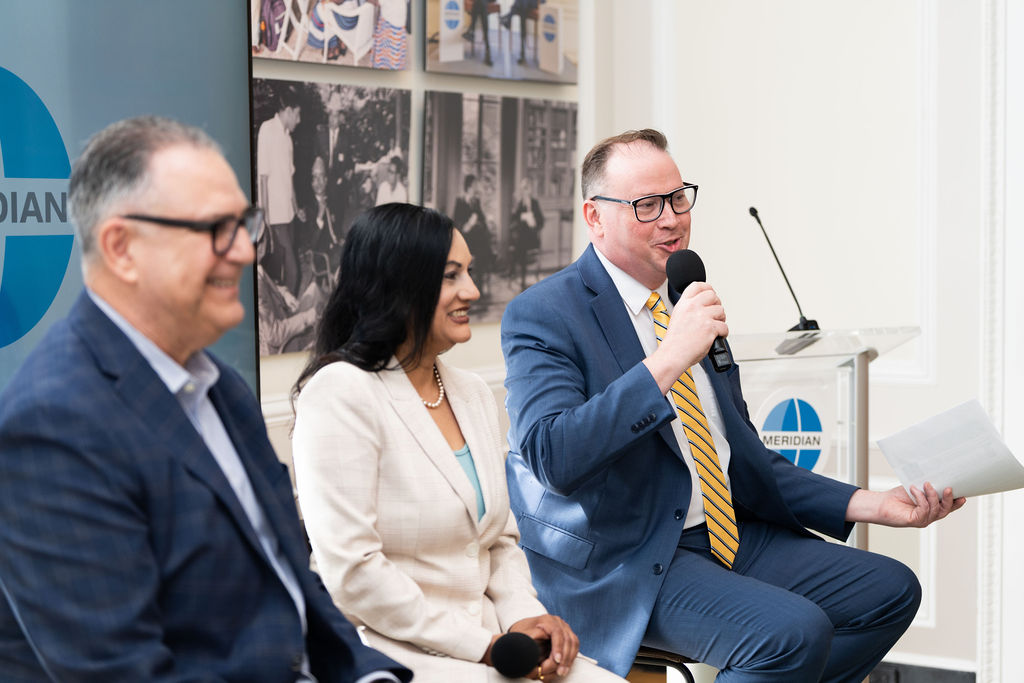
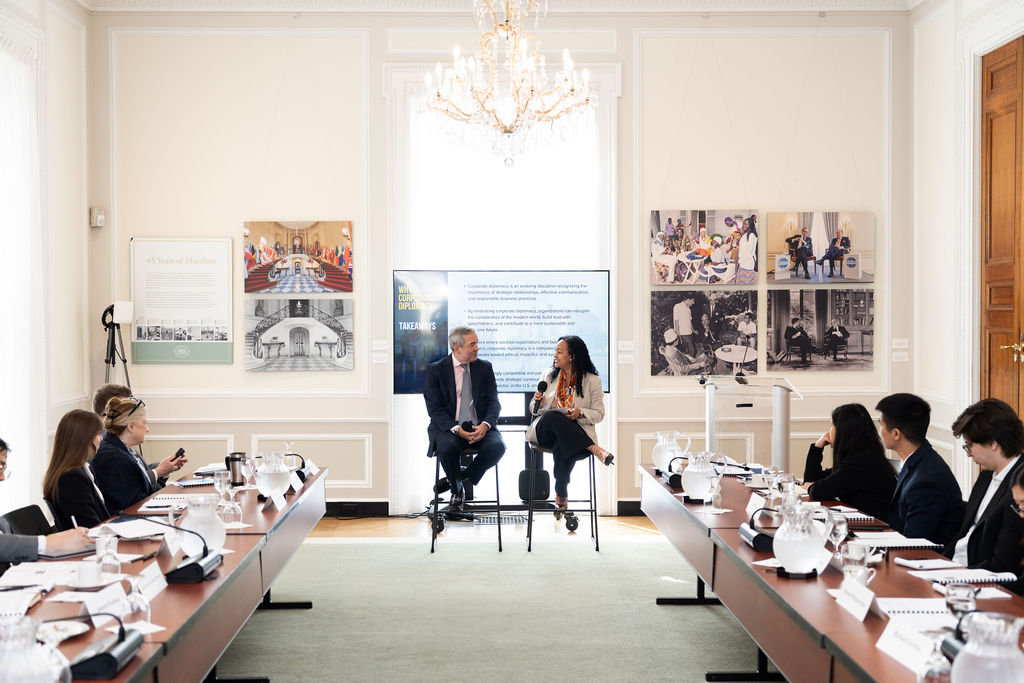
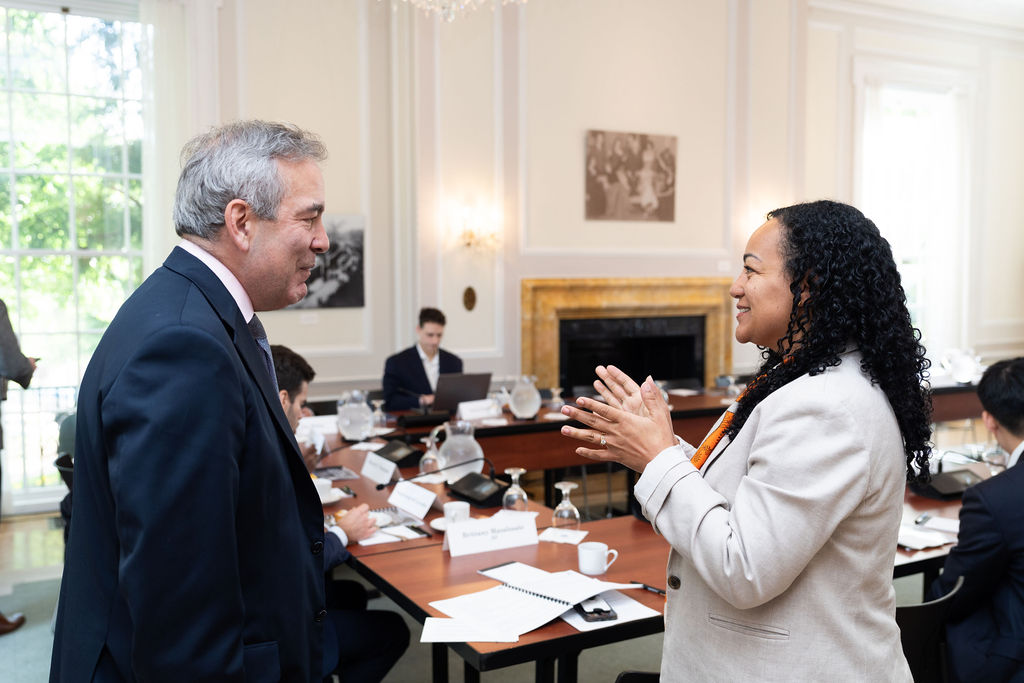
The program opened with welcome remarks from Brandon Soloski, Senior Director of the Center for Corporate Diplomacy at Meridian International Center, and Dr. Regina Abrami, Faculty Director of Strategic Initiatives and the Global Program at the Lauder Institute, setting the stage for a discussion on how corporate diplomacy operates in practice. Students then explored the foundations of the field through a session led by David Bohigian, CEO of Meridian International Center, and Brittany Masalosalo, followed by a fireside conversation featuring Francisco Sánchez, former U.S. Under Secretary of Commerce for International Trade, and Manisha Singh, former Assistant Secretary of State for Economic and Business Affairs, moderated by Jim Golsen, Vice President of the Center for Corporate Diplomacy at Meridian International Center, which examined how companies engage governments and navigate complex policy environments.
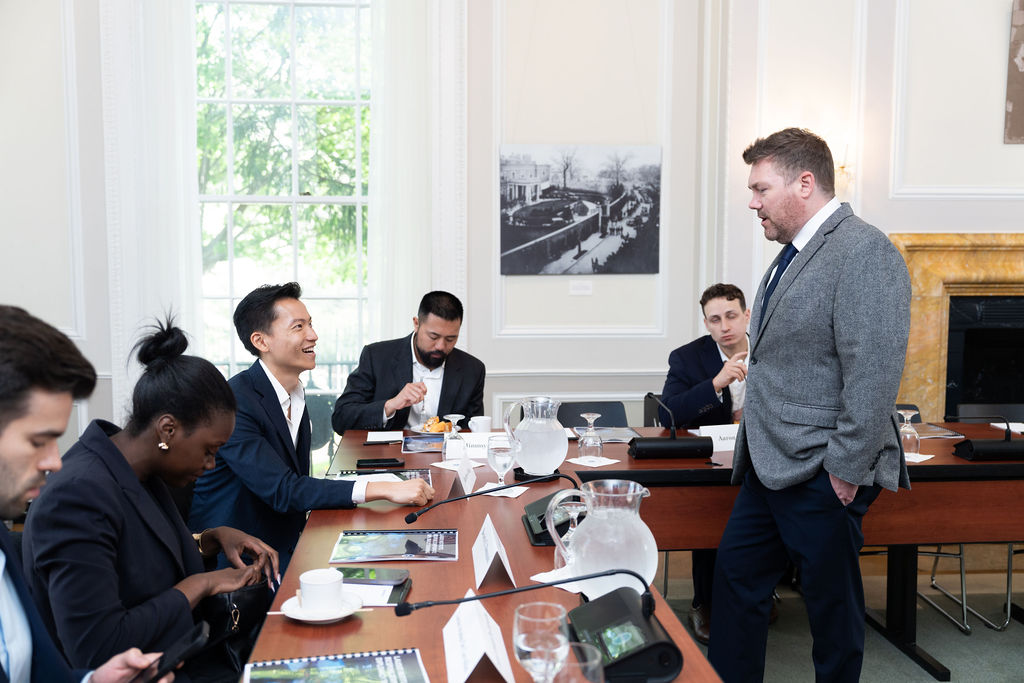
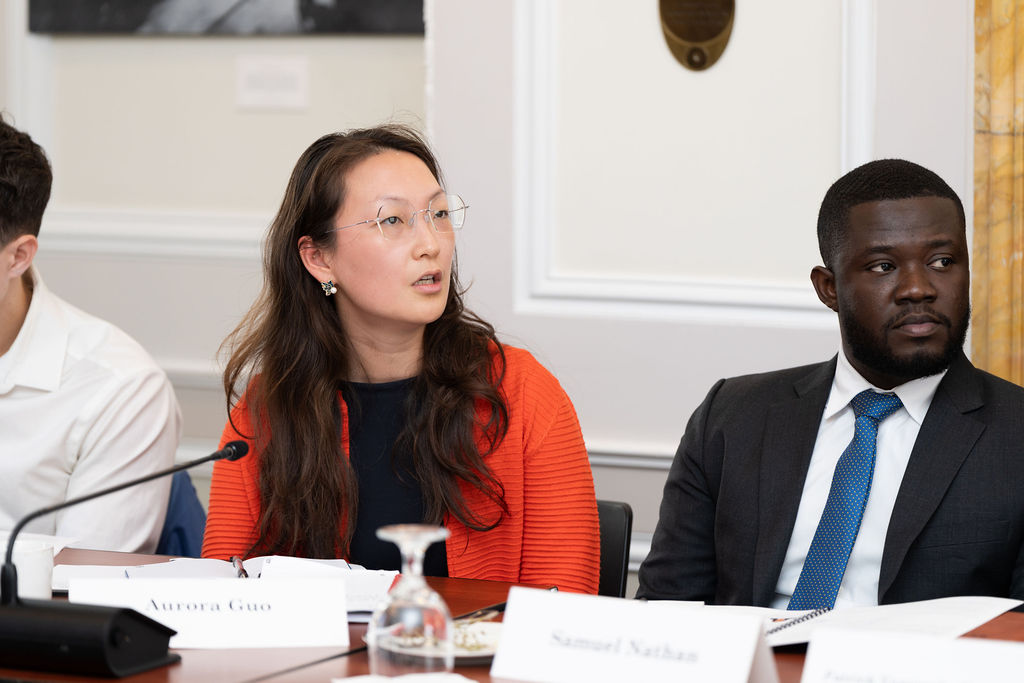
The session concluded with a global stakeholder mapping and simulation exercise led by Shaila Manyam, Chief Operating Officer and Executive Director of the World Federation of Direct Selling Associations, where participants applied these concepts in real time before closing remarks from Soloski and Abrami.
The takeaway was clear: success today is not just about what companies produce. It is about how effectively they navigate power, policy, and public trust across borders.
Here were the top takeaways from the program:
1. Companies are no longer just market actors, but geopolitical ones.
Corporate diplomacy is not a new concept, but its importance has accelerated as globalization, technology, and capital flows have deepened interdependence. Businesses now operate within political systems, regulatory environments, and public opinion landscapes that directly shape their success.
As discussed, companies now influence and are influenced by international relations. This reflects a broader shift also highlighted by the World Economic Forum’s recent report Growth in the New Economy: Towards a Blueprint, which underscores how economic growth is now shaped by the interaction between business, government, and geostrategic competition.
The implication is structural: businesses are not external to diplomacy. They are embedded within it.
2. Four forces define the operating environment, and most companies aren’t structured for them.
Navigating today’s landscape requires understanding four interconnected forces:
- Politics drive policy, and policy drives regulation
- Markets drive capital allocation and investment decisions
- Culture and public sentiment shape where companies are accepted and trusted
- Geopolitical risk can alter business environments overnight
While these forces shape outcomes, many organizations remain internally structured around product, performance, or regional silos rather than integrated geopolitical awareness. This gap is significant, as few companies are fully equipped to manage these dynamics in practice.
Corporate diplomacy is not a function. It is an operating model.
3. Trust is the ultimate enabler of global business.
While capital is often framed as the primary driver of expansion, the discussion emphasized a deeper reality: capital follows trust.
Companies assess markets not only on return potential, but on:
- Strength of rule of law
- Regulatory transparency
- Corruption risk
- Talent availability
These factors determine whether firms can operate effectively and sustainably.
This aligns with global investment trends tracked by World Bank, which consistently highlight governance and institutional strength as key drivers of foreign direct investment. In practice, corporate diplomacy is about building the relationships and credibility that make markets accessible in the first place.
4. Governments and companies are interdependent, but not always aligned.
The relationship between the public and private sectors is deeply interconnected, but it is not frictionless.
Governments balance a wider set of priorities, including jobs, labor standards, environmental concerns, and national security, while companies often approach engagement through a narrower commercial lens. Misalignment is inevitable.
The most effective organizations recognize this and adapt by understanding government incentives, not just their own, engaging early rather than reactively, and building relationships across agencies rather than relying on a single entry point.
This dynamic is shaping how companies operate across markets, as business decisions and government priorities become more closely intertwined. The U.S. State Department's Commercial Diplomacy Enterprise, for example, brings together agencies across the federal government to coordinate efforts that support American businesses abroad, illustrating how engagement now requires navigating a broad and interconnected policy landscape.
5. Corporate diplomacy is a learned skill—and the next generation must practice it in real time.
The program culminated in a live stakeholder mapping and simulation exercise, where participants navigated competing interests, political constraints, and crisis dynamics.
This reflects an important shift: corporate diplomacy cannot be learned through theory alone. It requires:
- Scenario-based decision-making
- Cross-sector perspective
- The ability to operate under uncertainty
As global challenges, from AI governance to supply chain security, become more complex, the demand for leaders who can operate at the intersection of business and geopolitics will only grow.
Programs like this are not just educational. They are building the next generation of decision-makers equipped for a world where diplomacy extends far beyond government.
Project summary
| Lauder Institute Bespoke Corporate Diplomacy Training | |
|---|---|
| Program Areas: | Corporate Diplomacy |
