

Insights@Meridian: Chairman John Jovanovic on Export Finance and U.S. Economic Statecraft

As geopolitical competition intensifies and global supply chains become central to economic security, export finance is emerging as a critical tool for advancing U.S. competitiveness and technological leadership. Increasingly, it functions not simply as a tool for supporting trade, but as an instrument of U.S. economic statecraft, shaping how American technology, infrastructure, and industry compete globally.
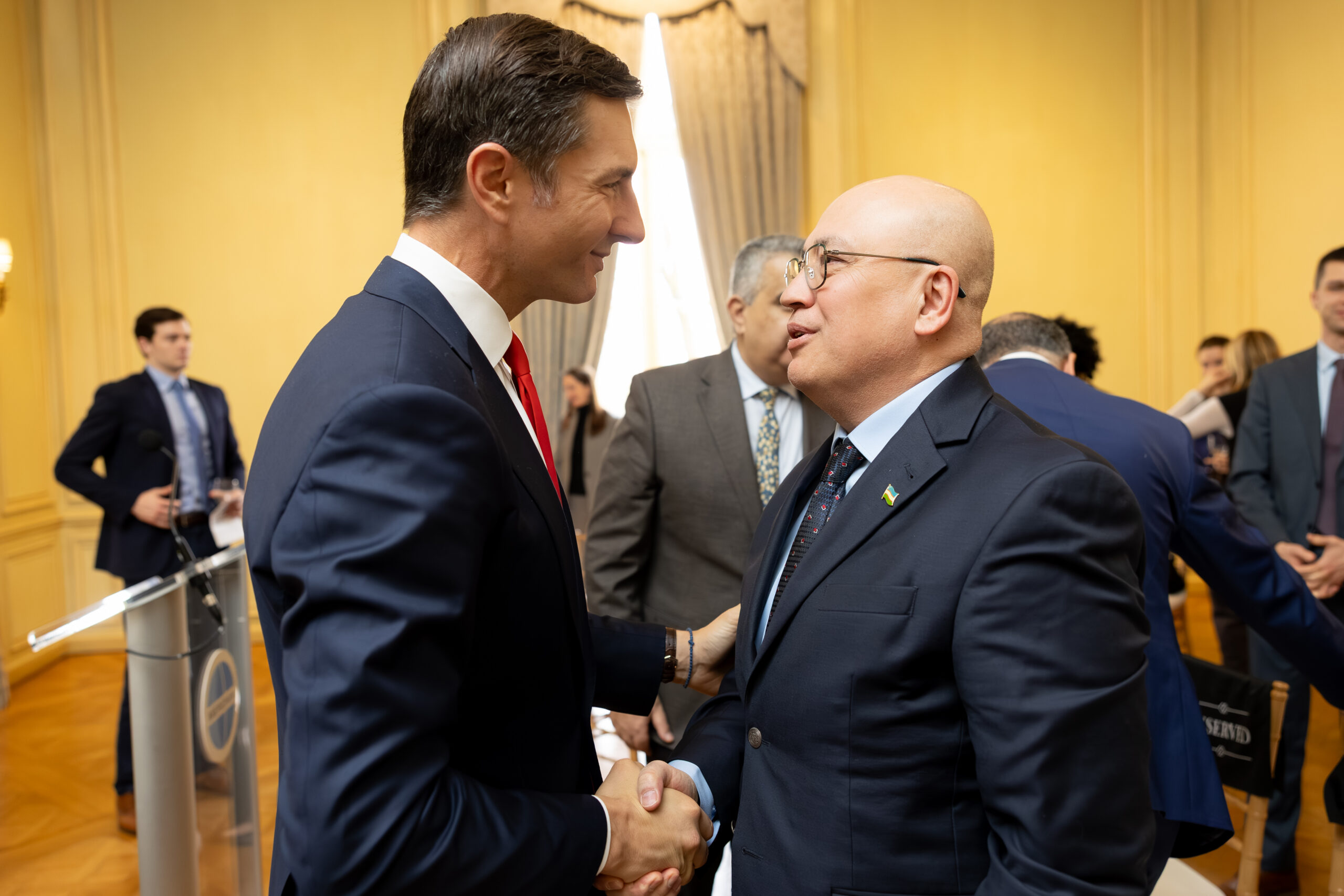
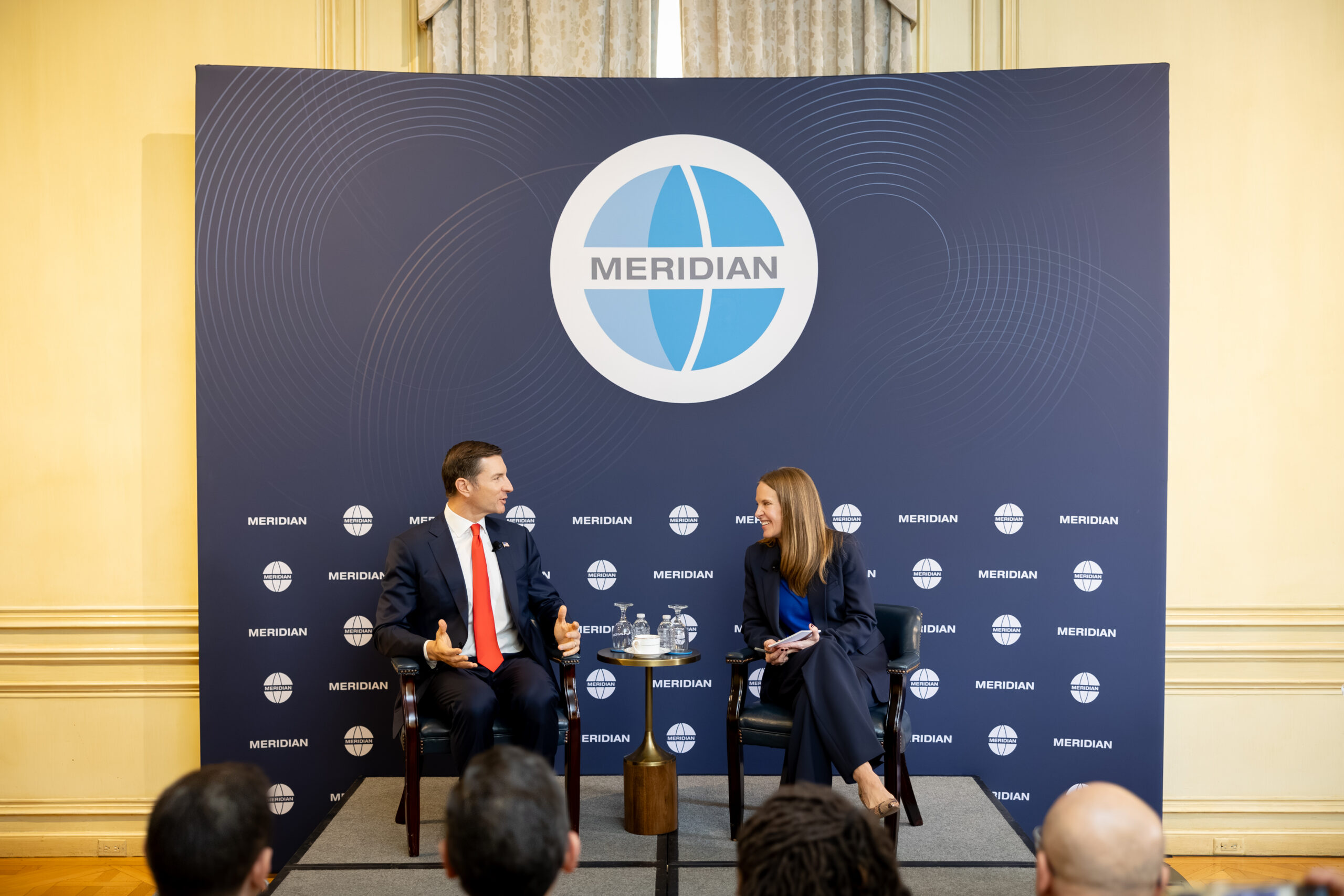
During a March 5 Insights@Meridian conversation, The Honorable John Jovanovic, Chairman of the U.S. Export-Import Bank (EXIM), explored how export credit is being deployed to strengthen U.S. competitiveness and reinforce partnerships with trusted economies. In discussion with trade policy expert Kate Kalutkiewicz, and introduced by Nicole Isaac of Cisco, the conversation examined how export finance fits within a broader strategy to secure supply chains, support advanced industries, and sustain American leadership in key technologies.
This Insights@Meridian brought together ambassadors and executives from Meridian’s Corporate Council to consider how financial tools, strategic investment, and international cooperation can reinforce U.S. manufacturing, energy leadership, and innovation amid rising global competition.
Here Were the Top Takeaways from the Program:
1. Export Finance Is a Strategic Tool of Economic Security
Export finance has become an increasingly important lever of national economic security. By enabling American companies to compete for major international projects, EXIM helps ensure that U.S. technology, infrastructure, and industrial capabilities remain embedded in global markets while strengthening partnerships with allied economies. In a period of heightened geopolitical competition, export credit increasingly shapes who builds critical infrastructure and whose standards influence emerging sectors. “Export finance can help to unlock investment while also supporting us in innovation, jobs, and trusted technology abroad,” explained Isaac.
2. Reindustrialization and Job Creation Remain Central to the Mission
At its core, EXIM’s mandate still ties global competitiveness to domestic economic strength. “The bank was designed and built to help American companies manufacturing and operating in America win all around the world and have that translate into more jobs here at home,” said Jovanovic. Export financing allows American manufacturers to secure overseas contracts that translate into jobs, industrial capacity, and supply chain activity in the United States. The strategy reflects a broader policy priority of reinforcing domestic production while competing globally.
3. Securing Critical Minerals Is Central to Supply Chain Resilience
Reliable access to critical minerals is emerging as a central pillar of U.S. economic and national security strategy. Initiatives such as Project Vault, launched in February 2026 to establish a U.S. Strategic Critical Minerals Reserve through a $10 billion public-private partnership supported by EXIM financing, aim to protect American manufacturers from supply disruptions while strengthening domestic production and processing capacity.
The initiative complements programs such as the Supply Chain Resiliency Initiative, which expand production capacity and diversify sourcing across allied economies. Together, these tools reflect a broader strategy to reduce dependence on unreliable markets while reinforcing industrial capacity across trusted supply networks. As Chairman Jovanovic noted, “We’ve become over-reliant on markets that aren't free, they aren't fair, they aren't functioning.”
4. Emerging Technologies Are Reshaping Export Strategy
Advanced industries such as artificial intelligence, next-generation energy systems, and advanced mobility are becoming central to U.S. export competitiveness. Financing mechanisms that help deploy these technologies internationally can accelerate adoption while reinforcing trusted technology ecosystems aligned with U.S. standards and innovation.
5. Public–Private Collaboration Is Key to Global Competitiveness
Large-scale infrastructure and technology projects increasingly rely on coordinated investment from government, private capital, and international partners. Initiatives such as Make More in America combine American technology, private capital, and export financing to support large-scale infrastructure and digital development projects around the world. Export finance helps bridge these actors, enabling complex projects that expand economic opportunity while reinforcing strategic alliances.
The discussion underscored how export finance is evolving beyond a traditional trade support mechanism into a broader tool of economic statecraft—one that links U.S. industrial strength, technological leadership, and international partnerships in an increasingly competitive global economy.




Project summary
| Insights@Meridian: Chairman John Jovanovic on Export Finance and U.S. Economic Statecraft | March 2027 | |
|---|---|
| Program Areas: | Diplomatic Engagement |
