

Global Business Briefing with His Excellency Esteban Moctezuma, Ambassador of Mexico to the U.S.

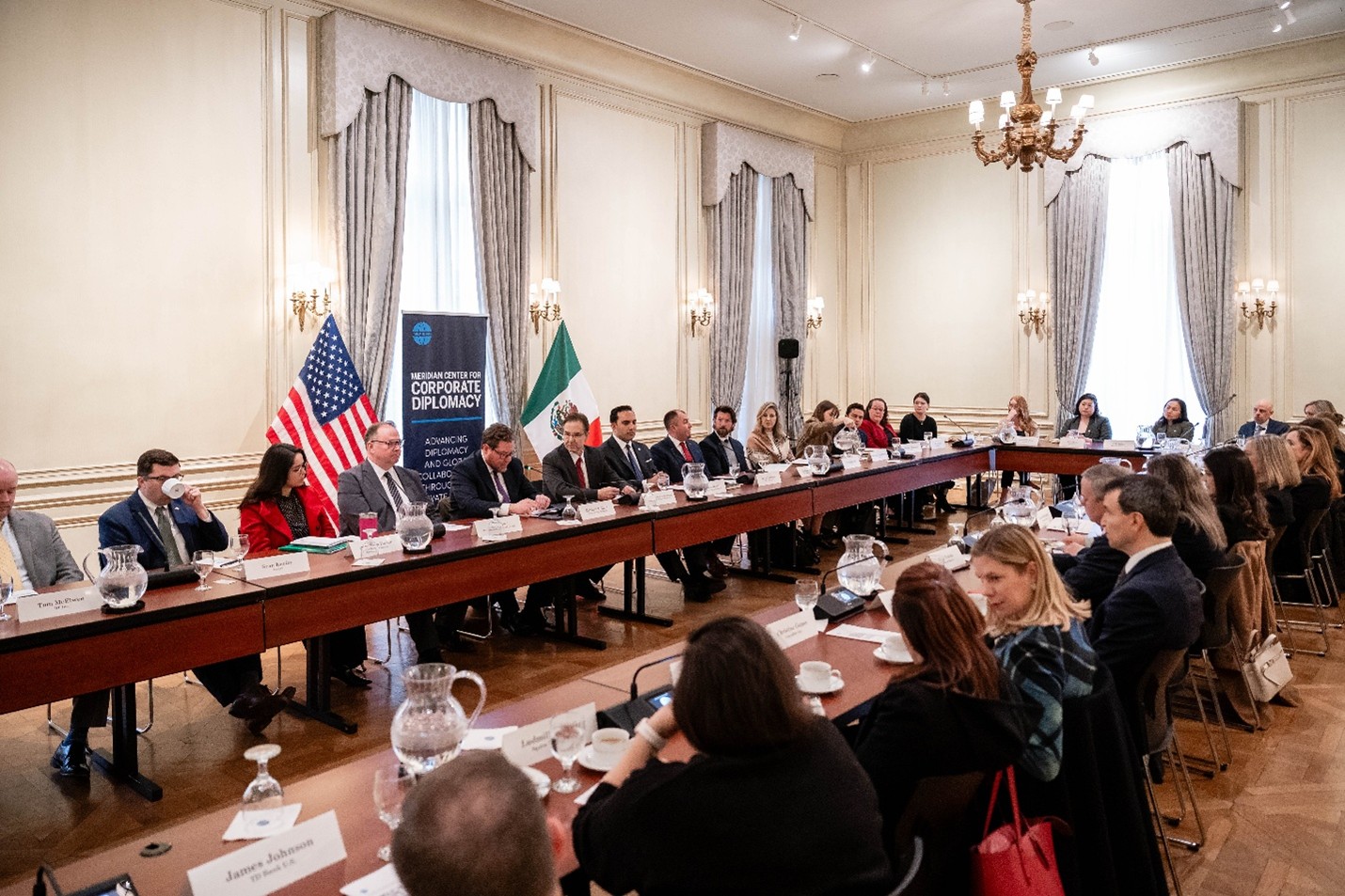
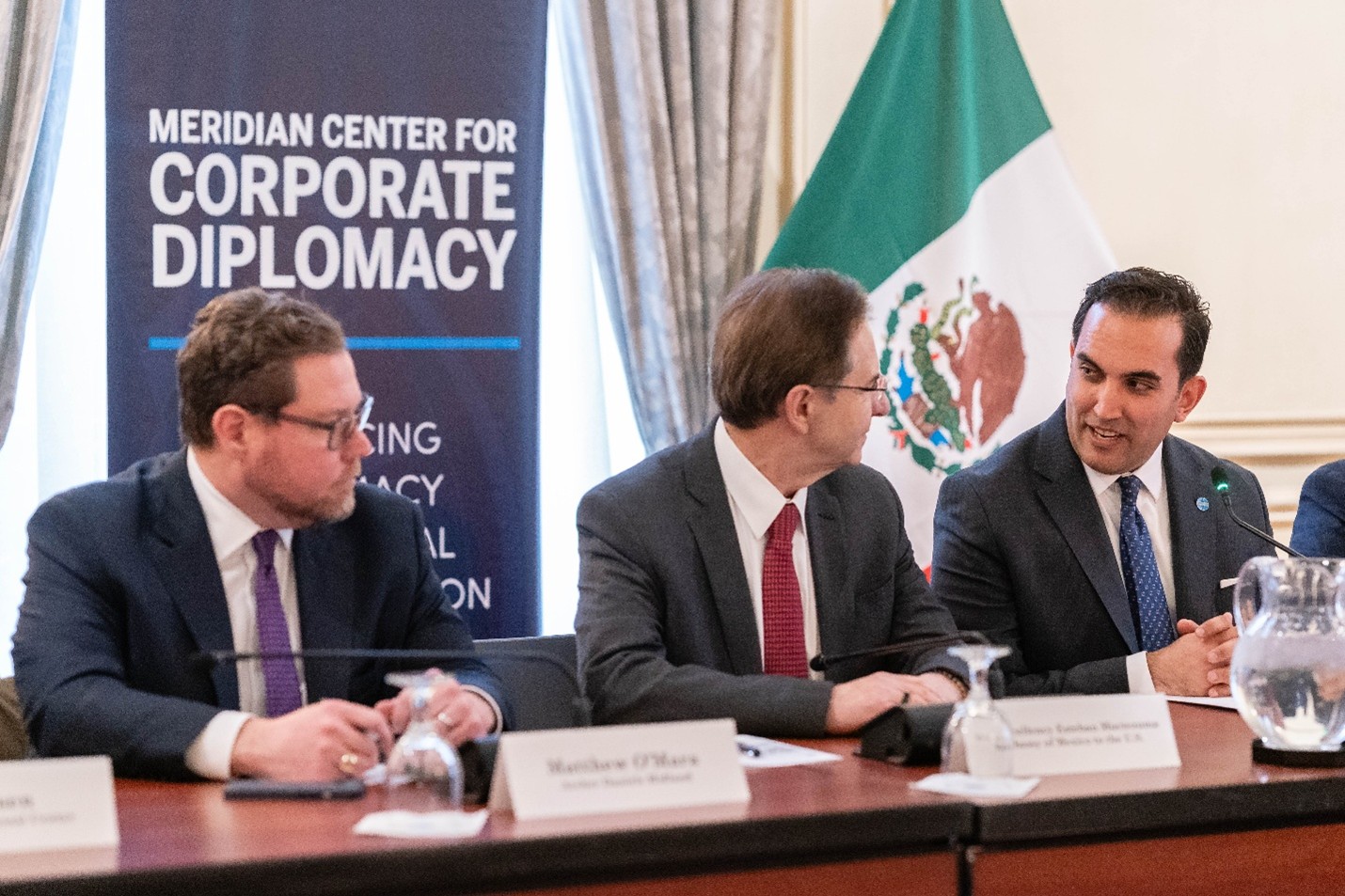
On March 3, 2026, Meridian convened corporate leaders for a Global Business Briefing with Esteban Moctezuma, Ambassador of Mexico to the United States, to discuss the upcoming six-year joint assessment of the United States–Mexico–Canada Agreement (USMCA), required under Article 34.7 and scheduled for 2026. Moderated by Puru Trivedi, Senior Vice President, Meridian International Center, the conversation examined Mexico’s perspective on the review process and the broader trajectory of North American competitiveness.
Here Were the Top Takeaways from the Program:
1. USMCA as the cornerstone of North American competitiveness
USMCA continues to serve as the backbone of regional economic integration, strengthening supply chains and providing long-term certainty for businesses operating across North America. The agreement reflects a model of co-production, in which goods are jointly developed and manufactured across borders rather than traded through a traditional buyer–seller relationship. The 2026 review represents an important opportunity to reinforce North America’s collective competitiveness.
2. Deep economic interdependence drives shared growth
U.S.–Mexico trade has reached historic levels, with Mexico now serving as the United States’ largest trading partner. Integrated supply chains mean that a significant share of U.S. content is embedded in Mexican exports, highlighting the depth of economic interdependence between the two economies. Cross-border production supports jobs, investment, and growth in both countries, underscoring the mutual benefits of continued regional integration.
3. Security and institutional stability as economic priorities
Recent security operations in Mexico and coordinated efforts between federal and state authorities reflect an emphasis on strengthening stability and reinforcing the rule of law. These efforts are closely tied to maintaining a reliable environment for investment and business activity. Continued cooperation with U.S. counterparts on security and migration issues also contributes to broader regional stability and investor confidence.
4. A pragmatic approach to the 2026 review process
With the July 1 notification deadline approaching, preparations are underway for the formal review process, alongside ongoing engagement with U.S. trade and commerce officials. The review serves as a key moment to assess the agreement’s economic impact and consider how it can continue to support North American competitiveness amid evolving global pressures.
5. Trilateral continuity and free trade principles
Maintaining USMCA as a trilateral agreement among the United States, Mexico, and Canada remains central to sustaining regional integration. While deep economic ties can occasionally generate policy tensions, the agreement provides a rules-based framework for managing differences constructively. Preserving open trade and the structural advantages of North American cooperation remains a shared priority.






Project summary
| Global Business Briefing with His Excellency Esteban Moctezuma, Ambassador of Mexico to the U.S. | March 2027 | |
|---|---|
| Program Areas: | Corporate Diplomacy |
