

Global Business Briefing with European Parliament Transport and Tourism Committee
Geopolitical tensions, economic uncertainty, and supply chain vulnerabilities are reshaping global markets. As companies explore ways to navigate this instability, transportation and tourism are being viewed as strategic sectors central to competitiveness, resilience, and international cooperation.
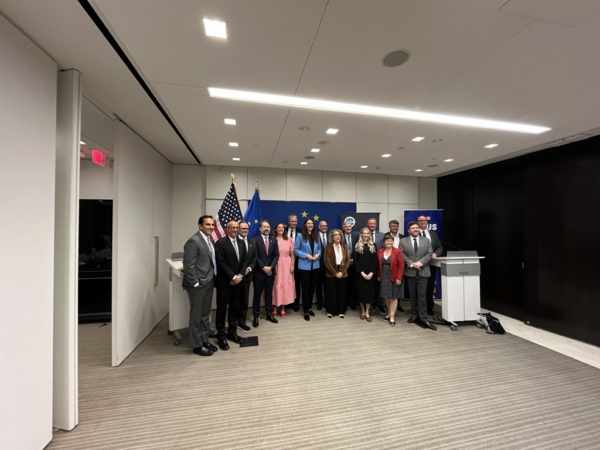
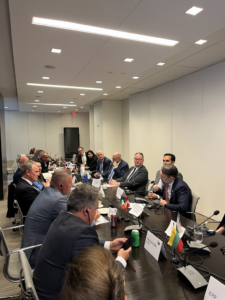
During a Global Business Briefing hosted at the European Parliament Liaison Office in Washington, DC, members of the European Parliament’s Committee on Transportation and Tourism joined U.S. private sector leaders for an off-the-record discussion on the future of transatlantic collaboration across aviation, autonomous vehicles, tourism, infrastructure modernization, energy resilience, and digital regulation. The conversation highlighted growing pressure on both Europe and the United States to balance innovation, security, consumer costs, and economic growth while preserving strong transatlantic ties.
Here are the top takeaways:
1. Europe Is Prioritizing Competitiveness and Industrial Growth
European policymakers are reframing economic strategy around competitiveness, industrial resilience, and simplified regulation as businesses across the continent face rising operational costs and slower growth. Broader momentum within the European Union is pushing efforts to balance sustainability goals with economic performance, particularly as the EU seeks to remain competitive in manufacturing, technology, and infrastructure investment. The shift comes as European leaders continue to debate how to reduce regulatory burdens while preserving foundational principles such as consumer protections.
2. Transportation Infrastructure Is Emerging as a Core National Security Priority
Airports, ports, logistics networks, and energy systems are being treated as strategic infrastructure critical to both economic resilience and national security. Russia’s invasion of Ukraine, supply chain disruptions, and rising geopolitical tensions have accelerated conversations around “dual-use” infrastructure capable of supporting both civilian and military operations. Industry leaders also emphasized that investments in aviation modernization, resilient energy systems, and upgraded air traffic management could reduce congestion, lower costs, strengthen supply chains, and improve long-term economic competitiveness.
3. AI and Autonomous Vehicles Are Outpacing Existing Regulatory Frameworks
The rapid development of autonomous vehicles, artificial intelligence, and advanced transportation technologies is exposing the limits of traditional regulatory systems built around static testing and predictable operating environments. As vehicles and transportation systems become more adaptive and software-driven, regulators on both sides of the Atlantic are being forced to reconsider how safety, certification, and liability standards are designed. Closer U.S.-EU coordination on technical standards and emerging technologies could help reduce costs, accelerate deployment, and strengthen Western competitiveness in the global technology race.
4. Europe’s Tourism Economy Is Colliding with Housing Affordability Pressures
Short-term rentals and record tourism levels are intensifying housing shortages and infrastructure strain across major European cities, forcing policymakers to confront growing tensions between economic growth and affordability. Cities including Barcelona, Amsterdam, and Venice have introduced or debated new restrictions on short-term rentals as local residents face rising rents and shrinking housing supply. Tourism dispersal, targeted regulation, and data-driven policymaking can reduce over-tourism without undermining travel demand or local economic activity.
5. Tourism and Travel Remain One of the Strongest Foundations of the Transatlantic Relationship
Even as political tensions, tariff disputes, and geopolitical disagreements continue to test the transatlantic relationship, travel demand between Europe and the United States remains high. Tourism and transportation continue to serve as powerful tools for economic cooperation, cultural exchange, and long-term diplomatic engagement, reinforcing people-to-people connections even during periods of political uncertainty. The discussion reinforced a broader reality facing both Europe and the United States: dialogue, private sector coordination, and direct engagement remain essential to navigating shared economic and geopolitical challenges.

Project summary
| Global Business Briefing with European Parliament Transport and Tourism Committee | May 2027 | |
|---|---|
| Program Areas: | Corporate Diplomacy |
