

Global Business Briefing on U.S. Strategy in the Western Hemisphere with Michael Jensen
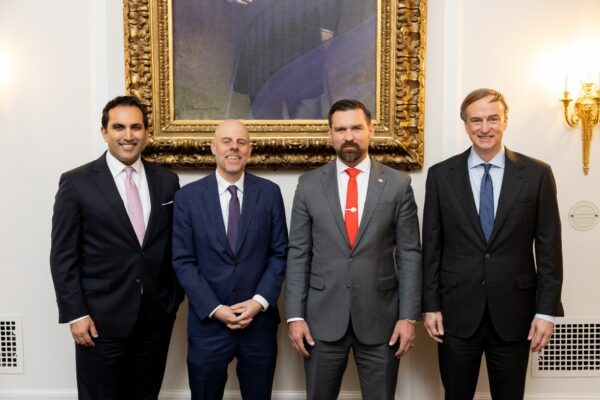
At the final Global Business Briefing of the season, Meridian’s Corporate Council hosted Michael Jensen of the National Security Council on December 10, 2025, for a candid discussion on the Trump administration’s strategic priorities in the Western Hemisphere.
Against a backdrop of shifting geopolitical influence, intensifying competition with China, and evolving regulatory environments, Jensen outlined the administration’s approach to strengthening long-term trade relationships, supporting U.S. businesses, and countering predatory practices across the region. The conversation touched on military posture, investment incentives, digital services taxes, and the future of agreements such as the USMCA.
Here Were the Top Takeaways from the Program:
1. Countering Predatory Practices Is Central to U.S. Strategy
The administration’s heightened pushback against predatory business practices, particularly those tied to China, is shaping a more assertive approach to protecting fair competition in the Western Hemisphere. U.S. companies remain the region’s preferred partners due to their long-term investment posture and mutually beneficial agreements. Strengthening regulatory frameworks, improving transparency, and reshaping incentive structures are all part of a coordinated effort to ensure U.S. industry remains competitive and welcome across Latin America.
2. Strengthening Trade Relationships Requires Regulatory Reform and Investment Incentives
A recurring theme was the need to simplify and accelerate approval processes for U.S. companies operating in the region. Ongoing interagency work is focused on removing bureaucratic bottlenecks and improving predictability for private-sector investments in sectors such as energy, mining, critical minerals, and advanced manufacturing. Long-term, stable trade relationships, especially with partners like Brazil, Mexico, and Colombia, remain a top priority for sustaining U.S. influence and market access.
3. Digital Services Taxes and Trade Barriers Are Key Flashpoints
Industry leaders raised concerns about digital services taxes in Canada, Brazil, and other markets, which disproportionately impact streaming services and digital platforms. Jensen acknowledged these challenges and reaffirmed the administration’s willingness to pursue measures, including Section 301 investigations, if such taxes remain discriminatory. The goal is to reduce retaliation-based measures (“revenge taxes”) and encourage trading partners to align their tax and regulatory systems with fair and open digital commerce.
4. Security and Economic Policy Are Increasingly Intertwined
The administration’s security partnerships with Mexico and Colombia remain robust, with continued cooperation on training, law enforcement, and counter-cartel operations. While new governments in the region may bring different approaches, long-standing collaboration on migration, narcotics, and regional stability remains vital. Military posture and intelligence coordination are being leveraged alongside economic tools to strengthen the U.S. position and address destabilizing actors, including transnational criminal networks.
5. Competition for Critical Minerals and Industrial Capacity Is Intensifying
As the U.S. works to rebuild its industrial base and reduce dependence on foreign suppliers, the Western Hemisphere is becoming increasingly central to securing critical minerals and reinforcing supply chains in automotive and advanced manufacturing. Companies seeking U.S. government support are expected to show how their investments directly benefit the American workforce and strengthen domestic resilience. Growing opportunities in Bolivia, Ecuador, and other emerging markets are front-of-mind as the administration evaluates new trade and investment pathways.









Project summary
| Global Business Briefing on U.S. Strategy in the Western Hemisphere with Michael Jensen | November 2025 | |
|---|---|
| Program Areas: | Corporate Diplomacy |
