

Game-Changing Capital Fueling Women’s Sports

From arenas to boardrooms, the rapid rise of women’s sports is reshaping how capital, culture, and diplomacy intersect on a global stage. This panel, convened by Meridian International Center, examined how investors are emerging as modern-day diplomats—deploying capital not only to scale teams, leagues, and media platforms, but to bridge cultures, expand markets, and advance inclusive economic growth worldwide.
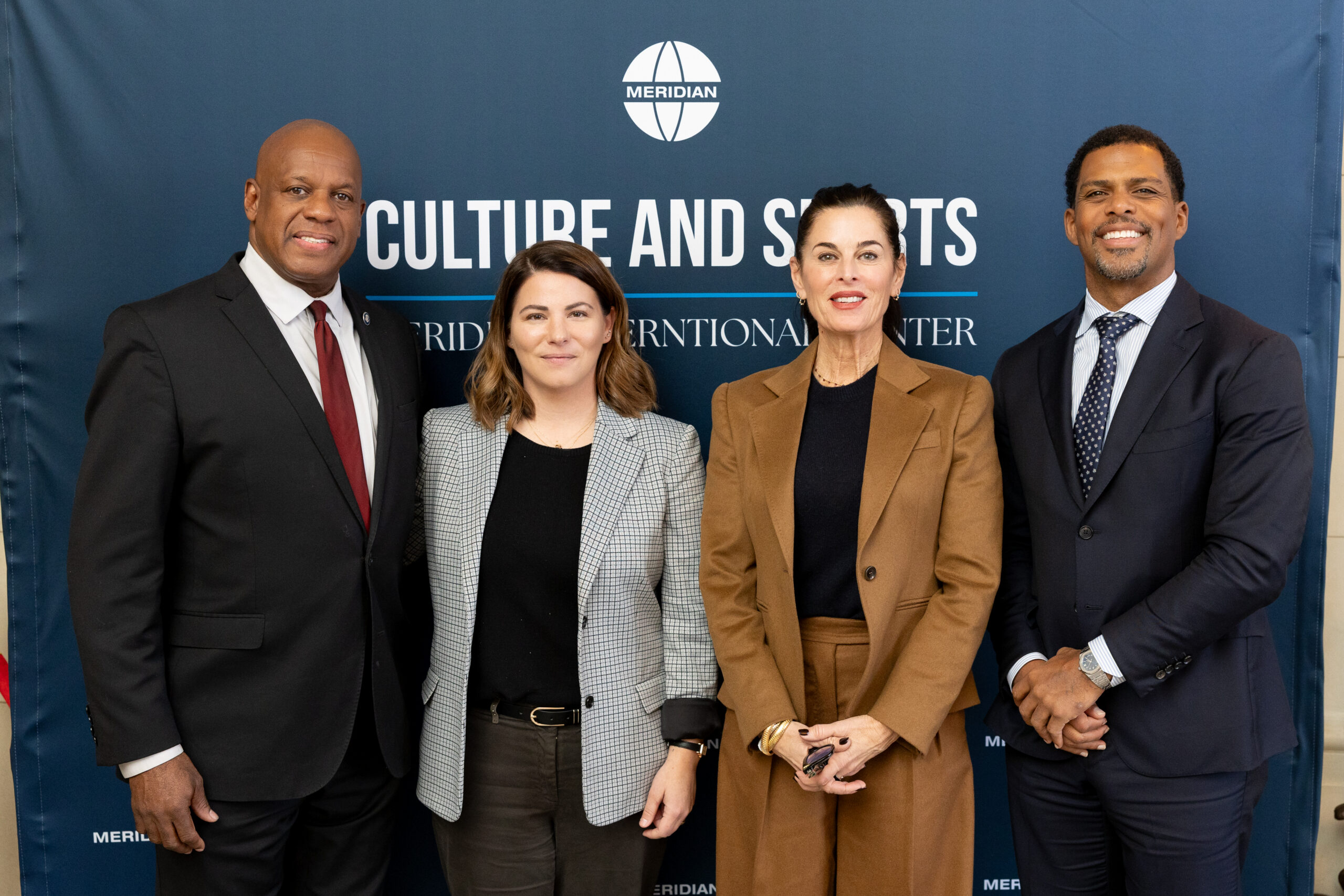
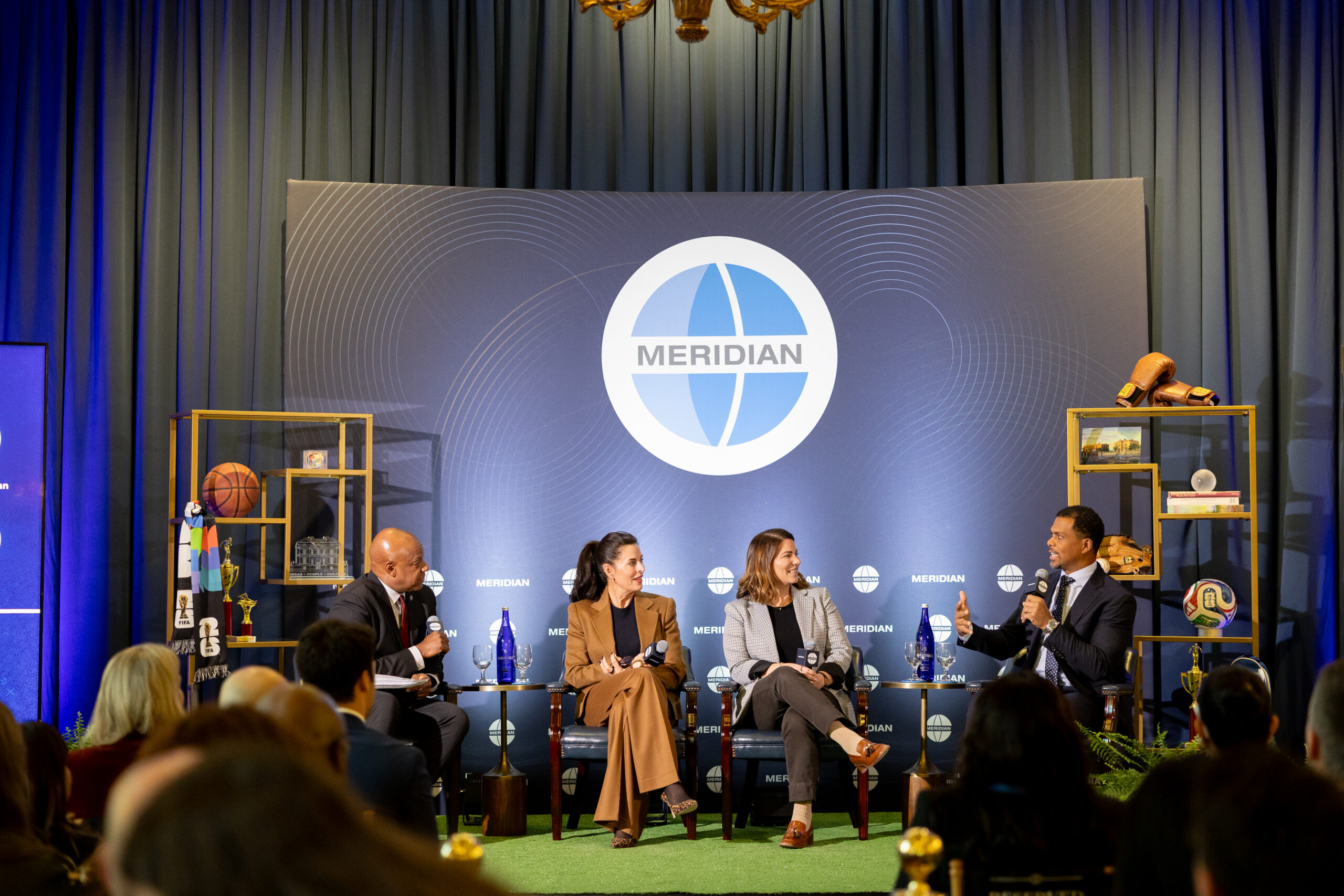
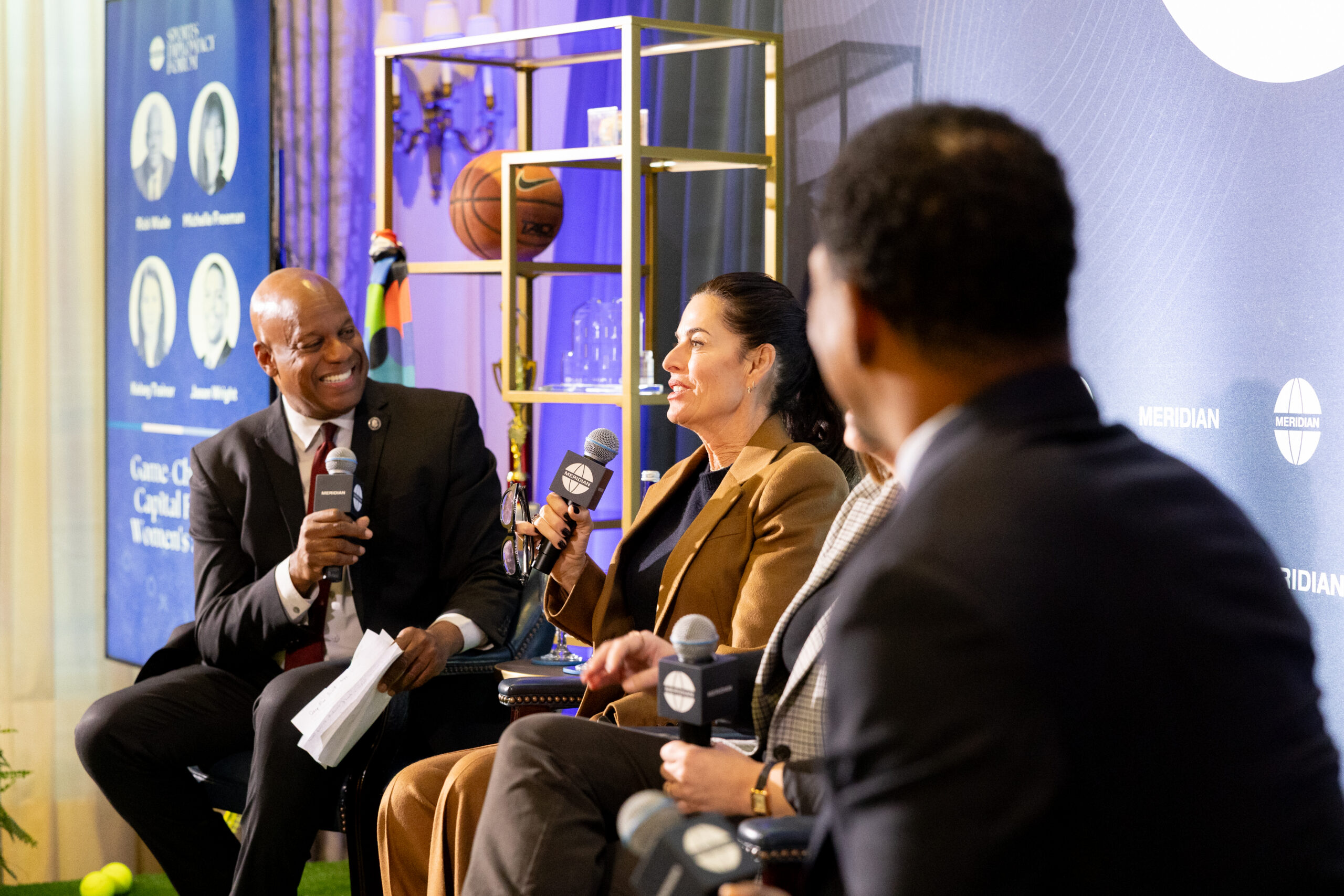
As investment accelerates across women’s sports, leaders including Michelle Freeman, Minority Owner, Monumental Sports & Entertainment, Kelsey Trainor, Advisor, Athena Global Advisors, and Jason Wright, Managing Partner and Head of Investments, Project Level, spoke on a panel, moderated by Rick Wade, Senior Vice President of Strategic Alliances and Outreach, U.S. Chamber of Commerce, and explored strategies to close the investment gap, build sustainable business models, and elevate women’s professional sports as global vehicles for equity, opportunity, and cultural diplomacy.
Here Were the Top Takeaways from the Program:
1. Catalytic Talent Met a Market Ready to Scale
The surge in women’s sports is often attributed to breakout stars, but panelists emphasized that today’s momentum reflects more than individual talent. As Jason Wright noted, athletes like Caitlin Clark arrived at a moment when professionalized sports ecosystems, digital-native audiences, and decades of family investment in girls’ youth sports converged. This alignment transformed attention into sustainable commercial momentum, signaling that women’s sports have moved from episodic visibility to long-term market viability.
2. The Data Now Proves What the Market Long Ignored
For years, women’s sports faced chronic underinvestment not due to lack of interest, but lack of data. Panelists underscored that without reliable analytics on viewership, fan behavior, and sponsorship performance, capital remained cautious. That gap is now closing. As new data reveal strong audiences and clear valuation mismatches, investors and sponsors are recalibrating—recognizing that women’s sports represent a market inefficiency poised for correction. As Michelle Freeman pointed out, “we [investors] are here. And that’s something to be celebrated”.
3. Women’s Sports Is a Full Entertainment Economy
Panelists challenged the assumption that success in women’s sports hinges solely on performance on the field, with Kelsey Trainor arguing instead that women’s sports are not just sports—it is sports and entertainment. Speakers framed the category as a full entertainment economy encompassing venues, merchandise, media, storytelling, and fan experience. From Monumental Sports & Entertainment’s integrated ownership model to sold-out Professional Women’s Hockey League games, the discussion highlighted how surrounding commerce, authentic narratives, and access beyond game play are collectively driving long-term value and sustained audience engagement.
4. Why Women’s Sports Is Unlocking a New Audience
One of the panel’s clearest insights challenged a common assumption that growth in women’s sports is siphoning audiences from men’s leagues. Rather than drawing fans away from men’s leagues, panelists emphasized that women’s sports are expanding the overall sports marketplace by attracting an entirely new audience. Jason Wright pointed to data showing only a 10–15 percent overlap between women’s and men’s season-ticket holders–evidence that women’s leagues are engaging younger, digital-native, and family-oriented fans who were previously underserved by the sports economy. This demographic expansion explains why sponsors and media partners are entering women’s sports not as a substitute investment, but as a pathway to reach new consumers and unlock net-new growth.
5. Why ‘Pink It and Shrink It’ Undermines Growth
Panelists cautioned that outdated approaches to women’s sports, often summarized as “pink it and shrink it,” continue to limit commercial potential. Rather than repackaging men’s products or narratives, speakers emphasized authentic storytelling that reflects the full complexity of women athletes and fans. Examples from Wrexham, UCLA, and the Professional Women’s Hockey League illustrate how showing lived experience, not preaching, builds emotional connection, expands audiences, and strengthens sponsorship value.


Project summary
| Game-Changing Capital Fueling Women’s Sports | January 2026 | |
|---|---|
| Program Areas: | Sports and Culture |
