

Financing Sovereignty: Capital Strategies for Global Space Partnership

As sovereign space ambitions expand, governments face a growing dilemma: how to secure the investment needed to build critical space infrastructure while retaining strategic control. With private capital playing an increasingly central role in the space economy, the question is no longer whether to partner, but how to do so without compromising national interests.
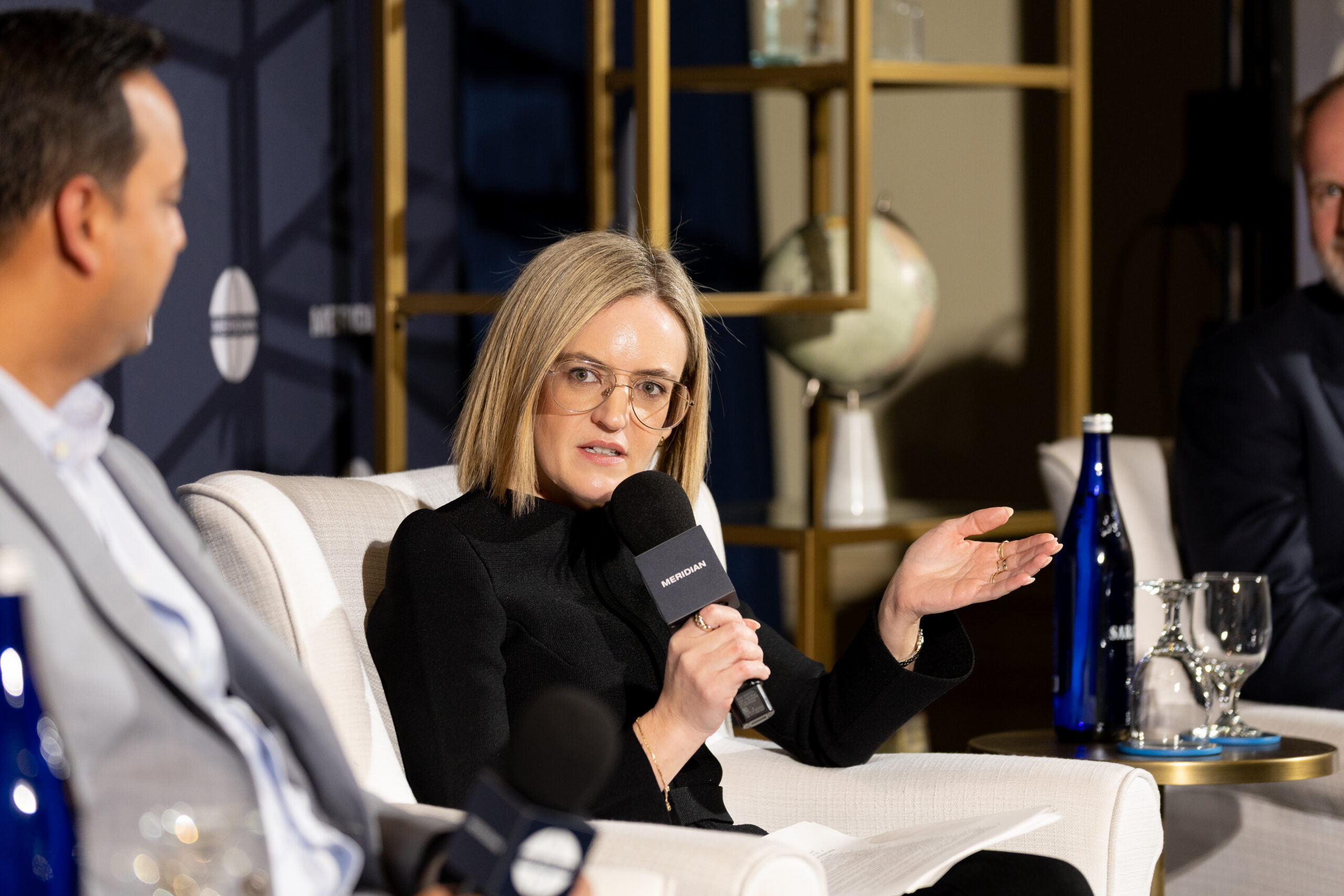
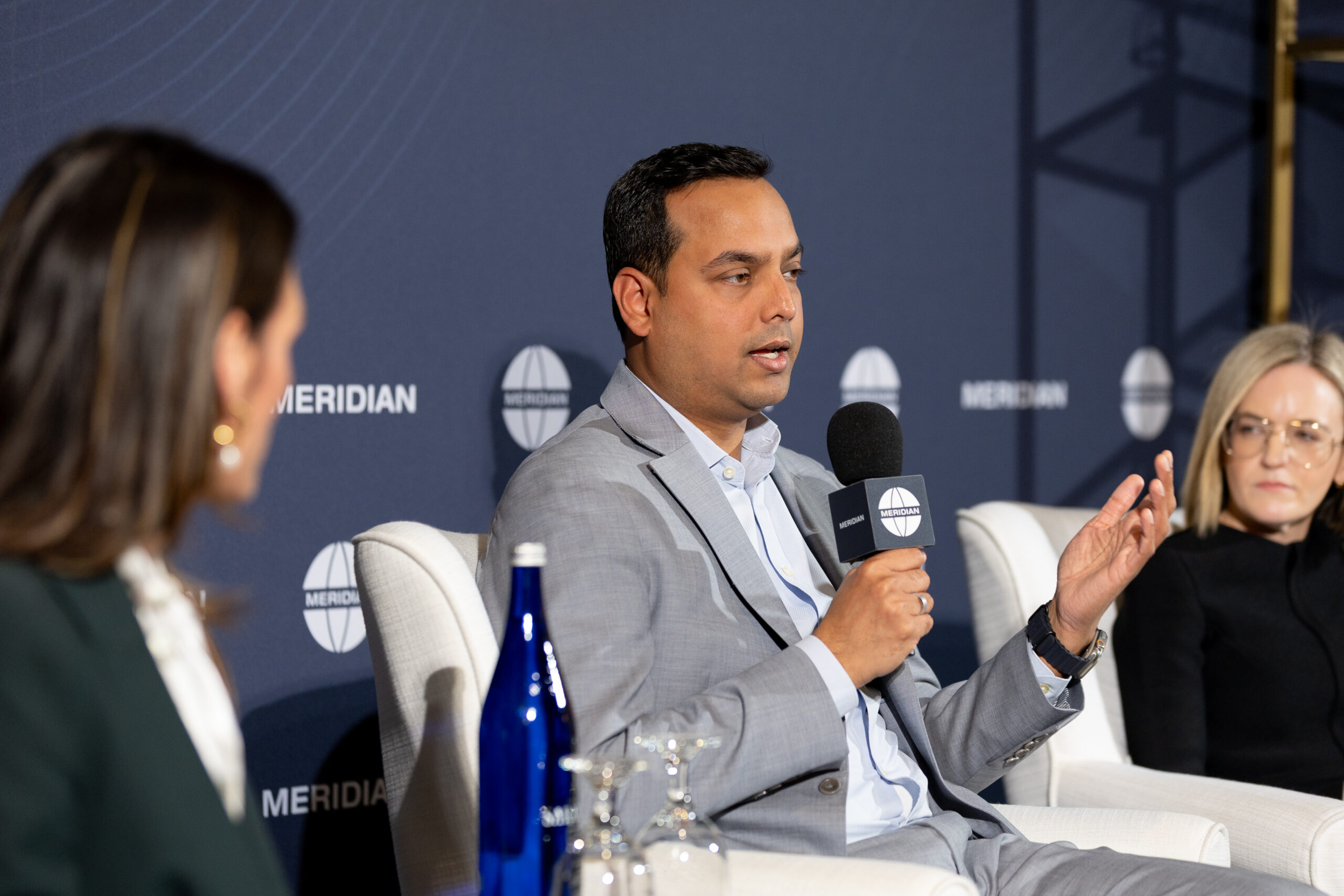
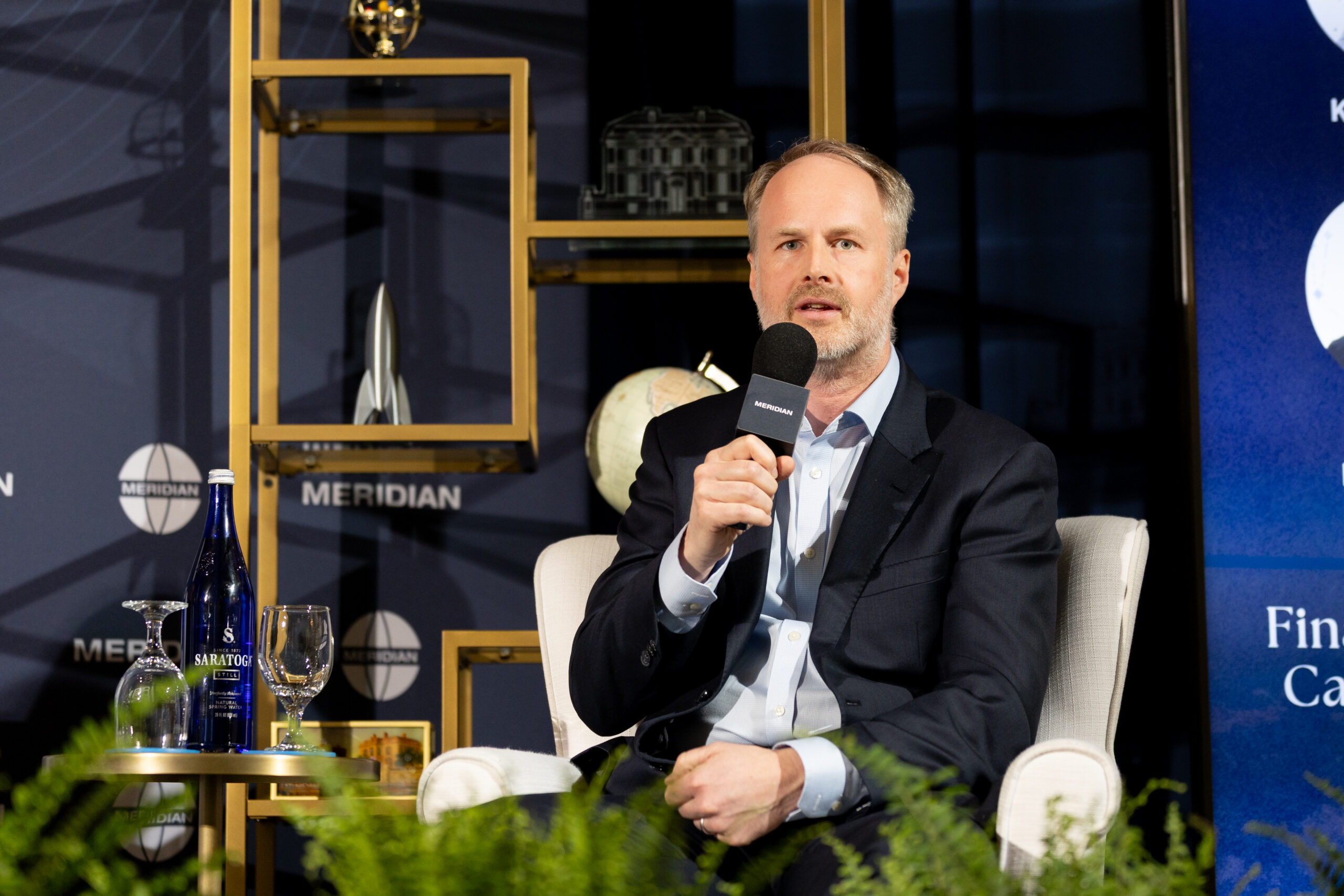
This panel examined the tension between national priorities, investor requirements, and the practical realities of financing space systems at scale. Featuring Kelli Kedis Ogborn (Strategic Advisor for Global Markets and Industry Engagement, Commercial Space Federation), Praveen Vetrivel (CEO, SLI), Caitlin Heffernan (Senior Vice President, Macquarie Group), and Fredrik Gustavsson (CFO, SWISSto12), the discussion highlighted how to unlock growth through public-private partnerships, new procurement models, and clearer understandings of control versus ownership. As Kedis Ogborn framed it at the outset: “Nations want sovereignty. Investors want bankable structures.” Closing that gap may be one of the defining challenges of the current moment in space.
Here Were the Top Takeaways from the Program:
1. Sovereignty in space is increasingly about control; not outright ownership
The push to build sovereign space capabilities is running up against a practical constraint: if governments insist on owning every asset, many projects simply won’t get financed. That’s why redefining what “sovereignty” actually requires has become so important.
Governments may not need to own every asset to claim sovereign capability. Vetrivel argued that “control and ownership are not necessarily the same thing,” urging policymakers to focus instead on whether they control what an asset does, what it produces, and how its data flows are governed. This distinction matters because full ownership can make projects prohibitively expensive and far less attractive to private investment.
Kedis Ogborn noted that the debate is often clouded by the assumption that autonomy automatically requires ownership. In practice, a more modern definition of sovereignty, grounded in assured access, security, and operational control, could unlock greater private participation, making more projects financially viable without compromising national interests.
2. Public-private partnership models can be adapted to preserve sovereign priorities
The central challenge is not a lack of financing models, but a reluctance to move beyond familiar procurement habits. Speakers across the panel stressed that governments often underestimate their flexibility, even though proven financing structures exist across other infrastructure sectors and can be adapted for space.
As Heffernan noted, there are “different models to suit different situations,” including arrangements where the private sector finances and builds assets while the public sector retains key operational roles. Vetrivel reinforced this point with examples from aviation and defense, where governments maintain step-in rights and ensure operational continuity even when delivery is privatized.
Together, these perspectives highlight a clear takeaway: state actors can tap into more efficient capital flows without giving up core strategic control, if they are willing to rethink traditional approaches.
3. Governments must structure risk intentionally to make space systems investable
Sovereign space ambitions will only attract private capital if nations take a more active role in structuring and allocating risk. As Caitlin Heffernan noted, “the most efficient way to manage that is just allocating the risk to the party that’s most able to manage that risk,” underscoring that unclear or misallocated risk is often what prevents deals from closing.
For emerging space nations, this means creating procurement and regulatory frameworks that clearly define who is responsible for what — particularly around political, regulatory, and change-of-law risks that the private sector cannot effectively absorb. Fredrik Gustavsson reinforced that without this clarity, companies are forced to price in uncertainty or avoid projects altogether, making financing significantly more expensive or, worse, unviable.
In practice, making a space ecosystem investable requires governance systems to provide transparent rules, stable regulatory environments, and contractual mechanisms, such as relief regimes or step-in rights, that give investors' confidence that risks are understood, managed, and ultimately calculable.
4. Strategic clarity is a prerequisite for bankable space infrastructure
Without clear strategic intent, space infrastructure projects risk becoming politically attractive but commercially fragile, and therefore difficult to finance. Investors and partners need confidence that long-term demand is real, sustained, and grounded in clearly defined needs.
Policymakers must therefore begin by being disciplined and specific about what they actually require. As Gustavsson emphasized, “the first thing is really for the government to have a very clear strategy of what they need,” grounded in a realistic assessment of capability gaps, priority use cases, and budget constraints. Too often, national authorities default to preferred solutions, such as building a national LEO constellation, before rigorously testing whether those options are the most effective or affordable way to meet their objectives.
Strategic alignment is not merely a policy exercise; it is the foundation of bankability. Without it, both public and private actors risk committing resources to systems that may satisfy political ambitions but fail to deliver sustainable commercial value.
5. The path forward will require cultural change as much as financial innovation
Financing sovereignty will depend not only on smarter structures, but on a deeper shift in how public and private actors think about partnership, control, and risk. Many of these models are workable in theory, yet adoption remains slow due to institutional inertia and conflicting assumptions between state actors and investors.
As Kedis Ogborn noted, this moment is “not just blending the ecosystems,” but fundamentally changing “the way that these industries have historically done business.” Vetrivel underscored the challenge, admitting that after years of explaining these approaches, only “maybe five” out of dozens of stakeholders had fully grasped them.
This persistent educational gap helps explain why the panel emphasized the need for governments to embed tools like leasing into core RFPs, introduce pre-development agreements earlier, and design more open, competitive procurement systems. The transition may be uneven, but it is ultimately unavoidable.


Project summary
| Financing Sovereignty: Capital Strategies for Global Space Partnership | March 2026 | |
|---|---|
| Program Areas: | Technology, Innovation, & Space |
