

Courts Without Borders: The NBA’s Global Impact
From Africa to Asia, Europe to the Americas, the NBA’s global expansion has transformed the league into a powerful vehicle for soft power, economic opportunity, and social inclusion. With initiatives like the Basketball Africa League (BAL), the NBA is partnering with African nations to develop talent pipelines, invest in local infrastructure, and showcase emerging markets on a global stage. Examine how the NBA’s international footprint advances cross-cultural understanding, elevates athletes as ambassadors, strengthens bilateral ties, and opens new channels for youth engagement, trade, investment, and cultural exchange.
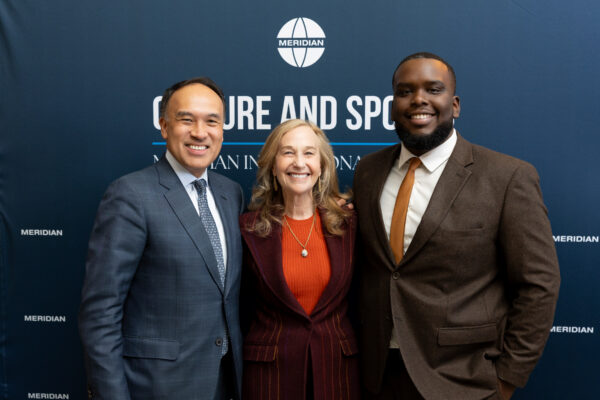
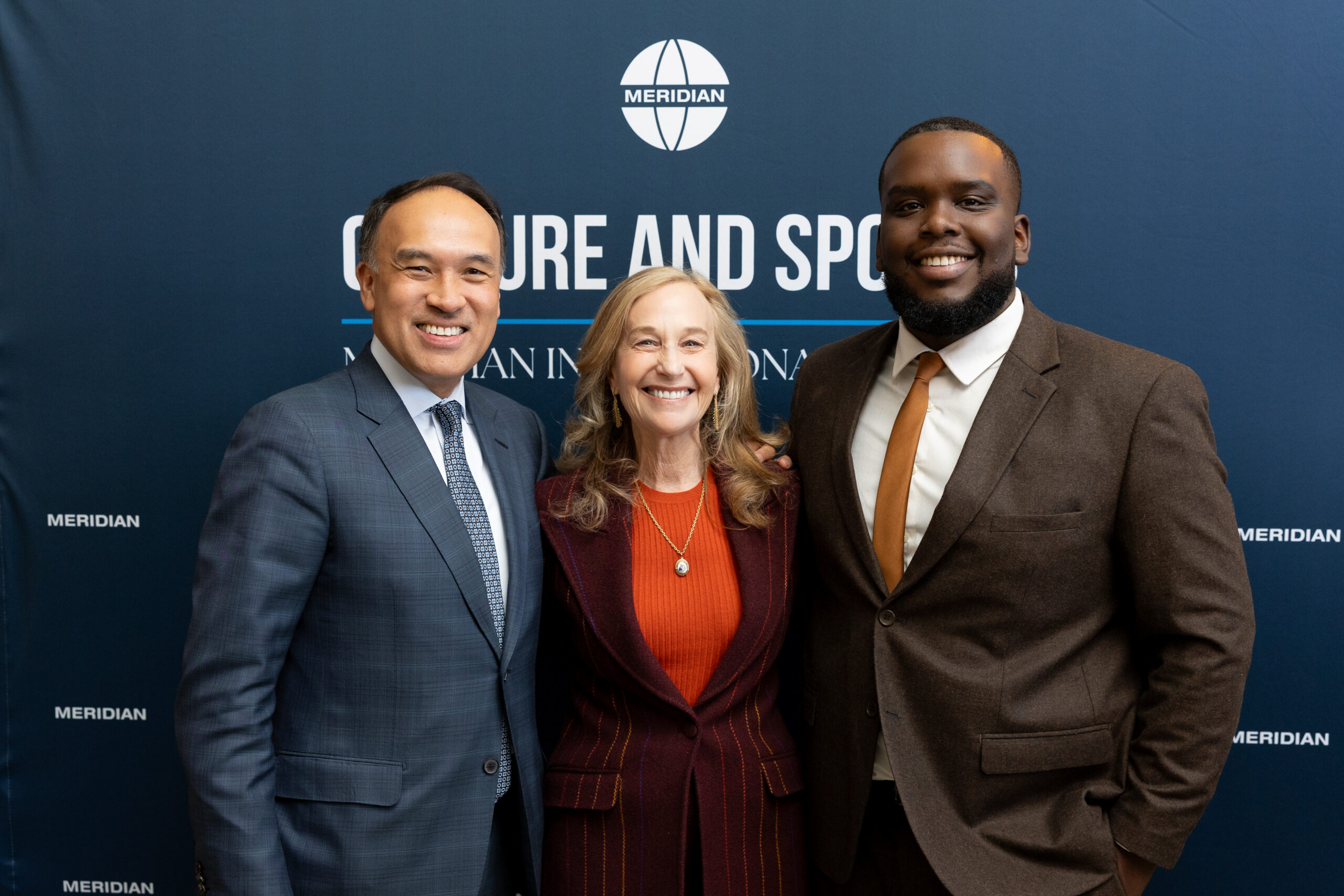
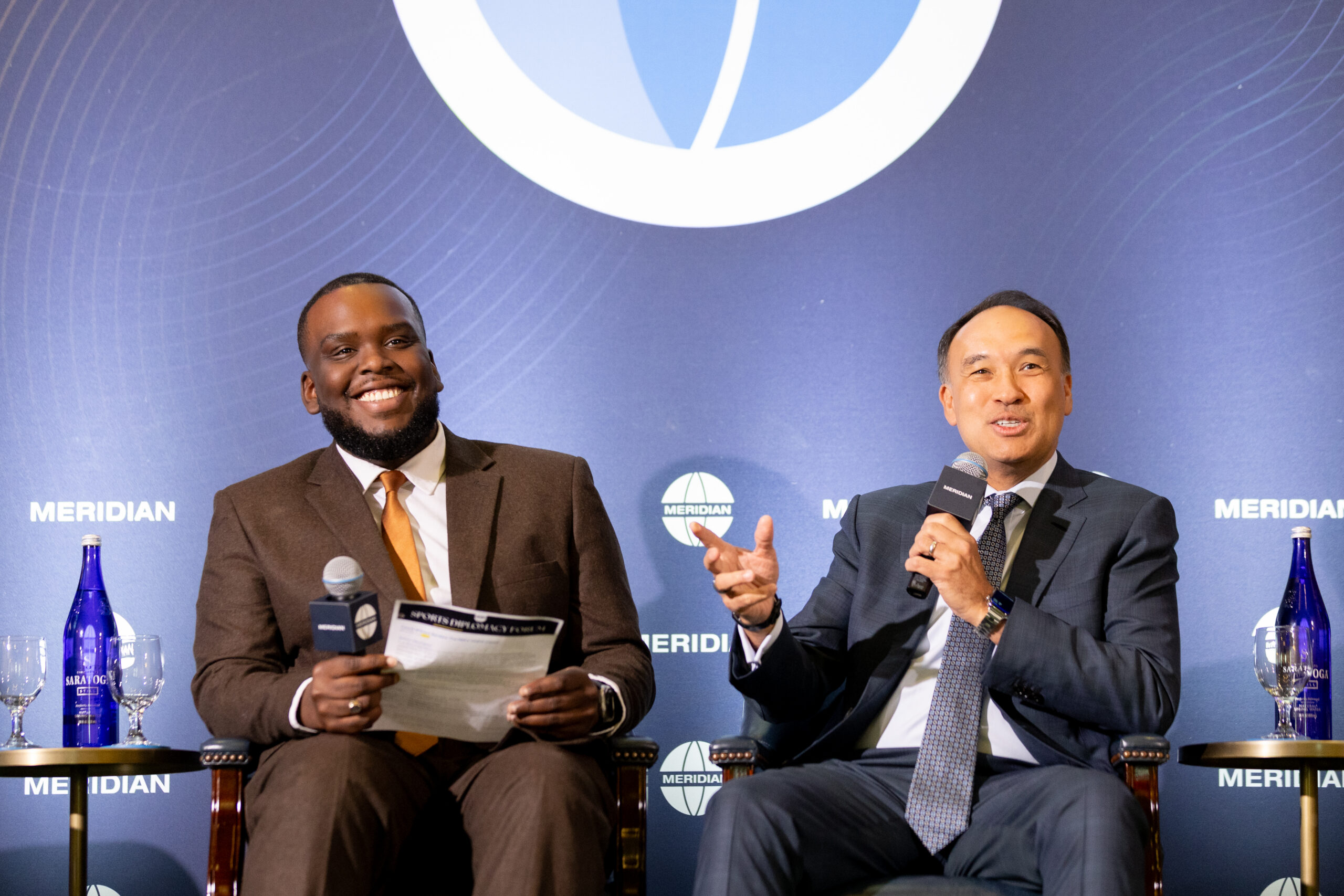
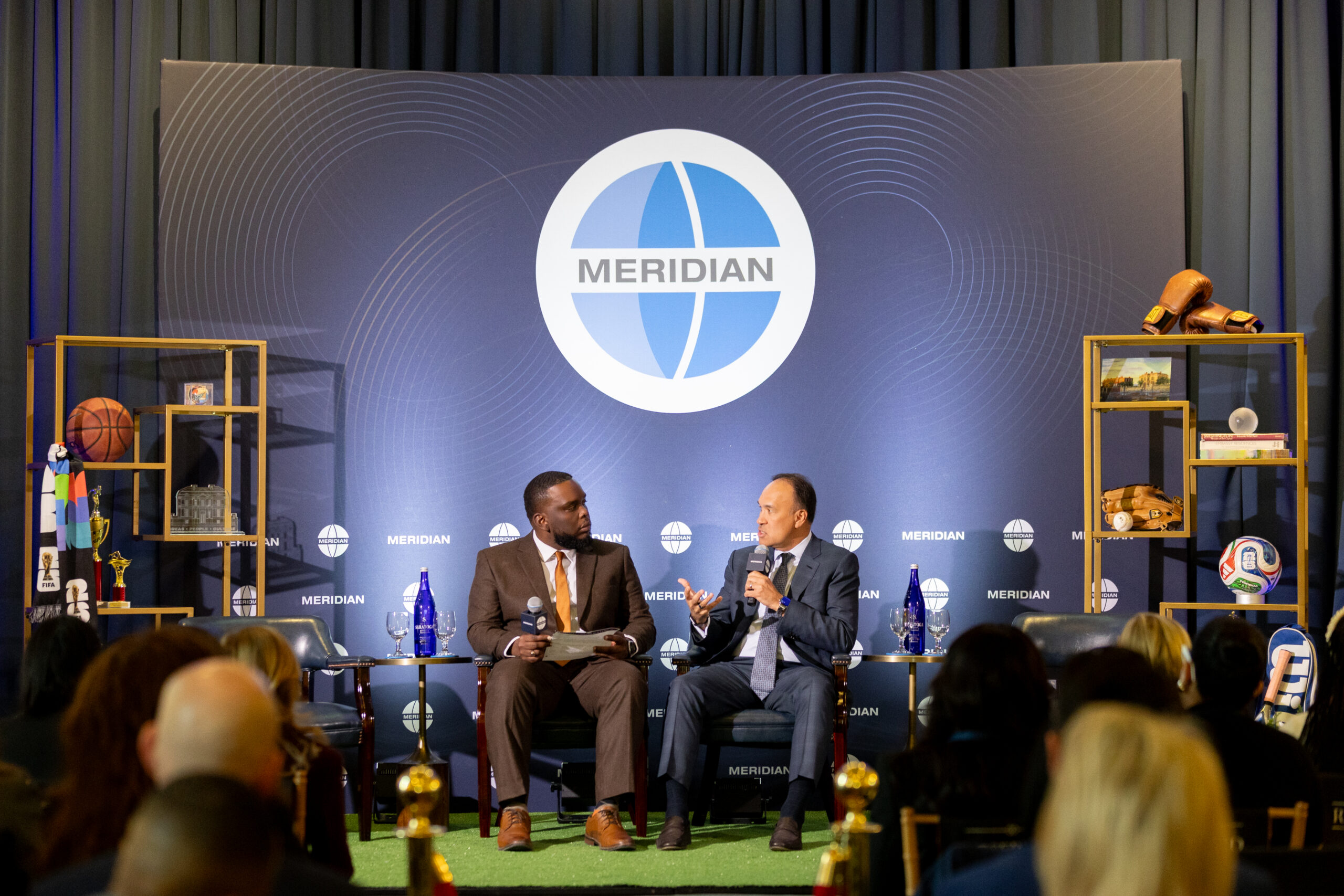
To explore how sports can shape diplomacy, markets, and communities, Meridian International Center convened a conversation with Mark Tatum, Deputy Commissioner and Chief Operating Officer of the NBA, moderated by Maxwell Millington, entertainment and sports reporter at Axios. The discussion examined how global superstars are transforming the league, why the NBA is investing deeply in Africa and Asia, and what a potential European league could mean for U.S. influence abroad.
Here Were the Top Takeaways from the Program:
1. The NBA’s Center of Gravity Has Gone Global
The faces of the NBA today are unmistakably international, and that’s no accident. According to Tatum, roughly 135 players in the league were born outside the United States, and the last seven NBA MVPs have all come from abroad. From Greece and Serbia to Cameroon and Canada, elite talent is no longer flowing in one direction, it’s fully global.
That shift has reshaped how fans around the world relate to the league. International stars don’t just play basketball; they serve as cultural bridges. When Victor Wembanyama casually invited fans to play chess with him in New York’s Washington Square Park, hundreds showed up, and the moment racked up tens of millions of views online. It was a reminder that today’s athletes connect across borders in real time, often more effectively than institutions can.
As Tatum put it, these players are not just stars, “they’re global ambassadors.”
2. Basketball Is a Universal Language and a Diplomatic Asset
Basketball’s reach gives the NBA a unique role in international engagement. Tatum described the sport as one of only two—alongside soccer—played and followed meaningfully in nearly every country in the world. That universality matters.
In places like China, where basketball has been played for more than a century and is the country’s most popular sport, “they don’t view basketball as an American sport,” but as a sport “that they’ve played for an entire generation.” In China, the NBA is less a foreign import than a familiar cultural fixture. The league’s return to China with preseason games in Macau, demonstrated the enduring power of sports to reopen doors and rebuild connections, even amid geopolitical tension.
The takeaway was clear: sports diplomacy works because it meets people where they are.
3. In Africa, the NBA Is Building an Economy, Not Just a League
Perhaps the most striking part of the conversation focused on Africa. For decades, the NBA’s presence on the continent centered on clinics and community outreach. But in conversations with African leaders, a different message came through loud and clear: create jobs.
The result was the Basketball Africa League (BAL), a pan‑continental professional league now entering its sixth season. According to Tatum, the BAL has already contributed hundreds of millions of dollars to Africa’s GDP and helped create tens of thousands of jobs, from media and marketing to hospitality and infrastructure.
In Kigali, Rwanda, the league catalyzed the development of a 10,000‑seat arena surrounded by hotels, restaurants, and commercial space, an “LA Live of Africa.” What began as a sports investment has become a model for urban revitalization and youth employment.
The lesson for policymakers and investors alike: sports can anchor entire economic ecosystems.
4. Franchising Is the Next Phase of Africa’s Growth Story
To sustain that momentum, the NBA is now moving toward a franchise model for the BAL. Rather than rotating teams annually, the league plans to establish permanent franchises in major African cities such as Lagos, Nairobi, and Cairo.
This shift is designed to unlock long‑term private investment. Franchise owners will have incentives to build arenas, training academies, and grassroots programs, in turn creating stability, continuity, and deeper local roots.
The NBA is betting that certainty attracts capital, and capital accelerates development.
5. Europe May Be the NBA’s Biggest Untapped Opportunity
The conversation closed with a look ahead to Europe. Basketball is the continent’s second‑most popular sport, yet it captures a surprisingly small share of media revenue and sponsorship. Tatum argued that the market is fragmented, under‑commercialized, and underserved, despite massive fan demand.
The NBA is now exploring the creation of a new European league, with permanent teams in major cities like London and Paris and stronger business fundamentals. Beyond entertainment, Tatum framed the move as a chance to spur investment in modern indoor arenas and revitalize urban centers.
If successful, the league could become one of the most significant U.S. soft‑power plays in Europe—without a single embassy or aid package.
Project summary
| Courts Without Borders: The NBA’s Global Impact | January 2026 | |
|---|---|
| Program Areas: | Sports and Culture |
