

Corporate Diplomacy Global Leaders Program: September 2026
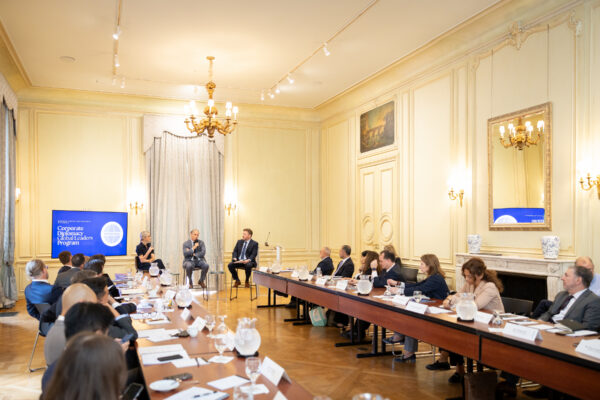
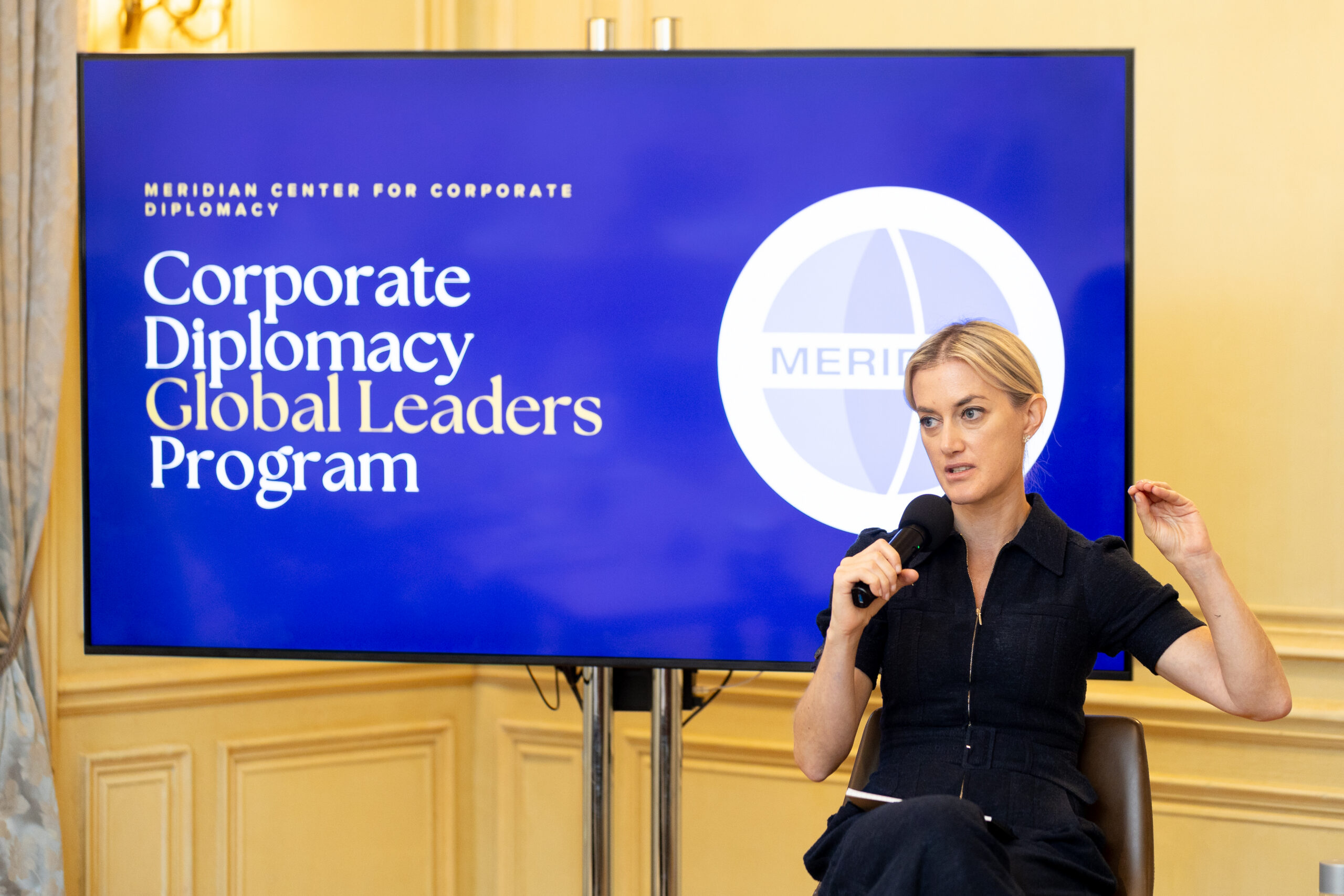
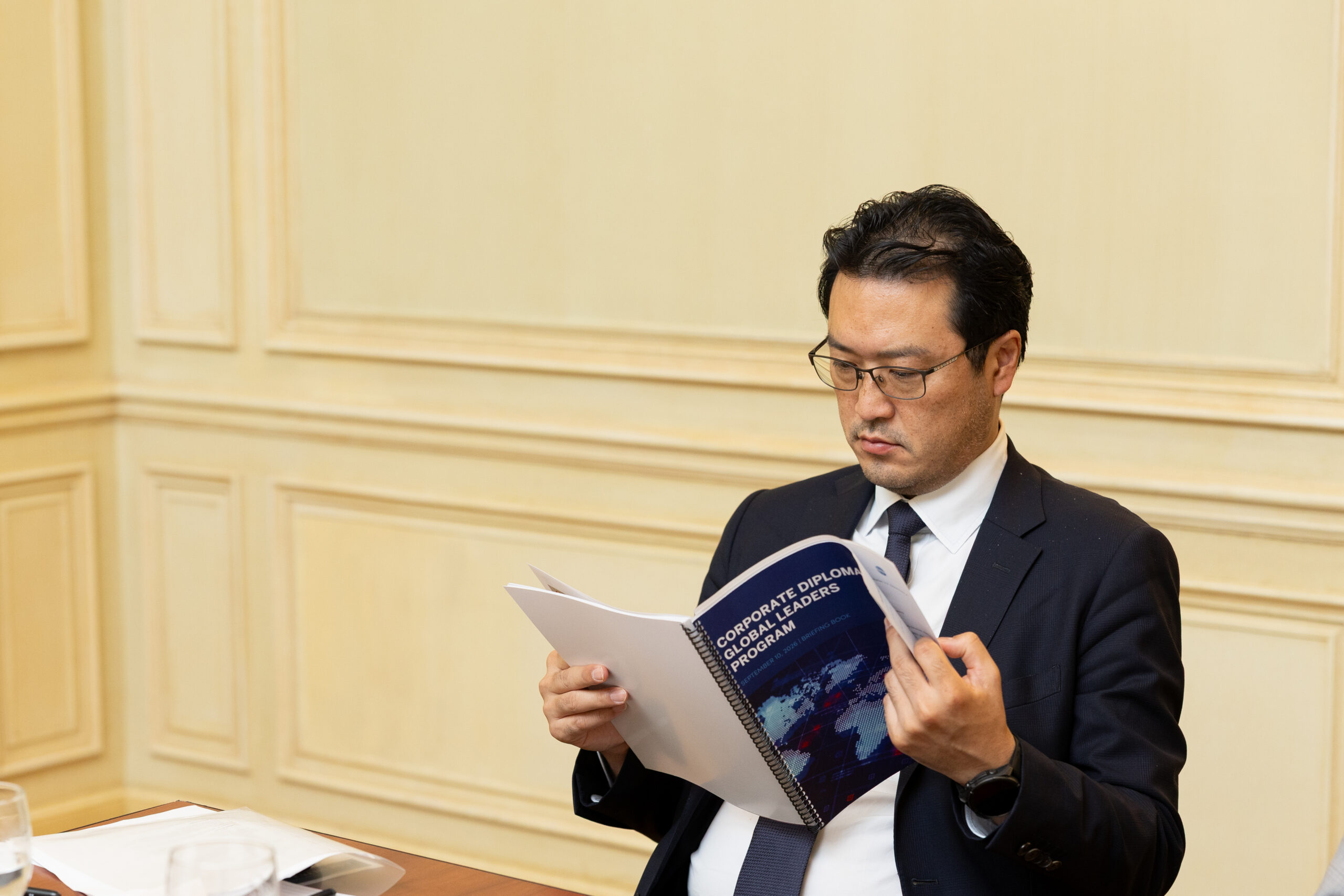
As businesses navigate a global environment increasingly shaped by geopolitical competition, economic security and rapid technological change, corporate leaders are taking on a greater role in managing relationships across borders. On September 10, Meridian International Center convened its Corporate Diplomacy Global Leaders Program (CDGLP), an intensive one-day training designed to equip rising leaders with the diplomatic skills, geopolitical insight and networks needed to advance business interests in a competitive global environment.
The training was organized around a series of practical modules that moved from the broader role of business in diplomacy to the tools leaders can use in real-world situations. Sessions covered corporate diplomacy, protocol, geopolitical risk, negotiation, trade and tariffs, embassy engagement, and stakeholder mapping, concluding with an interactive case study that challenged participants to apply the day’s lessons.
Training modules included:
What Is Corporate Diplomacy
Meridian CEO David Bohigian opened the program by framing corporate diplomacy as a response to a more complex, multi-actor global environment. As businesses gain greater influence across markets, technology and investment, leaders must understand not only commercial priorities but also geopolitical risk, public sentiment, cultural dynamics and the networks shaping decisions across borders.
The Art & Science of Protocol
Natalie Jones, Executive Vice President and Chief Operating Officer of Meridian International Center, led a practical training on how protocol can strengthen international relationships. Drawing on her experience as Deputy Chief of Protocol at the U.S. Department of State, she emphasized the importance of cultural awareness, correct forms of address, precedence and thoughtful preparation, reinforcing that small details can have an outsized impact on an engagement.
Geopolitical Risk Fireside Chat
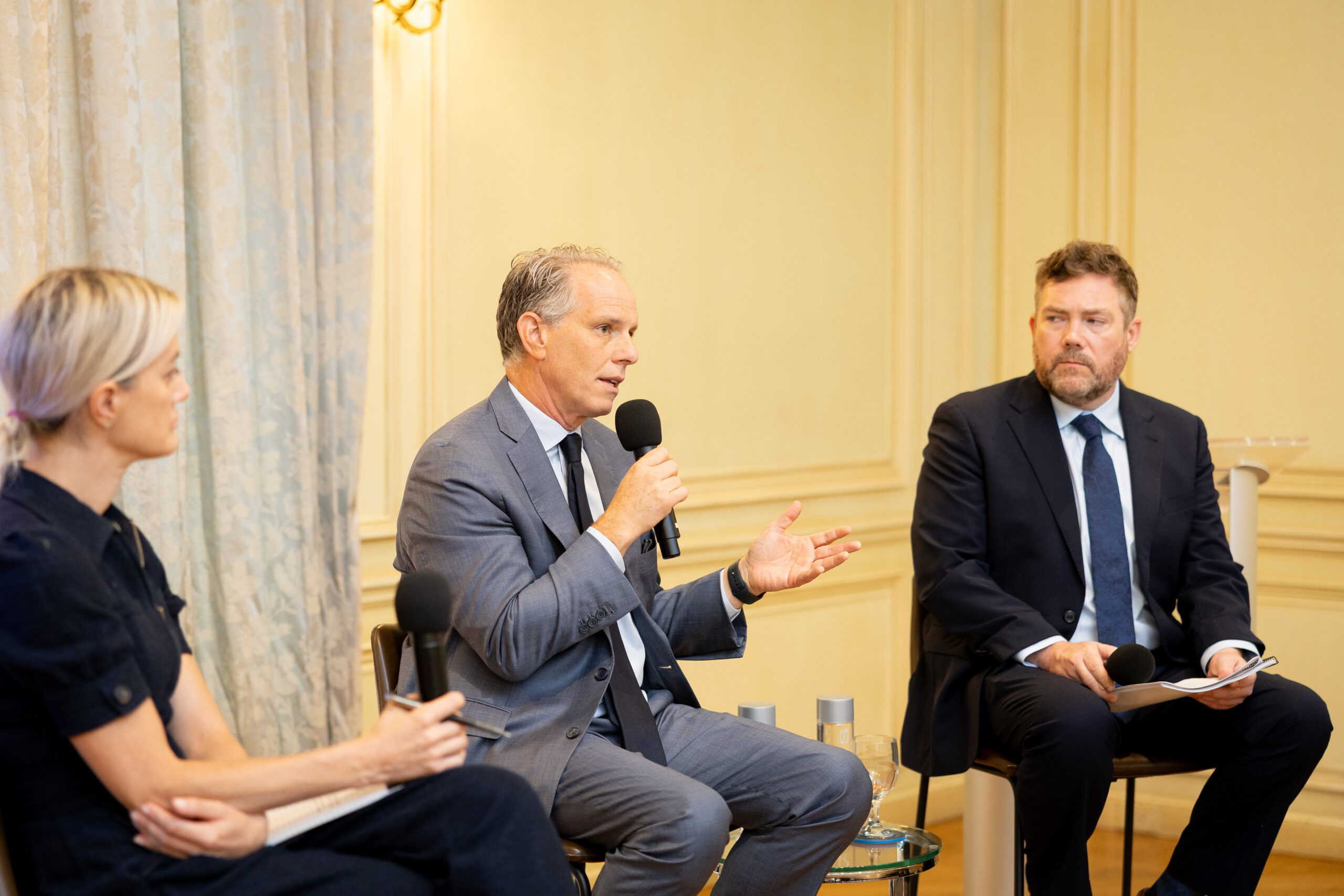
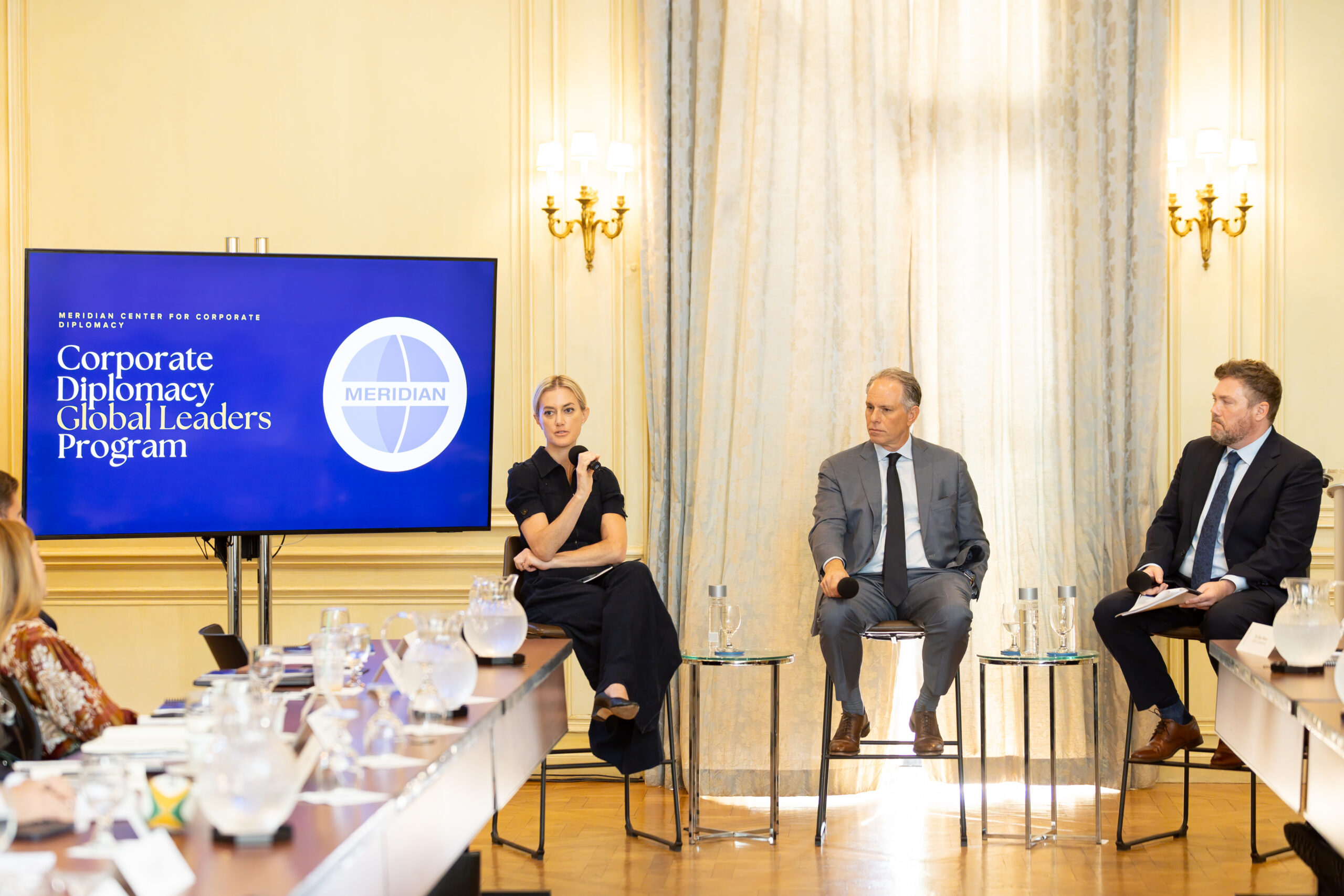
Jeremy Bash, Managing Director and Founder of Beacon Global Strategies LLC, and Samantha Vinograd, Foreign Affairs and National Security Commentator at CBS News and Head of US Corporate Affairs at Airwallex, examined how economic competition, technology and national security are increasingly intertwined. The discussion with Senior Director for the Center for Corporate Diplomacy, Brandon Soloski, underscored why companies must become more geopolitically minded as they navigate fragmented regulatory environments, shifting alliances and growing competition over technology and supply chains.
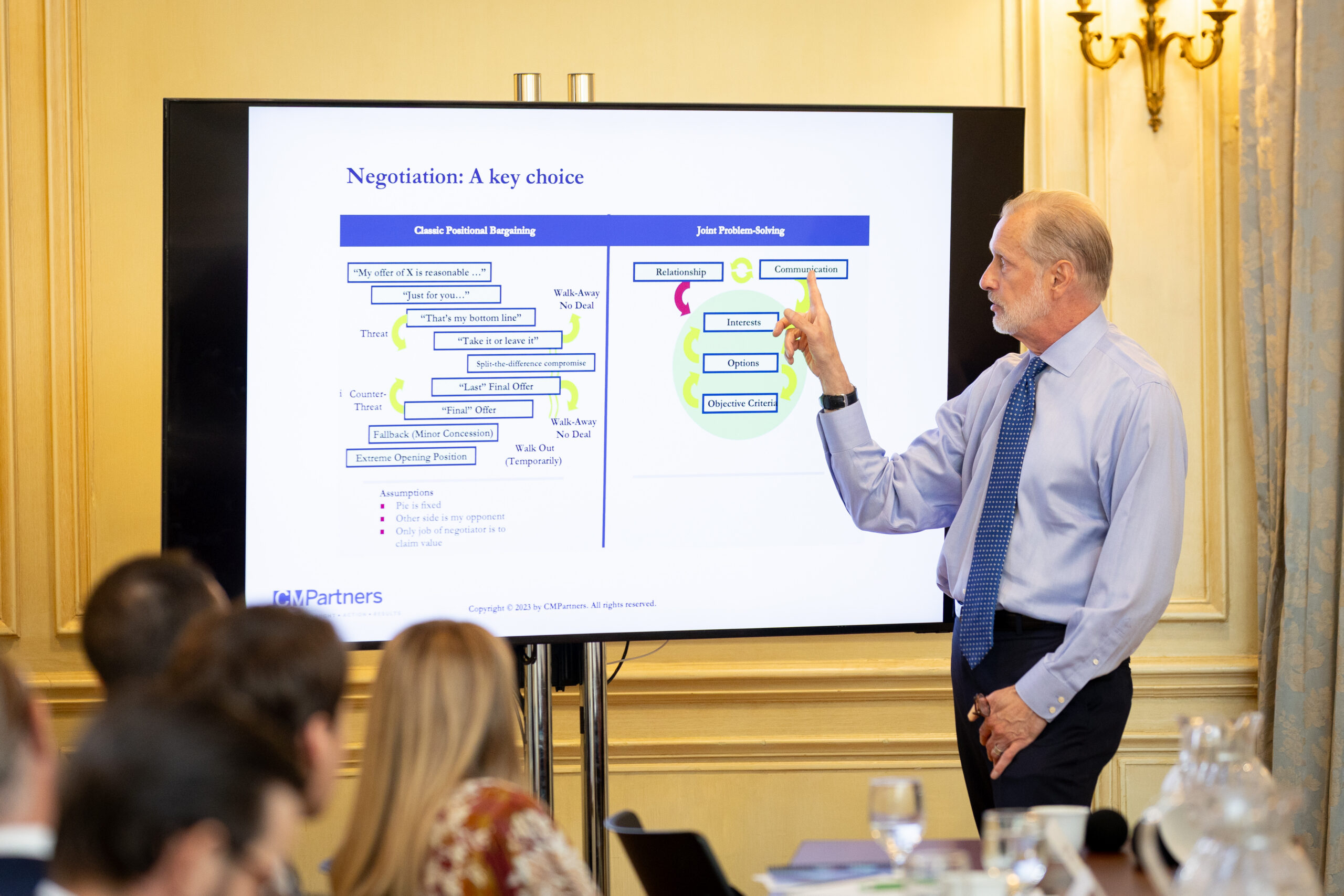
The Art and Science of Negotiation
Ken Hyatt, Founder and Partner of CMPartners, LLC, guided participants through a negotiation framework centered on preparation, adaptability and problem-solving. Rather than treating every negotiation as a zero-sum contest, he encouraged leaders to understand the other side’s interests, think deliberately about who needs to be at the table and remain focused on long-term objectives rather than reacting to individual moments.
Tariffs and International Trade Fireside Chat
The Honorable Francisco Sánchez, Partner at Holland and Knight, and Everett Eissenstat, Executive Vice President at the Inter-American Development Bank, joined moderator Alan Rappeport, Economic Policy Reporter at The New York Times, for a discussion on the durability of tariffs and the growing overlap between trade policy and national security. The conversation emphasized that companies need to plan for resilience, diversify supply chains and engage policymakers well before a problem reaches the point of crisis.
Embassy Engagement
Jim Golsen, Vice President for Corporate Diplomacy at Meridian International Center, outlined how companies can work more effectively with embassies, American Chambers of Commerce, and other business associations. He emphasized the value of building relationships across embassy teams, presenting a clear and credible business case, and engaging consistently so that companies already have trusted contacts when a regulatory, commercial or political challenge emerges.
Global Stakeholder Mapping & Case Study Simulation
The day concluded with Shaila Manyam, Chief Operating Officer and Executive Director of the World Federation of Direct Selling Associations, leading a stakeholder-mapping and case study exercise. Participants worked through a hypothetical investment challenge involving a new local-content requirement, identifying the government, embassy, trade association and business stakeholders that could shape the outcome and considering how to engage them in parallel.
Project summary
| Corporate Diplomacy Global Leaders Program: September 2026 | |
|---|---|
| Program Areas: | Corporate Diplomacy |
