

AI Horizons: Middle East and North Africa (MENA)

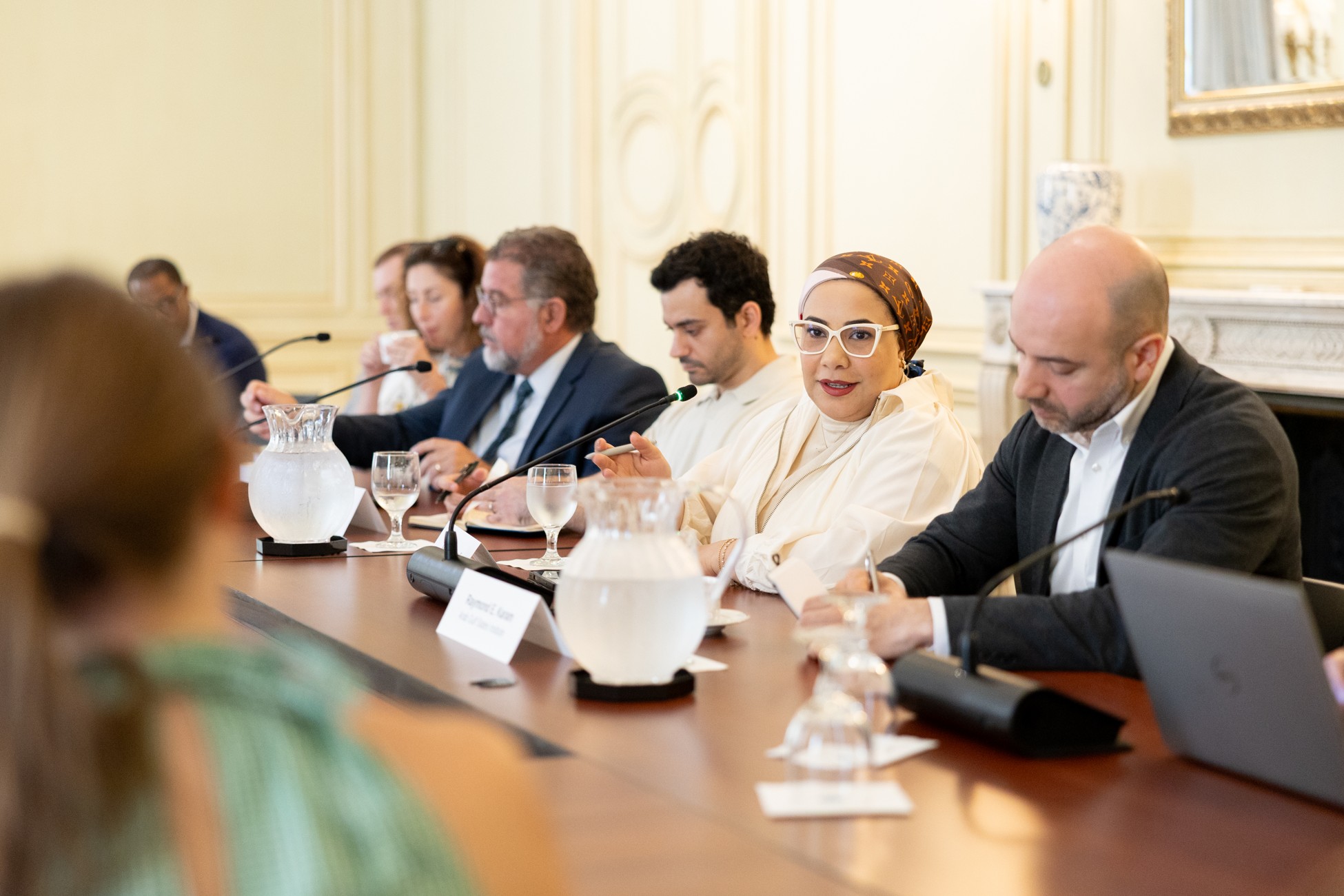
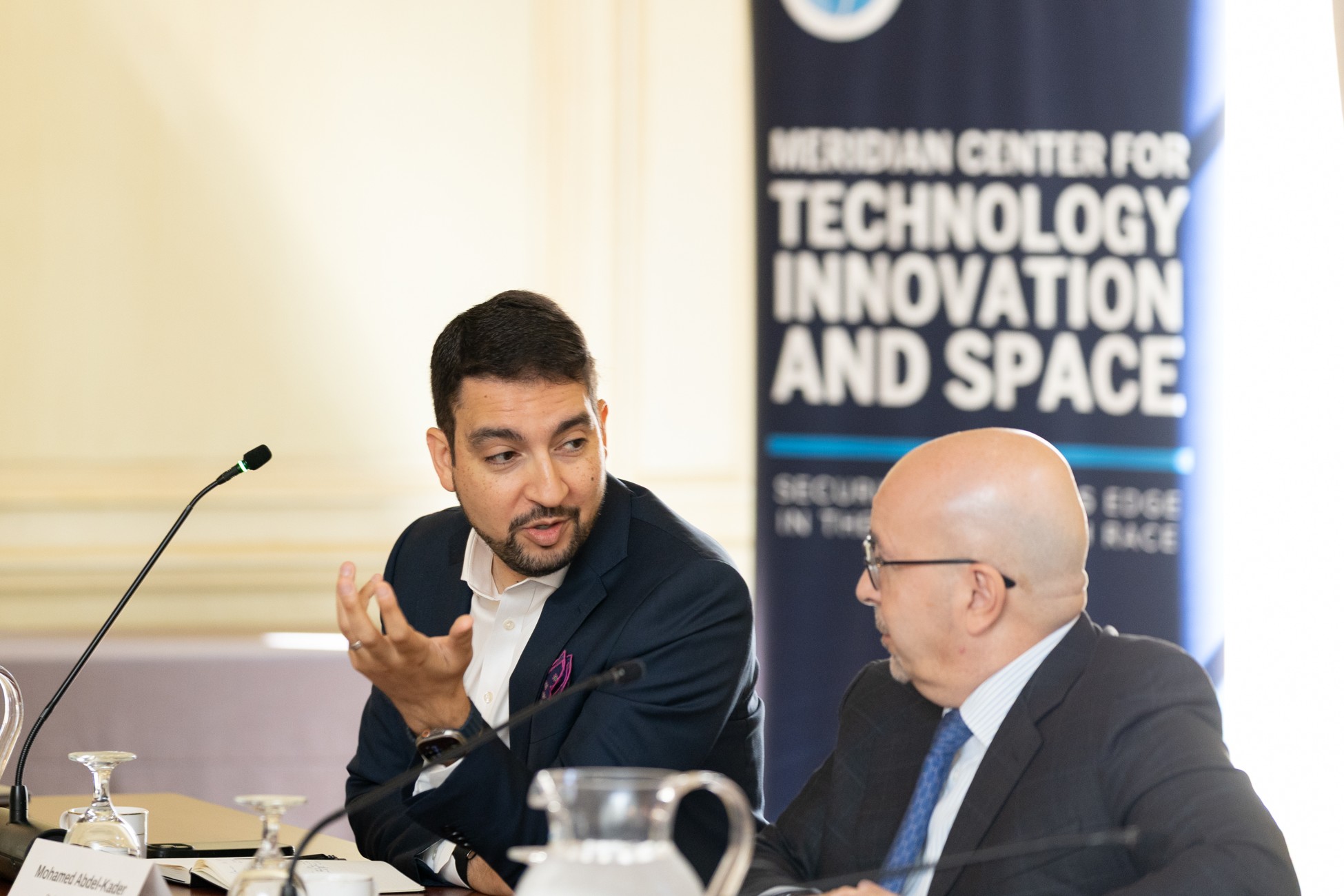
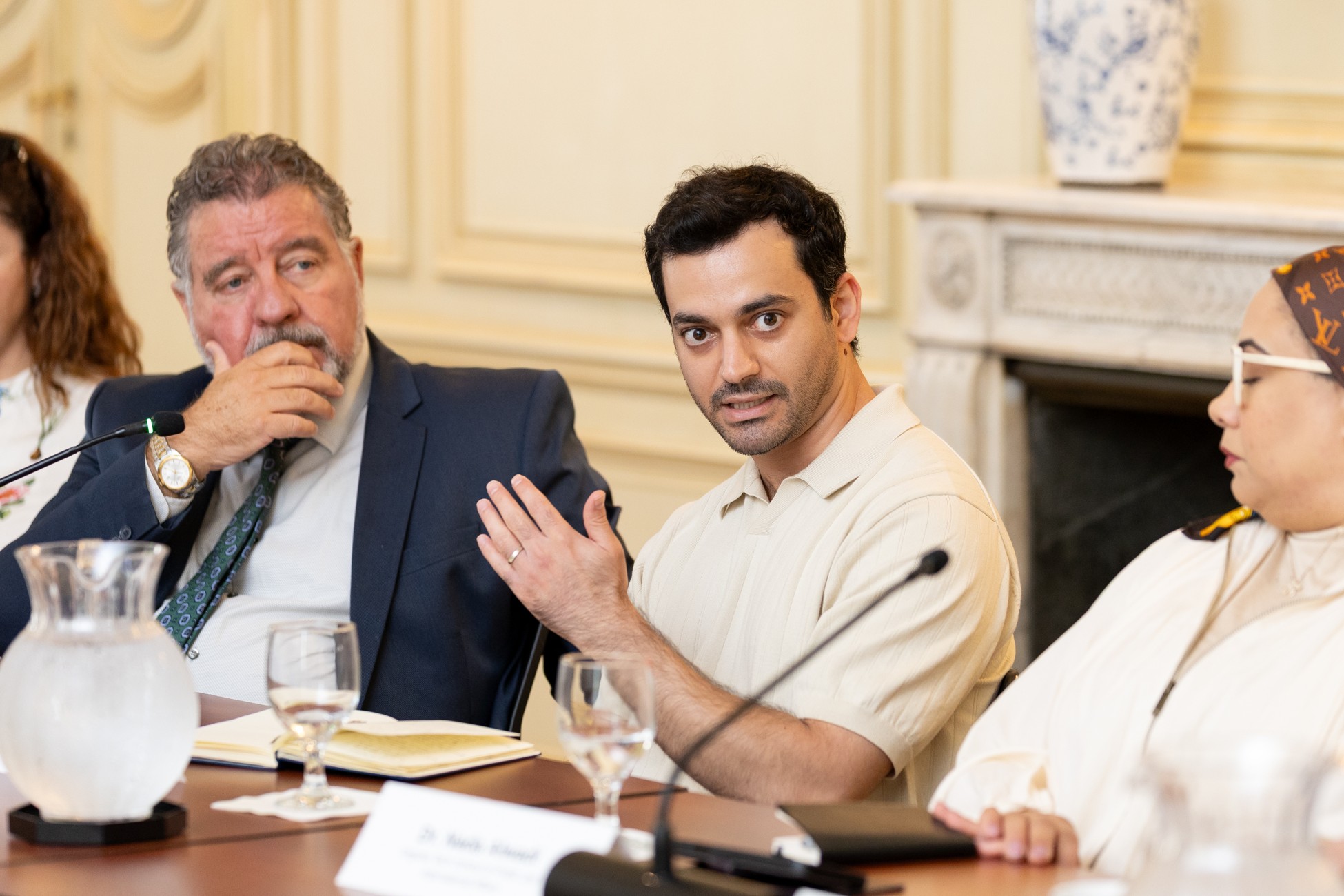
The Middle East and North Africa (MENA) region is home to some of the world's biggest investors in artificial intelligence (AI), yet the region also faces deep disparities in literacy, infrastructure, and integration across the region. On June 15, 2026, Meridian International Center convened a roundtable discussion on AI in the MENA region, bringing together voices from across technology, policy, entrepreneurship, and regional affairs to examine the region’s evolving AI landscape. Participants discussed how the region can strengthen local talent, expand opportunity, and build more connected innovation ecosystems while navigating persistent challenges in coordination, investment, and long-term development.
Here were the top takeaways from the program:
1. AI Innovation Starts with AI Literacy
The roundtable discussion opened with an overarching agreement that access to a tool is not the same as leveraging it. While many countries across MENA are already seeing high levels of AI adoption, participants emphasized that the more pressing challenge lies in limited literacy around how these technologies function and how to build or adapt them. Bridging that gap between usage and AI literacy will require a multi-tiered approach incorporating education, training, and investment. Across the region, many governments are responding with a strong push for local talent development. National training programs and university partnerships are quickly taking shape as incubators for talent, from the UAE's mandate to train thousands of federal employees to Bahrain's labor fund, Tamkeen, which aims to train 50,000 Bahrainis in AI by 2030. However, participants stressed that this training must go deeper than tool familiarity. Learning to use a chatbot, on its own, is not a durable skill. The greater priority is preparing people to build intelligent systems and to adapt as technology evolves, with AI literacy embedded across disciplines rather than confined to computer science.
2. AI is not a Stand-Alone Sector
When discussing AI as an industry, participants cautioned against MENA nations chasing dominant trends that center around maximizing AI adoption for its own sake. For instance, several noted that using large quantities of tokens to signal AI use is both prohibitively expensive and strategically superficial. At the national level, rather than treating AI as an independent sector to develop, it is important to integrate it into sectors where it can add the most value and especially in industries where the region already leads, such as agriculture, construction, and hospitality. As one participant put it, AI is best understood as an "exoskeleton” – something woven into everything a country already does rather than built alongside it. For smaller companies that are unable to compete on scale, the focus should be on making sure business leaders are equipped to utilize AI in growing and advancing their capabilities. Overall, alongside developing the tech industry, it remains crucial to ensure that advancements in AI can be practically implemented within growing economies.
3. Partnership Models will Facilitate Ecosystem Growth
Participants broadly agreed on the need to close the gap between talent and opportunity so that innovators and entrepreneurs are positioned to grow, but each offered a slightly different model for how MENA might build robust AI ecosystems. Several emphasized the government's underused role not only as a regulator but as a customer: by committing to buy and deploy AI solutions, governments can create the demand that anchors a local market and can act as agents of culture change in how AI is adopted. Others pointed to the persistent commercialization gap, in which research rarely makes the leap from universities to market; closing it means building deliberate paths from research to market product, such as establishing centers of excellence or hackathons. Micro-investments drew particular interest as a high-impact, low-cost model: Small amounts of capital and mentorship offered to individuals with limited technological access, who then generate creative solutions to local problems and fail quickly and cheaply when ideas don't work. Underpinning all of this is partnership—between the public and private sectors, and among academia, government, and industry—both to attract foreign companies and to glue local ecosystems into the global one.
4. Regional Coordination is Critical
Throughout the roundtable, participants emphasized the constraint of limited cross-border collaboration, exacerbated by regional competition and widening gaps between resource-rich Gulf Coast countries and others without capacity to make historic investments. Many noted that the lack of economic integration remains a major constraint on collective progress, making it harder to share talent, scale innovation, or build common infrastructure across borders. At the same time, AI and frontier technologies also present opportunities for strengthening regional coordination. Some pointed to emerging cross-border cooperation, such as joint cybersecurity leadership between the UAE and Bahrain, as a model for pooling scarce talent and capacity.
5. AI Trajectories in MENA are Shaped by Geopolitical, Environmental, and Socioeconomic Positions
Participants acknowledged some of the most pressing challenges currently facing the region, including war and instability, rising temperatures, and vulnerable infrastructure. With one participant succinctly stating the key challenges as “war and heat,” these factors will continue to impact long-term resource allocation and development across MENA. These pressures are particularly evident in the region’s AI infrastructure. Participants described a system that is acutely exposed: from undersea cables and power grids, whose fragility has been underscored by recent conflicts, to uncertainties around how shifts in U.S. security commitments could affect the international partnerships underpinning much of the region’s technology stack. Socioeconomic constraints compound these pressures: MENA hosts among the largest populations of forcibly displaced people. However, several reframed these conditions as opportunities as much as obstacles. MENA’s unique position, they argued, could allow it to become the indisputable expert on specific, regionally salient problems—such as heat indexing or geospatial mapping— with the ultimate objective of becoming an “exporter” as opposed to an “importer” of intelligence. To get there, some participants suggested these programs must extend beyond traditional understanding of the “workforce” to include more marginalized populations within the region, such as refugees, stateless individuals, and rural communities, to expand access to education and opportunity.






Project summary
| AI Horizons: Middle East and North Africa (MENA) | April 2027 | |
|---|---|
| Impact Areas: | Science and Technology |
| Program Areas: | Technology, Innovation, & Space |
