

Accelerating Investment in a Multipolar Space Economy

As the global space sector becomes increasingly competitive and capital-intensive, governments are reassessing how regulatory frameworks, public-private partnerships, and market signals can unlock capital.
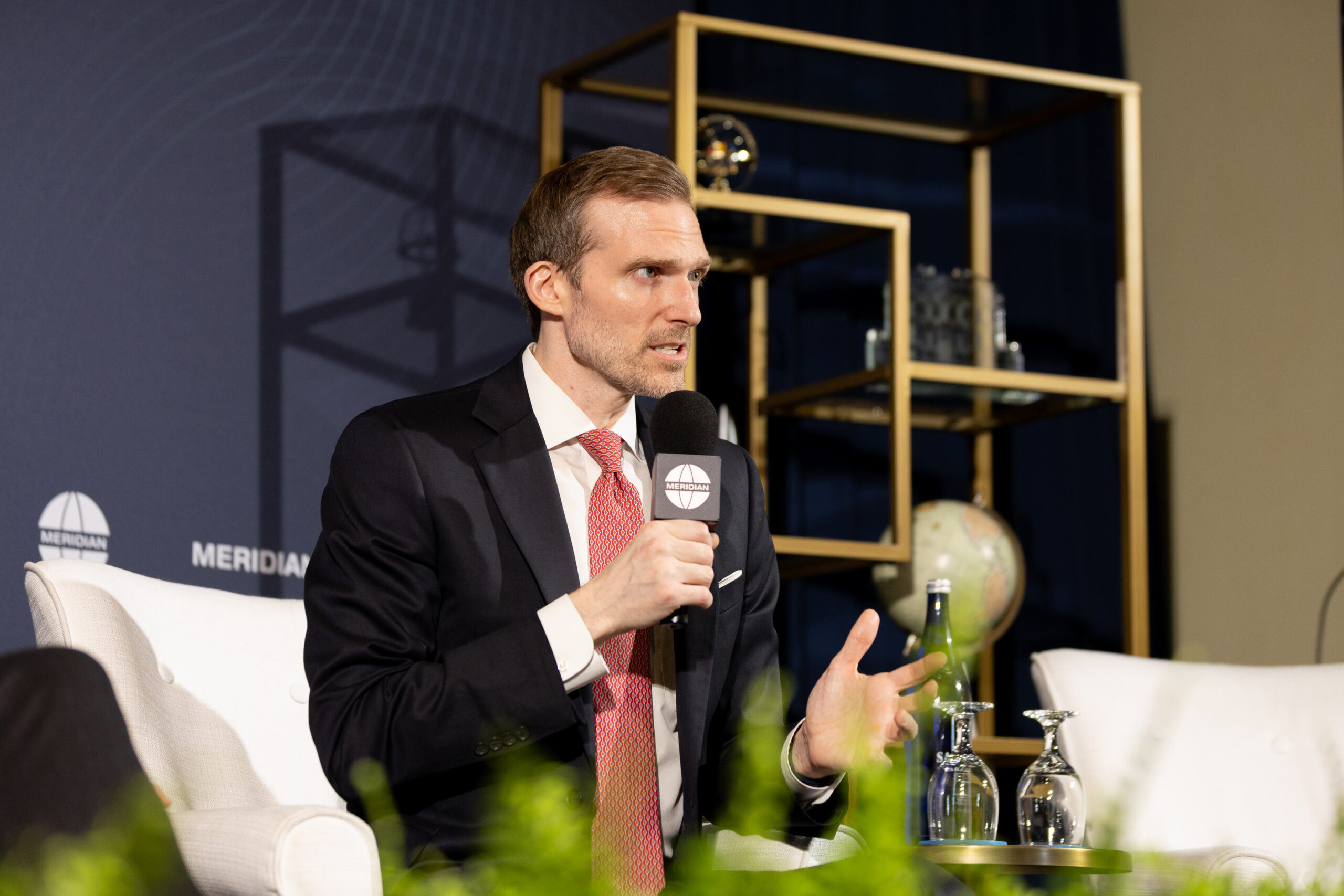
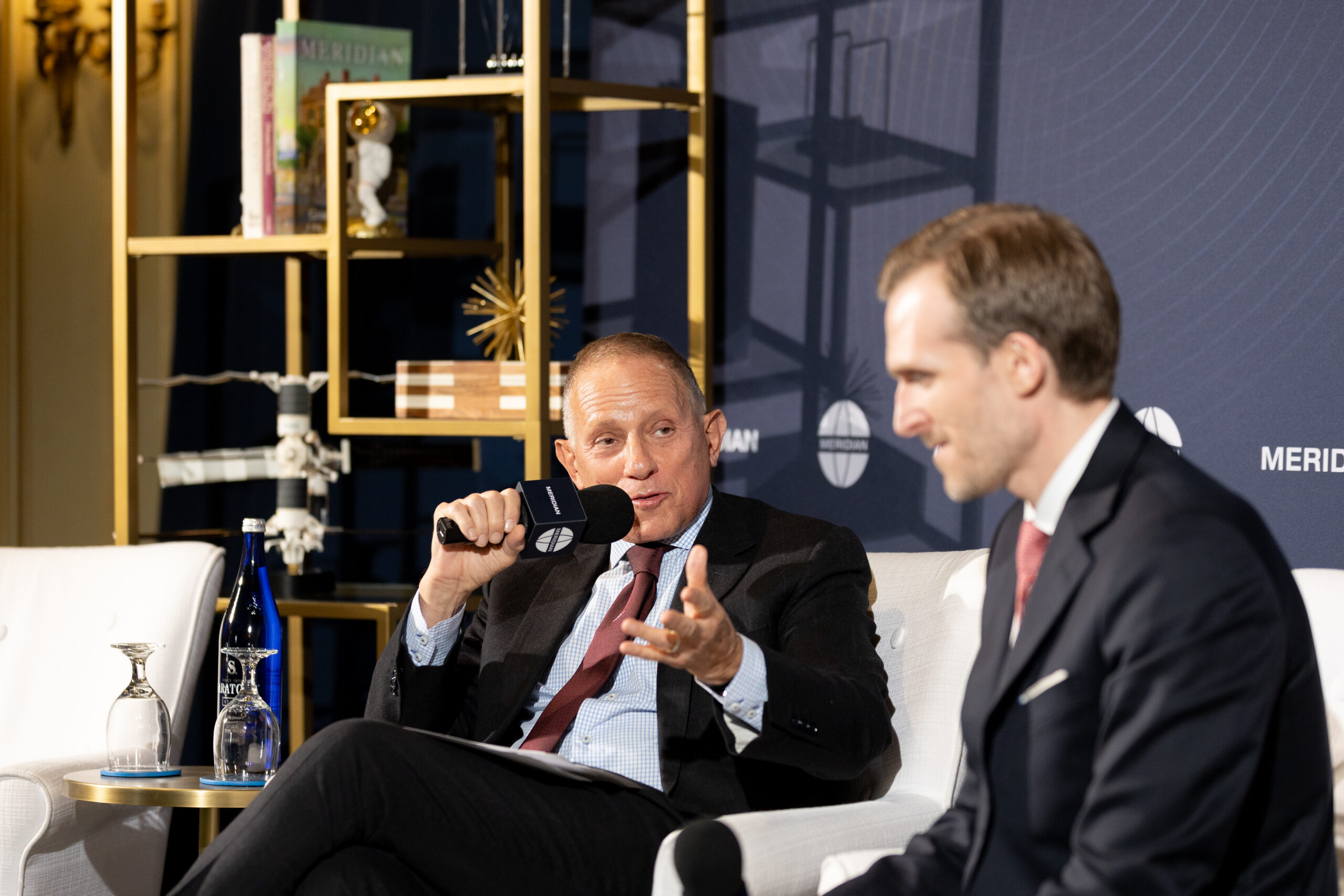
In this discussion, T.H Taylor Jordan (Assistant Secretary of Commerce for Environmental Observation and Prediction, NOAA; Director, Office of Space Commerce, U.S. Department of Commerce) and T.H Fred Hochberg (Chairman, Board of Trustees, Meridian International Center) explored how the United States is positioning itself to lead in a multipolar space economy.
Here Were the Top Takeaways from the Program:
1. Government is transitioning from operator to enabler
The discussion underscored a structural evolution in how the public sector participates in space, moving away from building systems and toward enabling markets. Jordan described how agencies like NOAA are increasingly purchasing commercial data instead of developing large, bespoke satellite programs, noting that in some cases “commercial data can rip and replace those data sets.”
This approach reduces costs and accelerates capability delivery while opening more opportunities for private firms. At the same time, new multi-year contracting models are intended to give companies confidence that “the government is going to be a stable and predictable partner well into the future.” This predictability is critical for attracting long-term investment.
2. Regulator certainty is a precondition for investment
Regulatory ambiguity, rather than technical risk, is now the primary constraint on funding in emerging space activities. Jordan pointed to the newly released mission authorization framework to establish a clear approval pathway for activities that do not yet fit within existing rules, emphasizing that it creates “a regulatory path to yes… where there perhaps did not exist before.” By reducing uncertainty around whether companies will ultimately be allowed to operate, the approach is designed to unlock capital that has remained on the sidelines.
Investors are willing to fund innovation, but only when the regulatory environment is predictable. In this context, clarity is not just supportive of growth; it is a prerequisite for it.
3. Investment will follow governments that can deliver consistency and scale
Beyond individual regulatory reforms, there is a larger shift in how space economies are being built. Funding decisions are shaped by the overall design of the market, including procurement models, interagency coordination, and federal agencies’ role as a long-term customer. Jordan’s observation that “there is money waiting on the sidelines for that confidence” reflects not just a regulatory gap, but a broader need for predictable demand and scalable opportunities.
Efforts to expand multi-year contracting and open government programs to commercial providers are intended to create that structure. This moves the conversation from enabling individual companies to shape entire ecosystems. In this environment, leadership will depend on which public institutions can design markets that are deep, stable, and capable of sustaining long-term financing.

Project summary
| Accelerating Investment in a Multipolar Space Economy | March 2026 | |
|---|---|
| Program Areas: | Technology, Innovation, & Space |
