

Western Hemisphere Energy Security: 5 Priorities for Investment and Regional Cooperation

As global energy markets face renewed volatility, the Western Hemisphere has an opportunity to strengthen energy security, economic growth and competitiveness. But abundant natural resources alone will not determine the region’s energy future. Investment, infrastructure, predictable policy and deeper cooperation across borders will determine whether those resources can reliably reach the markets that need them.
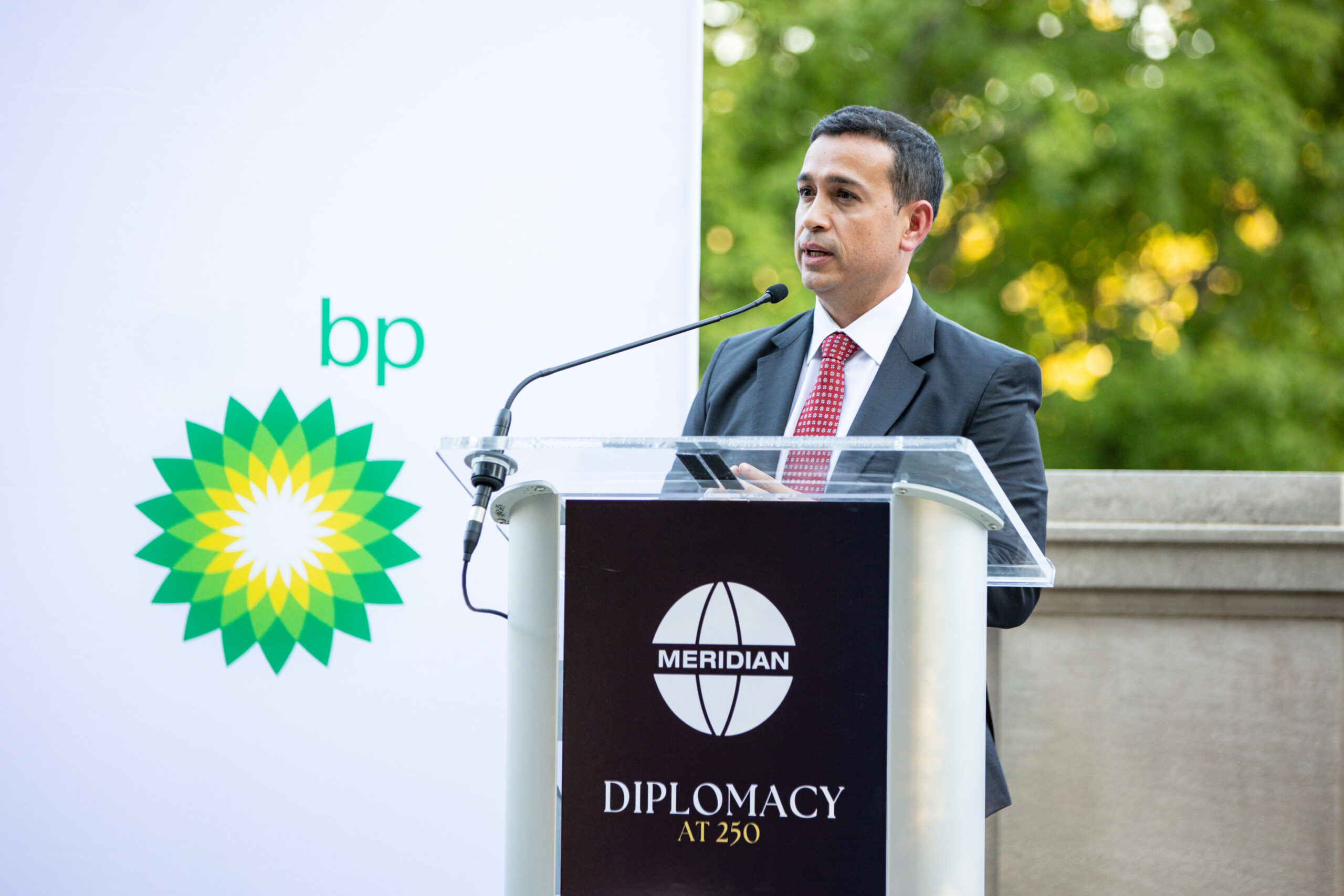
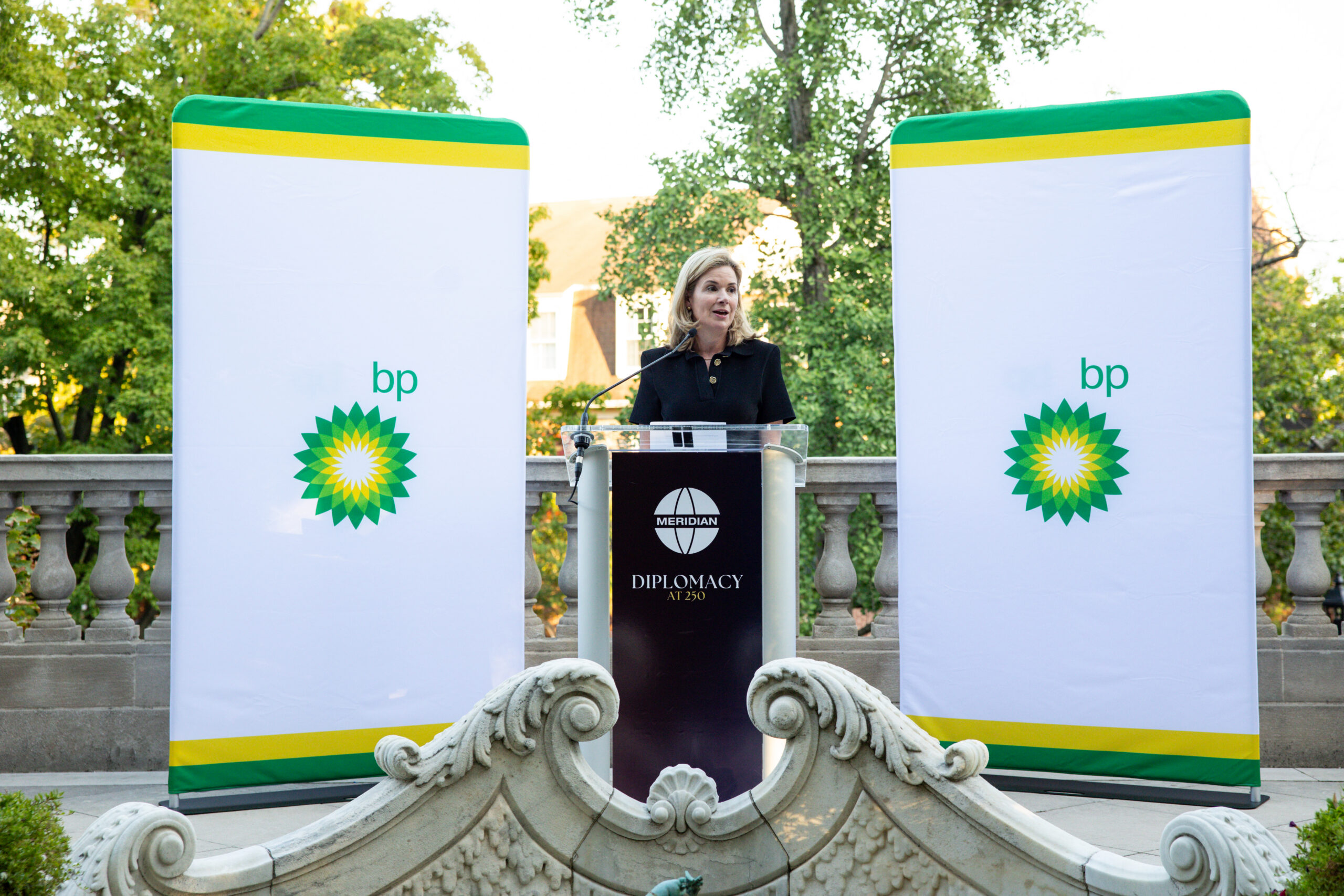
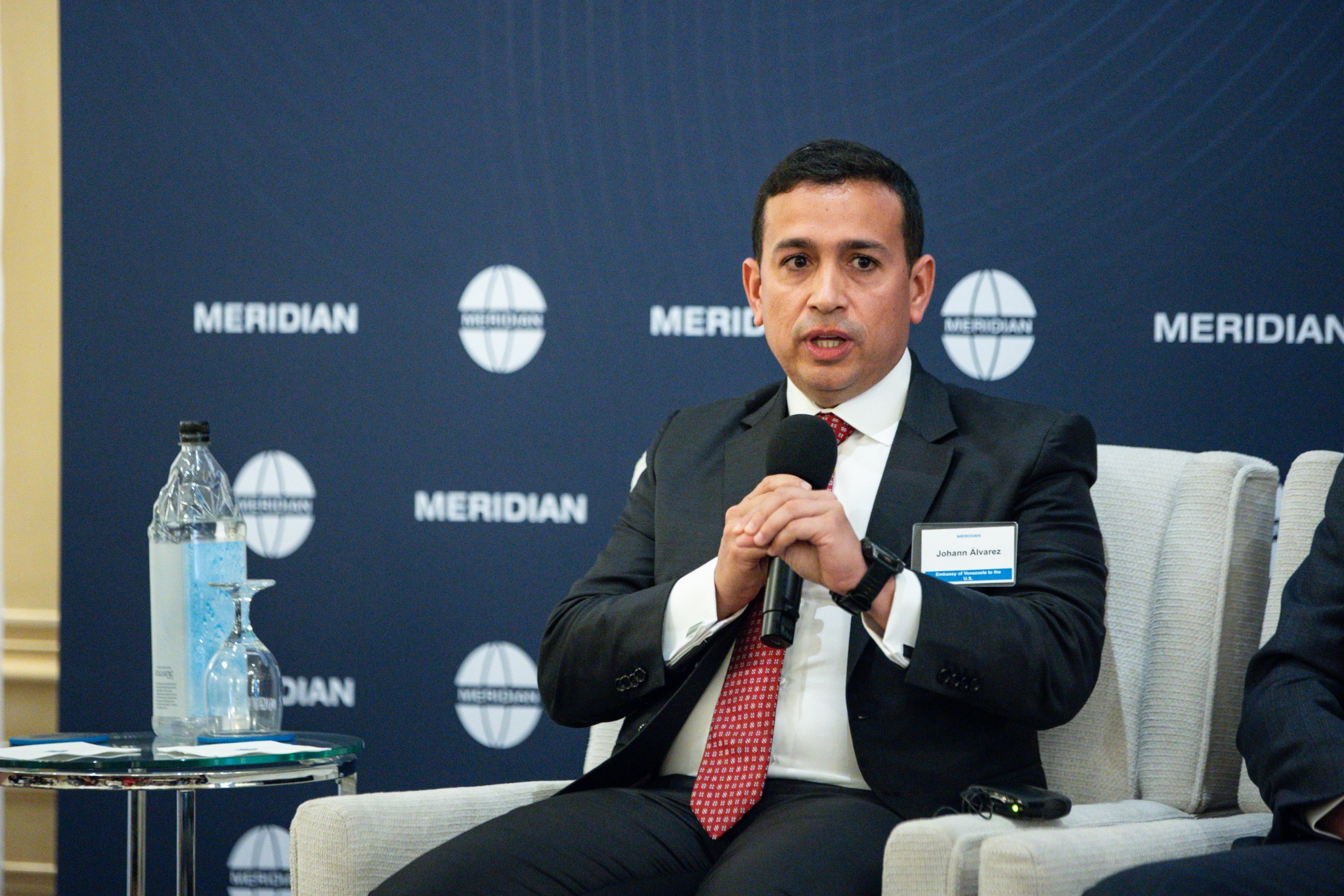
On September 16, Meridian International Center, in partnership with bp, convened leaders from government, industry and the diplomatic community for America 250: Advancing Energy Security and Competitiveness Across the Western Hemisphere. Moderated by Jim Golsen, Vice President of Meridian’s Center for Corporate Diplomacy, two panels examined the future of hemispheric energy security and the public-private partnerships needed to move projects from potential to production. Featured participants included David Campbell and Luisa Cipolliti of bp; Johann Álvarez, Chargé d’Affaires at the Embassy of Venezuela to the U.S.; Widad Whitman of the U.S. Department of Energy; Isabella Cascarano of the U.S. Department of Commerce; and Landon Derentz of the Atlantic Council. The discussions were followed by a reception at Meridian House.
Here are the top takeaways:
1. The Western Hemisphere Is Positioned to Play a Bigger Role in Global Energy Security
The Western Hemisphere combines significant oil, natural gas and critical mineral resources, but that abundance is unevenly distributed across the region. Latin America and the Caribbean alone holds about 15% of global oil and natural gas resources, around half of global lithium reserves and more than one-third of copper reserves, creating opportunities for countries to complement one another through trade, infrastructure and investment. At a time when disruptions abroad can quickly affect prices and supply worldwide, the region’s proximity to major markets offers another potential advantage. Turning those resources into durable energy security will depend on connecting supply with infrastructure, capital, and demand across borders.
2. The Biggest Energy Barriers Are Often Above Ground, Not Below It
Resource abundance means little if companies cannot confidently invest in projects that may operate for decades. Regulatory certainty, permitting, licensing and durable legal frameworks can determine whether capital moves into a market and whether projects make it from planning to production. In the United States, federal permitting for many energy infrastructure projects can take roughly four to five years, while major transmission projects can take around a decade from development through completion. Long-term investment also depends on trust working in both directions: governments need responsible partners capable of sustaining major projects, while companies need predictable rules that account for risk over the life of an investment.
3. A More Connected Hemisphere Can Turn Energy Resources Into Regional Resilience
Because resources, infrastructure and demand are unevenly distributed, no single market can fully realize the hemisphere’s energy potential on its own. Cross-border pipelines, refining capacity, power systems and trade can connect energy-producing markets with countries that face higher costs or limited domestic supply. Existing expertise also matters: countries including Venezuela, Brazil and Argentina already have experienced energy workforces and decades of institutional knowledge that can support new investment without building capacity from scratch. Greater integration can put those complementary resources, infrastructure and talent to work across the region while creating skilled jobs and broader economic opportunities in producing countries.
4. Public and Private Investment Must Work Together to Strengthen Supply Chains
Technology alone cannot move an energy project from concept to commercial scale. Governments can use grants, loans, tax incentives and other financing tools to address specific market gaps and reduce risk, while private companies provide the capital, technology and operational expertise needed to build and sustain projects. Effective coordination can also strengthen critical supply chains by encouraging diversified sourcing without eliminating competition. The challenge is matching the right public-sector tool to the right vulnerability while creating conditions that allow commercially viable projects to stand on their own.
5. Energy Security Requires Investing in Energy Diplomacy
Energy security is inseparable from economic policy, national security and international engagement, making technical expertise an important diplomatic capability. Diplomats and policymakers need a working understanding of energy markets, infrastructure, technology and regulation to negotiate partnerships and identify opportunities across complex portfolios. Stronger energy literacy can also help governments design regulatory systems that attract responsible investment and communicate more effectively with industry. Building the next generation of energy infrastructure will require investing not only in physical assets, but also in the people responsible for connecting policy, markets, and international partnerships.
This program was made possible with support from bp.






Project summary
| Western Hemisphere Energy Security: 5 Priorities for Investment and Regional Cooperation | September 2026 |
|---|
