

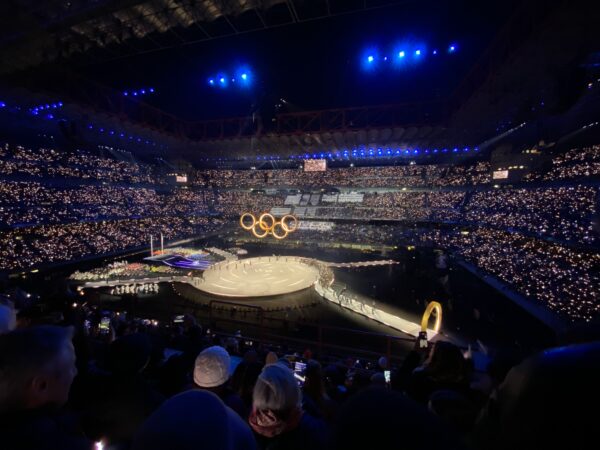

Visiting Fellow for the 2026 Winter Olympics
The Athletes’ Agenda
How the IOC AC has Supported Recommendations 3-5 of the Olympic Agenda 2020+5
By Joshua Peng
Since its inception in 1981, the International Olympic Committee Athletes' Commission (IOC AC) has been a vital link between IOC leadership and Olympic athletes. Over 22 Olympic Games, the Commission has expanded its size and influence. Originally composed of just nine appointees, it now includes 23 members, the majority of whom are elected by athletes themselves. One of the Commission’s key roles is supporting the implementation of the IOC’s Olympic Agenda. In 2021, the Olympic Agenda 2020+5 introduced 15 strategic recommendations to advance the Olympic Movement, including strengthening athletes' rights and responsibilities (Recommendation 3), attracting top talent (Recommendation 4), and promoting safe sport and protecting clean athletes (Recommendation 5). In response to these goals, the IOC AC released its own strategic plan in 2023, outlining steps to address these priorities. Following the 2026 Winter Olympic Games in Milano-Cortina, the Commission is set to evaluate the progress made toward these objectives. Did it succeed in empowering athletes, drawing elite competitors, and ensuring their protection? By reviewing initiatives from the 2024 Summer Olympic Games in Paris and new projects slated beyond 2026, it becomes clear that the Commission made significant strides in supporting Recommendations 3-5. As a result of these efforts, the Commission has become an increasingly effective advocate for athletes within the Olympic Movement.
Recommendation 3: Reinforce athletes’ rights and responsibilities.
Throughout the last quadrennial, efforts to “[empower] athletes within the decision-making processes of the IOC and put them at the heart of the Olympic Movement” have been front and center in the IOC’s communications. The increased focus on initiatives such as Athlete365 - a digital platform connecting Olympians to various resources - and greater visibility for the impact of Olympic Solidarity funding are products of Recommendation 3. The most text-heavy of the 15 recommendations within Olympic Agenda 2020+5, the recommendation encompasses six subsections with 19 specific suggestions for strengthening athletes’ rights and responsibilities. Two notable suggestions include:
- Building on Olympic Solidarity funding, continue empowering and supporting Athletes’ Commissions (ACs) across the Olympic Movement by encouraging IFs, NOCs and Continental Associations to provide sufficient resources to Athletes’ Commissions.
- Create new initiatives with TOPs and RHBs for athletes and Olympians.
How has the IOC AC built upon Olympic Solidarity (OS) funding to empower ACs throughout the Olympic Movement? According to its strategic agenda, the IOC AC aimed to ensure that all 206 NOCs have an effective AC by 2025. To achieve this, the IOC AC provided guidance on developing new NOC ACs by sharing best practices and guidance on accessing OS funding. OS funding is the redistributed broadcast revenue provided to all National Olympic Committees (NOCs), Continental Associations, and to sports development programs supported by International Federations (IFs). This funding supports development programs for less wealthy NOCs to create greater competitive parity in the Olympic Games.
In addition to athletic training, coaching initiatives, and other on-the-field development, NOCs can also access OS funding through yearly NOC AC Activity Grants to set up their own Athletes’ Commissions and to fund AC programs. According to Olympic Solidarity annual reports from 2021-2024, the total OS budget for the quadrennial was $590 million. Of this, $7.2 million was allocated to NOC AC Activity Grants. When the first Activity Grants were awarded in 2020, the total annual budget was a mere $540,000. Both the total number of NOC ACs and the total number of grant requests increased throughout the quadrennial. From 2021 to 2025, the total number of countries requesting NOC AC Activity Grants increased from 70 to 120. As of mid-2025, 200 NOCs had their own Athletes’ Commission, 10 more than in 2023. While not having met the goal of 206 ACs by 2025, this growth still demonstrates the IOC AC’s success in supporting commissions across the Olympic Movement and ensuring their stability with OS funding. With a 10% increase in OS funding for the 2025-2028 cycle ($650 million), the IOC AC has an opportunity to ensure the long-term stability of ACs globally.
Another notable suggestion within Recommendation 3 of the Olympic Agenda 2020+5 is to create new initiatives with The Olympic Partner (TOP) sponsors. The TOP program is the highest sponsorship level of the Olympic Games with an estimated value per quadrennial of at least $200 million. In addition to exclusive and global marketing rights surrounding the Olympic Games, TOP sponsors are given the opportunity to launch activations around the Olympic Games that impact the athlete experience. Athlete-centric activations are designed and executed in collaboration with Athlete365, a platform that the IOC Athletes’ Commission launched in 2017 to connect Olympians and Paralympians to career and educational opportunities, physical and mental health services, and connect brand management support.
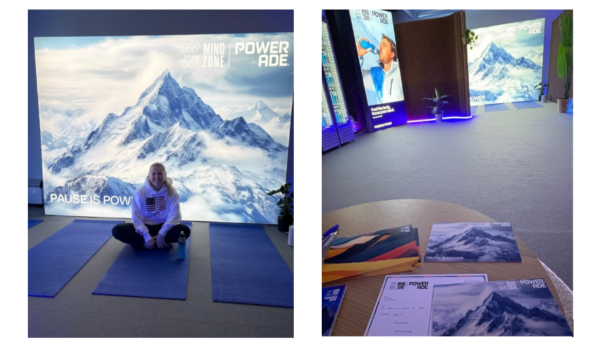
A new initiative that debuted during the 2024 Summer Olympic Games in Paris was the Athlete365 x Powerade Mind Zone, a mental wellness area within the Olympic Village sponsored by the Coca Cola subsidiary. The IOC AC counted approximately 2,300 athletes from 148 countries who took part in mindfulness activities such as guided meditations and visualizations through virtual reality. From data collected by the Commission, 92 percent of participants responded to the activation with positive feedback. With support from IOC AC leadership, the Mind Zone returned to the Olympic Games in Milano-Cortina to provide similar services.
Following the diffuse model of the 2026 Winter Olympic Games, the Mind Zone was present in all six Olympic Villages offering mindfulness activities including virtual reality experiences, art therapy, and guided breathing. Across different sports and disciplines, athletes made use of the space to prepare for and decompress from competition. First time Olympian and German speedskater Hendrik Dombek said of his experience and of the Mind Zone: “It’s my first time at the Games…it's more hectic, and I feel restless. It's very important to have a space where you can just chill out, relax and decompress.” Stevenson Savart, Haiti’s first Olympian in cross-country skiing, said that Mind Zone aided his preparations: “This space allows me to recharge and get rid of stress before competition…It allows me to have a clear mind. Afterwards, I feel settled and ready to go. It’s the perfect place.”
Other activations have supported athletes in between, or in preparation for, the Games. For example, Airbnb’s Athlete Travel Grants have supported Olympic hopefuls in need of housing during training sessions abroad by providing credits to athletes for Airbnb stays. These grants were instrumental in supporting the Refugee Olympic Team’s training before the 2024 Paris Games. When this activation debuted in 2021, a total of 500 travel grants were offered. By 2025, the program was able to offer 1,000 travel grants of $2,000 USD each to eligible athletes travelling to Milano-Cortina. In addition to doubling the number of Athlete Travel Grants awarded ahead of the 2026 Winter Olympic Games, Airbnb announced a celebratory $500 USD credit for all Olympians and Paralympians regardless of need. These grants - a collaborative effort between Airbnb, the IOC, and Athlete365 - have received overwhelmingly positive feedback from athletes across the globe:These grants - a collaborative effort between Airbnb, the IOC, and Athlete365 - have received overwhelmingly positive feedback from athletes across the globe:
“I don't think people understand just how beneficial it is having a community like Athlete365 supporting the journeys of Olympic athletes,” said Egyptian fencer Mariam Amer. “I can't begin to explain how much I've benefited from the grant. It has allowed me to organize training camps for myself overseas to better my performance.”
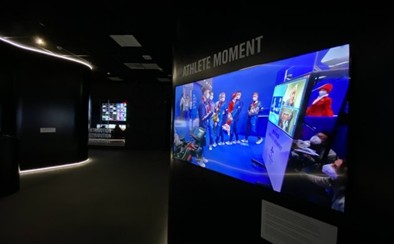
In addition to the growth of existing sponsor activations ahead of the Olympic Games in Milano-Cortina, new activations debuted as well. Recent additions to the TOP portfolio include AB InBev (exclusive category: non-alcoholic and alcoholic beers), and Chinese tech company TCL (exclusive category: home audiovisual equipment and home appliances). Both announced extensions as TOP partners through 2032 this year. In the lead up to Milano-Cortina, AB InBev announced that it would offer “experiential activations” in the form of “relaxation and celebration spaces for fans and athletes in Milan, Cortina and Livigno.” TCL equipped the Olympic Village with its home appliances including washing machines, air conditioners, and TVs. It also provided “Athlete Moments” using TCL interactive display technology at the side of the field of play, allowing athletes to digitally connect with family after competition.
Outside of the Olympic Games, sponsors actively recruit and hire Olympians and Paralympians to work for them. Deloitte, a management consulting firm, helped create an Athlete Employability Framework to improve the Athlete365 Career+ initiative. Additionally, Deloitte has identified employment gaps, built job readiness programs for athletes, and hired Olympians to “Team Deloitte” which represents 30 dual-career athletes across 15 sports for 14 different countries. Allianz, a multinational insurance agency, has recruited and hired athletes – Paralympians in particular – to their offices around the world. As presenting sponsor of the Paralympic Torch Relay, Allianz can highlight inclusivity and empowerment as corporate values. “There is no clear differentiation between Olympics and Paralympics,” said Eike Buergel, Global Head of Allianz’s Olympic & Paralympic Program, “We want them to be on eye level, whether on the field of play or in the insurance landscape.”
Overall, the sustainability and growth of existing sponsor activations impacting Olympic and Paralympic athletes, plus the introduction of new sponsor initiatives informed by the IOC Athletes’ Commission through Athlete365, demonstrates the IOC AC’s progress in fulfilling Recommendation 3 of the Olympic Agenda 2020+5.
Recommendation 4 - Continue to attract best athletes
Recommendation 4 is particularly focused on attracting top talent from professional leagues and other sports event organizers to the Olympic Movement. The main suggestion within Recommendation 4 reads:
- Engage with best athletes, in collaboration with IFs, professional leagues, NOCs and player representatives to ensure the motivation of current and emerging generations of best athletes to compete at the Olympic Games.
A major storyline from the 2026 Winter Olympic Games was the participation of players from the National Hockey League (NHL) for the first time since 2014. Due to the lack of top athletes in ice hockey, viewership of the sport declined severely: compared to the 2014 men’s championship game, which drew 3.6 million viewers, the 2022 men’s championship game drew 1.0 million - a 71 percent decrease.
The agreement to bring NHL players back to the Olympic Games required two lanes of negotiations - one between the NHL and NHL Players’ Association (NHLPA), and one between the NHL and the International Ice Hockey Federation (IIHF). A new collective bargaining agreement (CBA) between the NHL and NHLPA was signed on June 27, 2025 and allowed for NHL players to return to the Olympic Games. Shortly afterward, an agreement was reached between the NHL and the IIHF on July 2, 2025. While the NHL players and the IIHF have historically been eager for league participation, the league itself has always been concerned about injuries, pausing the NHL schedule, and the lack of marketing and media rights. As the collective bargaining representative of NHL players, the NHLPA pushed strongly for a return to the Olympic Games and successfully negotiated this into the new CBA. While the role of the IOC and IOC Athletes’ Commission’s was limited in these negotiations, the IOC AC played a role in how NHL players experienced Milano-Cortina. Accommodations, facility quality, and future discussions of media and marketing rights that fall in the IOC AC’s purview will affect the “motivation of current and emerging generations of best athletes to compete at the Olympic Games.” The strength with which the NHLPA pushes for future participation in the Olympic Games rests in part on the experience that the IOC AC helped curate.
A major point of controversy preceding the Olympic Games was the size of the playing surface at the Santagiulia Ice Hockey Arena. While NHL executives postured in the media regarding the potential safety issues of a smaller arena, the men’s tournament was executed without public complaint from players. In terms of the facility itself, the biggest issue that arose was the originally dark color of the dasher boards which reduced visibility of the puck. This was quickly fixed after a complaint from American goalie Jeremy Swayman. The most significant controversy coming out of both the men’s and women’s hockey tournaments was the change to three-on-three overtime in medal-deciding games. With NHL players accustomed to playing in five-on-five overtime periods during league playoff games, many players and analysts believed the change fundamentally altered the flow of the game. This rule change played out in dramatic fashion as the US defeated Canada in both tournaments in three-on-three overtime.
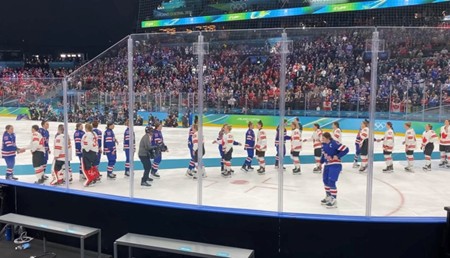
According to IIHF President Luc Tardif, the rationale for changing the overtime period to three-on-three was the packed schedule of the Olympic hockey tournament. Should there be changes made to the Olympic hockey tournament schedule that could allow for the return of four-on-four overtime periods (which NHL players experienced until 2014), those changes would be reviewed by the IOC Program Commission, which works closely with the IOC Athletes’ Commission. However, at this point, the Athletes’ Commission will be in the feedback collection process and advocating for any changes to the tournament will not have yet begun. Observers will watch how future tournament formats respond to this criticism, and note if any NHL players join the IOC Athletes’ Commission (which currently has none) in order to affect change.
In addition to the return of NHL players, Milano-Cortina were marked by the debut of ski mountaineering as an Olympic sport. New events were added as well in luge, ski jumping, skeleton, freestyle skiing, and alpine skiing. The inclusion of new sports and events is a long process that begins years before any Olympic medals are awarded. Ski mountaineering, for example, was approved for the 2026 Olympic Games in 2021, only after its debut in the 2020 Youth Olympic Winter Games in Lausanne. The Olympic Program Commission, which leads the review and decision-making process for additions to the Olympic program, is informed by representatives including the Athletes’ Commission chair. Ski mountaineering proved to be an extremely popular sport in its debut in Bormio. At least 95 percent of available tickets were sold – the same rate as speed skating and short track, which were hosted in Milan.
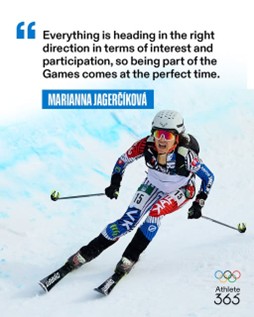
The inclusion of new sports and events bringing additional elite athletes to the Olympic Games is a success of Recommendation 4 partly attributed to the IOC Athletes’ Commission’s leadership. To continue fulfilling the Recommendation and motivate athletes to continue competing in these new events, the IOC AC must effectively integrate these new athletes into their programming.
Recommendation 5: Further strengthen safe sport and the protection of clean athletes.
Finally, Recommendation 5 - continue to promote safe sport and protect clean athletes - is concerned with the physical and mental health of Olympians, as well as antidoping and preventing competition manipulation. Two notable suggestions include:
- Increase mental health support programs for elite athletes and their entourage.
- Continue to support World Anti-Doping Agency (WADA) and International Testing Agency (ITA) development and implementation of anti-doping programs, including towards professional leagues and college sport.
Since the launch of the Athlete365 platform, the IOC Athletes’ Commission has designed a number of mental health resources under the banner of #MentallyFit. Speaking about these resources, Abhinav Bindra, Second Vice President of the IOC AC and an IOC Mental Health Ambassador, commended the IOC for making “incredible strides in supporting athletes with resources that not only address immediate concerns but also promote long-term well-being.” While the Athlete365 x Powerade Mind Zone returned to provide professional services to athletes in Milano-Cortina, the IOC AC also strengthened digital and telephone resources. Also returning to the Olympic Games in 2026 was the Mentally Fit Helpline. Announced in 2021 to provide counselling services for athletes accredited for the 2024 and 2026 Olympic Games, the IOC AC ensured that the helpline would provide professional support 24 hours a day in 70 languages. While athletes have been encouraged by Athlete365 social media channels and advocates to access the helpline, even after the Closing Ceremony, the IOC has not published any data regarding access to the helpline. At the same time, little data has been retrieved regarding athlete utilization of mindfulness apps or e-learning courses distributed through the IOC Mental Health in Elite Athletes Toolkit. To better understand the effects of the IOC AC’s mental health initiatives, the organization must collect and publish accurate usage data following the Milano-Cortina Games.
The IOC Athletes’ Commission has been vocal regarding anti-doping. In particular, the IOC AC states its commitment to raising awareness among athletes, supporting the World Anti-Doping Agency (WADA) and its initiatives, and warning about the risks of using nutritional supplements. The IOC AC works closely with WADA, especially the WADA Athlete Council: five out of the Athlete Council’s 20 members are appointed by the IOC AC (including current WADA Athletes’ Council member and former IOC AC Chair Emma Terho). In 2020, the WADA Athlete Council developed Athletes’ Anti-Doping Rights Act which includes the right for Olympic Athletes “to receive anti-doping education and information from anti-doping organizations.”
One way that the IOC AC has lived up to its role in the publication of the Anti-Doping Rights Act is its support of anti-doping programming across NOC Athletes’ Commissions. Recent examples of programming include a two-day educational workshop hosted by the Sierra Leone NOC AC; similar workshops for the Hong Kong, China NOC AC; and an athletes’ forum led by the Montenegro NOC AC headlined by two interactive anti-doping and safeguarding workshops. All of these activities were supported by NOC AC Activity Grants.
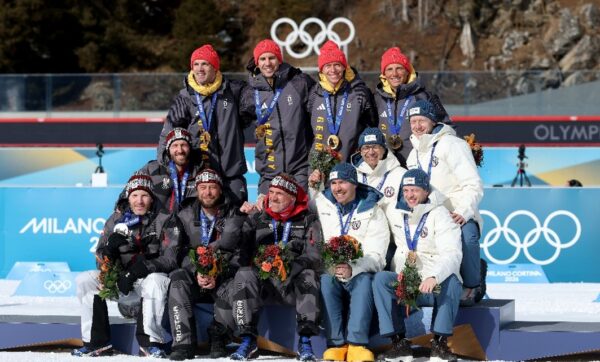
Additionally, the IOC AC has designed Medal Reallocation Ceremonies. In 2018, under then IOC AC Chair Kirsty Coventry, the IOC AC proposed a standardized process to reallocate medals determined to have been won by an offending athlete. In 2024, the IOC AC recommended that full medal ceremonies in front of family, friends, and fans, be held to honor clean athletes with the rightful celebration they deserved. During the 2024 Olympic Games, 10 Olympians were awarded reallocated medals ranging from a bronze medal for the Women's 200m race in Sydney 2000, to a full podium of medals for the Women's 400m Hurdles in London 2012. Ahead of Milano-Cortina 2026, the IOC AC made an additional recommendation regarding venue choices for athletes’ receiving reallocated medals. These were ultimately hosted in Anterselva – which otherwise hosted biathlon events during competition days. Fourteen medals were reallocated on February 14, presented by IOC President Kirsty Coventry and the IOC AC Chair.
Conclusion
As just one piece of the governance structure of the Olympic Movement, the IOC Athletes’ Commission may be criticized for having too small a presence or for its influence on the Olympic Movement being nominal. While it is true that the Olympic governance structure is composed of a multitude of committees and associations, and that even Continental Associations and NOCs possess their own Athletes’ Commissions, it is also true that the IOC AC stands alone as the most powerful elected body of athletes with decision-making power at the global level.
At the conclusion of the 2026 Winter Olympic Games, Korean bobsledder Yunjong Won and Estonian biathlete Johanna Talihärm were elected to the two Commission memberships vacated by outgoing IOC AC Chair Emma Terho and Astrid Uhrenholdt Jacobsen. International basketball star and IOC AC member Pau Gasol was selected as the new chairman. 2,393 athletes, representing a participation rate of over 83%, cast votes. This represents a significant increase in participation from the 2024 election, which had a participation rate of 62%. Pau Gasol’s election to IOC AC Chair, as well as the overall growth in electoral participation, indicates the AC’s increased influence in the Olympic movement.
By analyzing the IOC AC’s action supporting ACs across the Olympic Movement; launching new athlete-centric activations with TOP sponsors; curating an Olympic experience that will continue to attract top athletic talent globally; increasing mental health programming; and supporting anti-doping programs, it becomes clear that the IOC AC has been an essential agent in executing Recommendations 3-5 of the Olympic Agenda 2020+5. While the AC can make improvements – especially in integrating athletes from new or returning sports into leadership roles, and researching the effectiveness of its new mental health initiatives – the Commission has clearly become a more effective advocate for Olympic and Paralympic athletes.
The implications of a successful IOC Athletes’ Commission reverberate beyond the Olympic Games or sport generally. Globally, there are few governing bodies that are directly elected by the people that they represent. By successfully delivering on the aspects of the Olympic Agenda 2020+5 that it set out to support, the IOC AC provides a blueprint for representative governance globally across all contexts.
Works Cited
Athlete365. (2026). 14 Olympians receive Olympic medals in reallocation ceremony at Milano Cortina 2026. https://www.olympics.com/athlete365/articles/milano-cortina2026/14-olympians-receive-olympic-medals-in-reallocation-ceremony-at-milano-cortina-2026
Athlete365. (2024). AC guide: Creating an Athletes’ Commission strategy. https://www.olympics.com/athlete365/articles/ac-support/ac-guide-creating-an-ac-strategy
Athlete365. (2025). ACT grant. https://www.olympics.com/athlete365/topics/act-grant
Athlete365. (2025). Airbnb Athlete Travel Grant. https://www.olympics.com/athlete365/topics/airbnb
Athlete365. (n.d.). Airbnb Athlete Travel Grant 2025. https://www.olympics.com/athlete365/offers/airbnb/airbnb-athlete-travel-grant-2025
Athlete365. (n.d.). Athlete365. https://www.olympics.com/athlete365
Athlete365 (2026). How the Mind Zone is helping athletes thrive at Milano Cortina 2026. https://www.olympics.com/athlete365/articles/milano-cortina2026/how-the-mind-zone-is-helping-athletes-thrive-at-milano-cortina-2026
Athlete365. (2025). How to seek help at Milano Cortina 2026. https://www.olympics.com/athlete365/articles/safesport/how-to-seek-help-at-milano-cortina-2026
Athlete365. (n.d.). Mental health. https://www.olympics.com/athlete365/topics/mental-health
Athlete365. (2026). NOC AC Activity Grant breaks new ground in 2025. https://www.olympics.com/athlete365/news/act-grant/noc-ac-activity-grant-breaks-new-ground-in-2025
Athlete365. (2025). Relax and recharge at the Athlete365 x Powerade Mind Zone. https://www.olympics.com/athlete365/news/mentally-fit/relax-and-recharge-at-the-athlete365-x-powerade-mind-zone
Athlete365. (2024). Ten Olympians receive reallocated medals in Champions Park ceremony. https://www.olympics.com/athlete365/articles/olympic-medal-reallocation/ten-olympians-receive-reallocated-medals-in-champions-park-ceremony
Athlete365. (2024). The Airbnb500. https://www.olympics.com/athlete365/articles/airbnb500/the-airbnb500
Bindra, A. (2024, October 21). Mental health advocacy [Post on X]. https://x.com/Abhinav_Bindra/status/1848958963728961809
Coyne-Schofield, K. (2026, February). [Post on Instagram] https://www.instagram.com/p/DUnoWVqlX3O/?img_index=2
Kaplan, E. (2025, December). ESPN. Bill Daly: If Olympic ice unsafe, NHL players won't take part. https://www.espn.com/nhl/story/_/id/47251828/bill-daly-olympic-ice-unsafe-nhl-players-take-part
Francs Jeaux
Garlick, B. (2026, March). Insurance Business Magazine. Paralympic Games – inside the insurance architecture. https://www.insurancebusinessmag.com/uk/news/breaking-news/paralympic-games--inside-the-insurance-architecture-567669.aspx
International Ice Hockey Federation. (2023). IIHF finalizes agreement with NHL and NHLPA. https://www.iihf.com/en/news/68847/iihf_finalizes_agreement_with_nhl_and_nhlpa_for_th
International Olympic Committee. (n.d.). 1981: Creation of the Athletes’ Commission. https://www.olympics.com/ioc/1981-creation-of-the-athletes-commission
International Olympic Committee. (2025). AB InBev on the road to Milano Cortina 2026. https://www.olympics.com/ioc/news/ab-inbev-on-the-road-to-milano-cortina-2026
International Olympic Committee. (2023). Athletes hail arrival of latest Athlete365 Airbnb Athlete Travel Grants as record numbers applied in 2023. https://www.olympics.com/ioc/news/athletes-hail-arrival-of-latest-athlete365-airbnb-athlete-travel-grants-as-record-numbers-applied-in-2023
International Olympic Committee. (n.d.). IOC Athletes’ Commission. https://www.olympics.com/ioc/athletes-commission
International Olympic Committee. (n.d.). Olympic Agenda 2020+5. https://www.olympics.com/ioc/olympic-agenda-2020-plus-5
International Olympic Committee. (n.d.). Olympic Solidarity. https://www.olympics.com/ioc/documents/beyond-the-games/olympic-solidarity
International Olympic Committee. (n.d.). Ski mountaineering at Milano Cortina 2026. https://www.olympics.com/en/milano-cortina-2026/sports/ski-mountaineering
International Olympic Committee. (2025). TCL on the road to Milano Cortina 2026. https://www.olympics.com/ioc/news/tcl-on-the-road-to-milano-cortina-2026
International Olympic Committee. (n.d.). Who is responsible for adding events or disciplines to the Olympic programme? https://www.olympics.com/ioc/faq/sports-programme-and-results/who-is-responsible-for-adding-events-or-disciplines-to-the-programme-of-the-olympic-games
International Olympic Committee Athletes’ Commission. (2023). IOC Athletes’ Commission strategy (PDF). https://www.olympics.com/athlete365/app/uploads/2023/09/Athlete365_IOC_AC_Strategy_ENG_9b_AW.pdf
International Olympic Committee. (2026). Milano Cortina 2026 Olympians elect Yunjong Won and Johanna Talihärm as new members to IOC Athletes’ Commission. https://www.olympics.com/ioc/news/milano-cortina-2026-olympians-elect-yunjong-won-and-johanna-taliharm-as-new-members-to-ioc-athletes-commission
National Hockey League. (2024). NHL and NHLPA agree on four-year extension to CBA. https://www.nhl.com/news/nhl-nhlpa-agree-on-4-year-extension-to-cba
NBC. (2026, February). Olympic hockey boards replaced with lighter color after player feedback. https://www.nbcolympics.com/news/olympic-hockey-boards-replaced-lighter-color-after-player-feedback
Reuters. (2018). IOC plans medal reallocation ceremonies to honor athletes. https://www.reuters.com/article/sports/ioc-plans-medal-reallocation-ceremonies-to-honor-athletes-idUSKBN1I32O8
Sports Business Journal. (2024). TOP sponsorship program faces a key inflection point as the Olympic Games embark on a period of opportunity. https://www.sportsbusinessjournal.com/Articles/2024/05/27/olympics/
Sports Media Watch. (2018). Olympic men’s hockey ratings tumble on NBCSN. https://www.sportsmediawatch.com/2018/02/olympic-mens-hockey-ratings-curling-nbcsn/
World Anti-Doping Agency. (n.d.). Athlete Council. https://www.wada-ama.org/en/athletes-support-personnel/athlete-engagement/athlete-council
World Anti-Doping Agency. (2020). Athletes’ Anti-Doping Rights Act. https://www.wada-ama.org/en/resources/athletes-anti-doping-rights-act
Project summary
| The Athletes’ Agenda |
|---|
