

Powering AI: How Critical Minerals, Advanced Nuclear Energy, and U.S.-Japan-Korea Cooperation Are Strengthening Energy Security
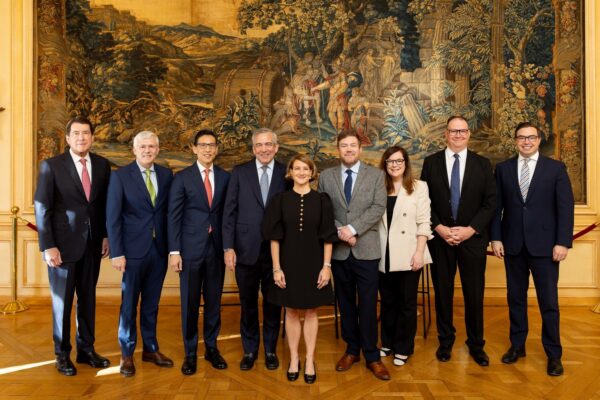
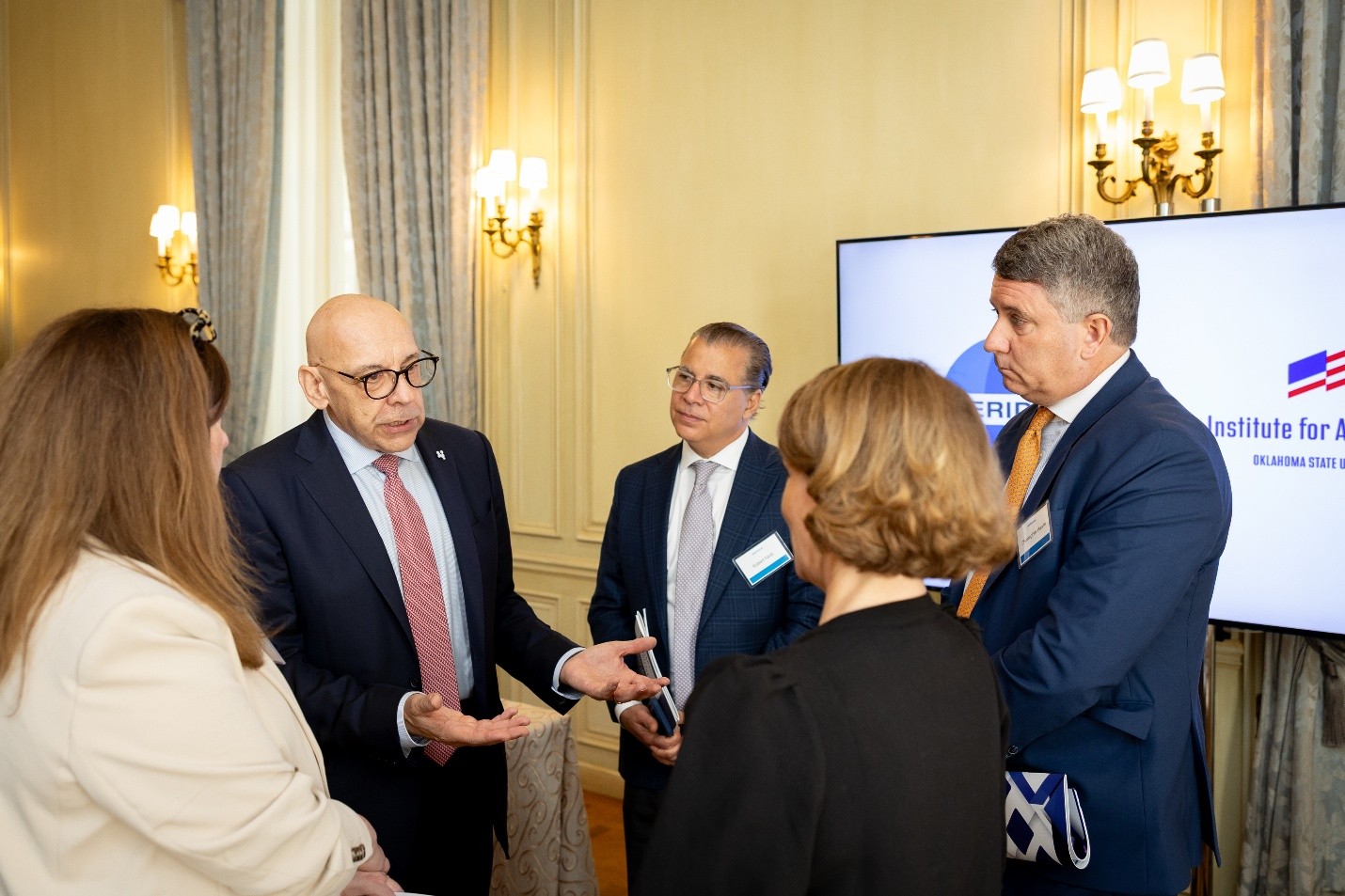
Artificial intelligence is reshaping energy demand while increasing the importance of the minerals, fuels, and industrial capacity needed to power it. On September 30, 2026, Meridian International Center and the Hamm Institute for American Energy at Oklahoma State University convened government and industry leaders from the United States, Japan, and Korea at Meridian House to examine how critical mineral supply chains, advanced nuclear energy, and allied cooperation can support the infrastructure behind the AI economy. The program brought together approximately 60 senior energy and technology executives, U.S. government leaders, and Korean and Japanese diplomatic officials.
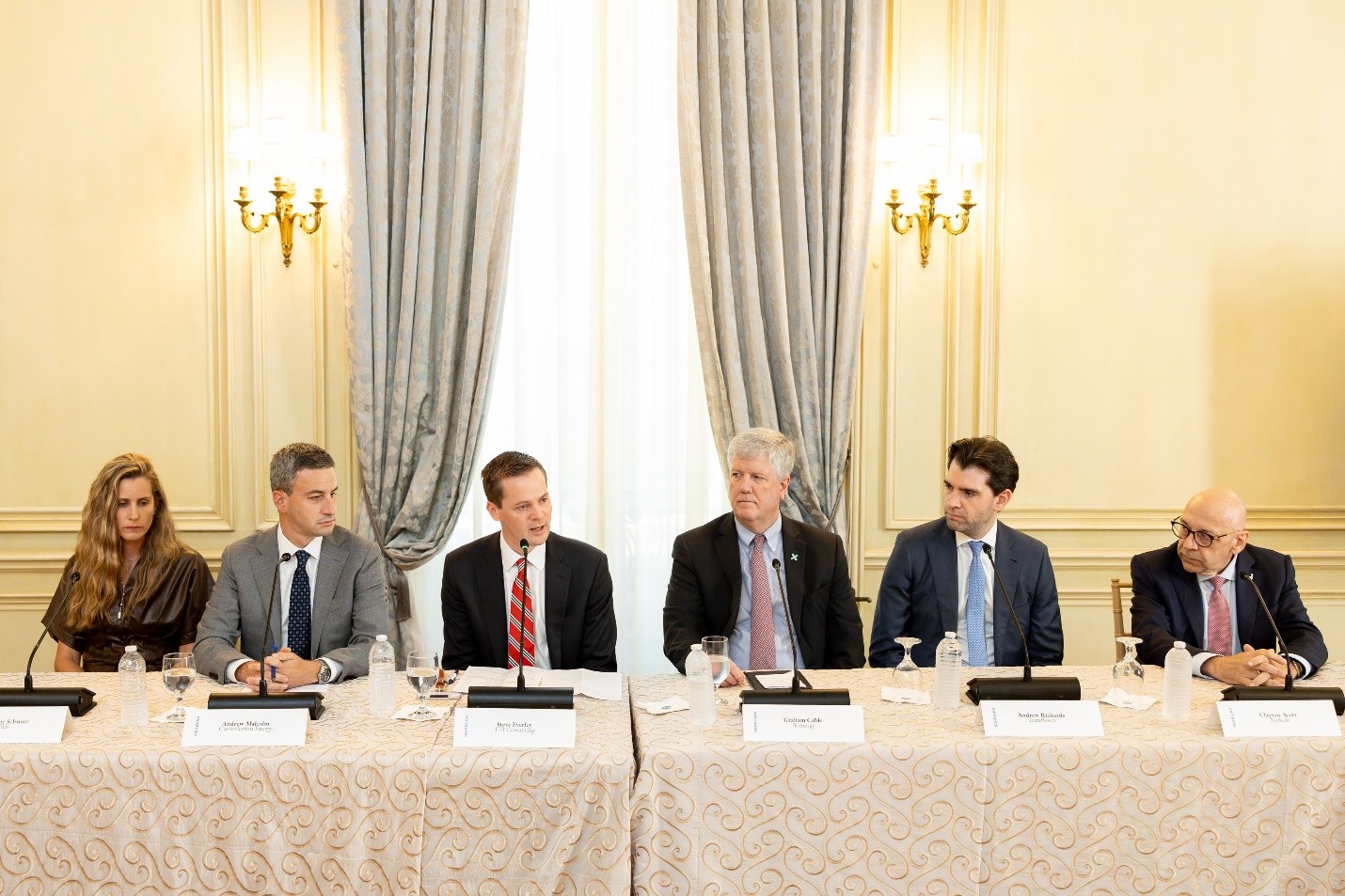
Across two fireside chats and two expert panels, the conversations focused on turning energy and mineral security priorities into projects that can scale. Leaders examined the investment, manufacturing capacity, and international partnerships needed to expand advanced nuclear energy, strengthen critical mineral processing, and build more resilient supply chains.
Opening session on the future of U.S. nuclear energy and its role in American energy security and competitiveness
America’s nuclear buildout must become repeatable, not exceptional. The next generation of nuclear projects will need to prove that successful deployments can be replicated across sites and markets without starting from scratch each time. Experience with the BWRX-300 in Canada and the Clinch River project in Tennessee points to the value of standardized designs, shared regulatory learning, and supply chains capable of supporting multiple deployments. At the same time, major investments such as Korea Zinc’s multibillion-dollar expansion of critical minerals processing and recycling facilities in Tennessee demonstrate private-sector confidence in the industrial ecosystem needed to support advanced energy and manufacturing projects. Faster licensing can help move projects forward, but financing, workforce capacity, and reliable access to uranium and enrichment remain critical to turning approvals into operating reactors.
That challenge extends beyond the United States. As countries seek reliable power for economic growth and energy-intensive technologies, nuclear exports can create long-term commercial relationships while expanding markets for U.S. technology. Competing globally will require the United States to pair its regulatory and technological capabilities with secure fuel supplies and stronger relationships with allies, particularly as Russia and China remain major players in the international nuclear market.
A conversation on U.S. industrial competitiveness, critical mineral security, and the role of international partnerships in strengthening supply chains.
Critical mineral security will be won in the middle of the supply chain. Mining is only one part of the equation. Processing and refining remain major choke points for materials that feed semiconductors, AI data centers, energy technologies, and advanced manufacturing, leaving entire industries exposed when capacity is concentrated in a single country. Building resilience means developing alternatives across the value chain rather than simply increasing access to raw materials.
The bigger test is turning industrial policy into commercially viable projects. New processing and manufacturing facilities need enough certainty to attract capital, making tools such as financing, trade measures, and long-term offtake agreements important for creating durable demand. Cooperation with Japan and Korea can help fill those gaps by combining U.S. resources and investment with allied capital, technology, and industrial expertise. Over the coming years, reducing dependence on single-source suppliers will depend not on any one country recreating the entire supply chain, but on building complementary capacity across trusted markets.
Panel I: Bolstering the US-Korea-Japan Trilateral Partnership to Secure Critical Mineral Supply Chains
The U.S., Japan, and South Korea do not need three separate critical mineral supply chains. Each country brings complementary strengths in resources, processing, manufacturing, technology, and capital that can contribute to a more resilient shared system. Rather than replicate every stage of production, the countries can build on existing capabilities, expand processing and recycling, and develop projects that connect their markets and industries.
Building a stronger trilateral supply chain will require governments and industry to remove barriers between the three countries. Different regulations can make it harder to move critical minerals across borders, while uncertain demand can make major processing and recycling projects difficult to finance. Early-warning systems can flag potential supply disruptions, but long-term resilience will depend on investing in projects that combine technology and financing with reliable demand.
Panel II: Critical Minerals Needed for America’s Nuclear Renaissance
America’s nuclear supply chain challenge goes far beyond uranium. Advanced reactors depend on specialized steel, graphite, zirconium, transformers, turbines, and reactor components, alongside a reliable nuclear fuel supply. Some of these supply chains are not yet qualified or scaled to support widespread deployment in the United States, creating a gap between plans to expand nuclear generation and the industrial base needed to build it.
Fuel remains another constraint. Expanding domestic uranium mining is only one step; conversion, enrichment, and fabrication capacity must grow alongside it, including supplies of the fuels required by some advanced reactor designs. Suppliers also need confidence in future reactor deployment to justify investments in new facilities and manufacturing capacity. Partnerships with Japan and Korea can help meet near-term needs while U.S. capacity grows, but the longer-term measure of success will be whether advanced reactors move from individual demonstrations to repeatable commercial deployment and whether the supply chain can scale with them.







Hosted in partnership with:

Project summary
| Powering AI: How Critical Minerals, Advanced Nuclear Energy, and U.S.-Japan-Korea Cooperation Are Strengthening Energy Security | October 2026 |
|---|
