

How the Dominican Republic Is Expanding U.S. Trade, Investment and Supply Chains

The Dominican Republic is building on decades of economic growth to deepen its role as a U.S. trade and investment partner. In 2025, foreign direct investment reached more than $5 billion, with officials expecting further growth in 2026, reflecting continued investment across energy, manufacturing and other sectors. At the same time, faster logistics, expanding energy capacity and new opportunities in critical minerals and technology are creating more ways for U.S. companies to invest and grow in the country.
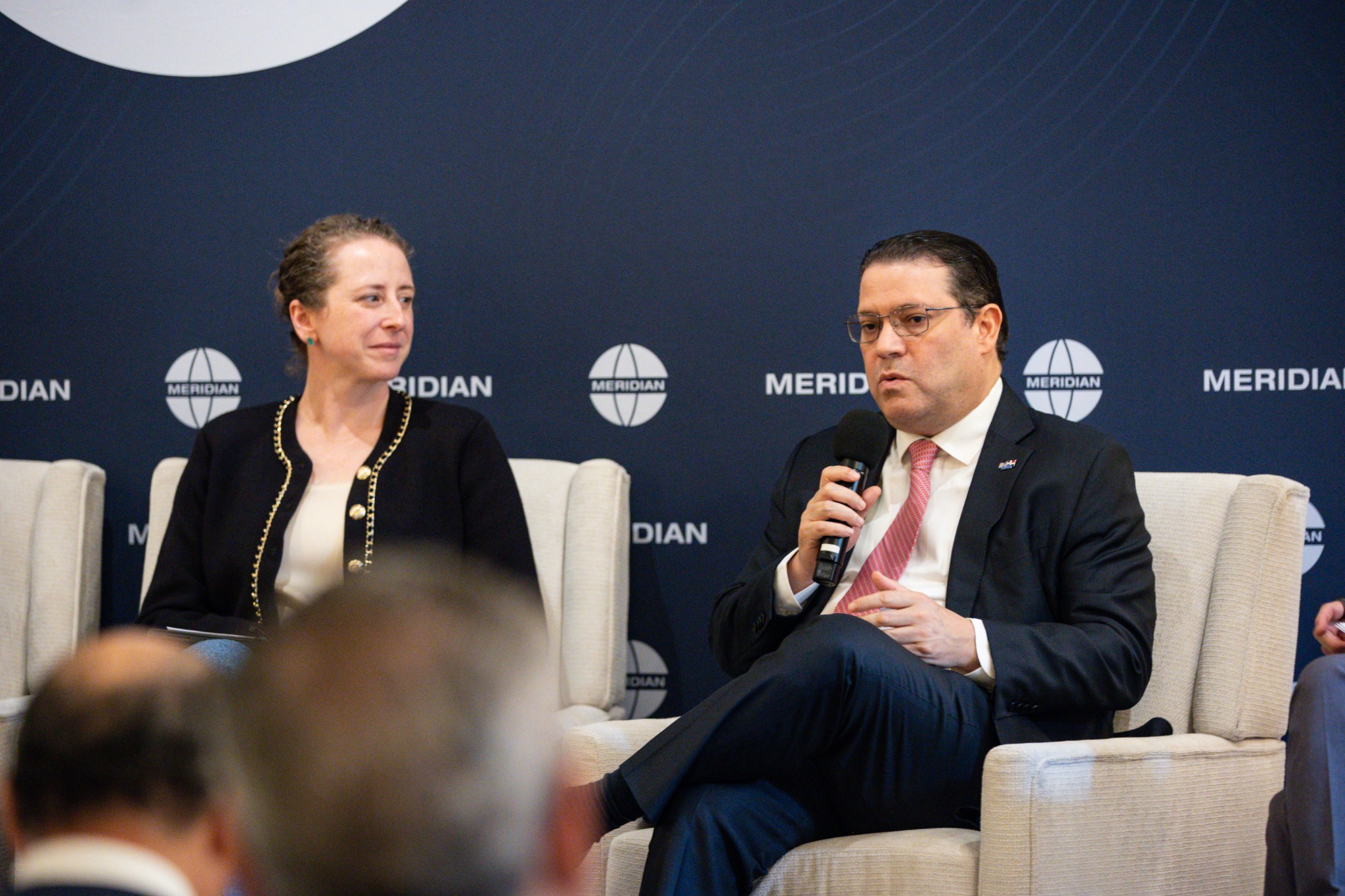
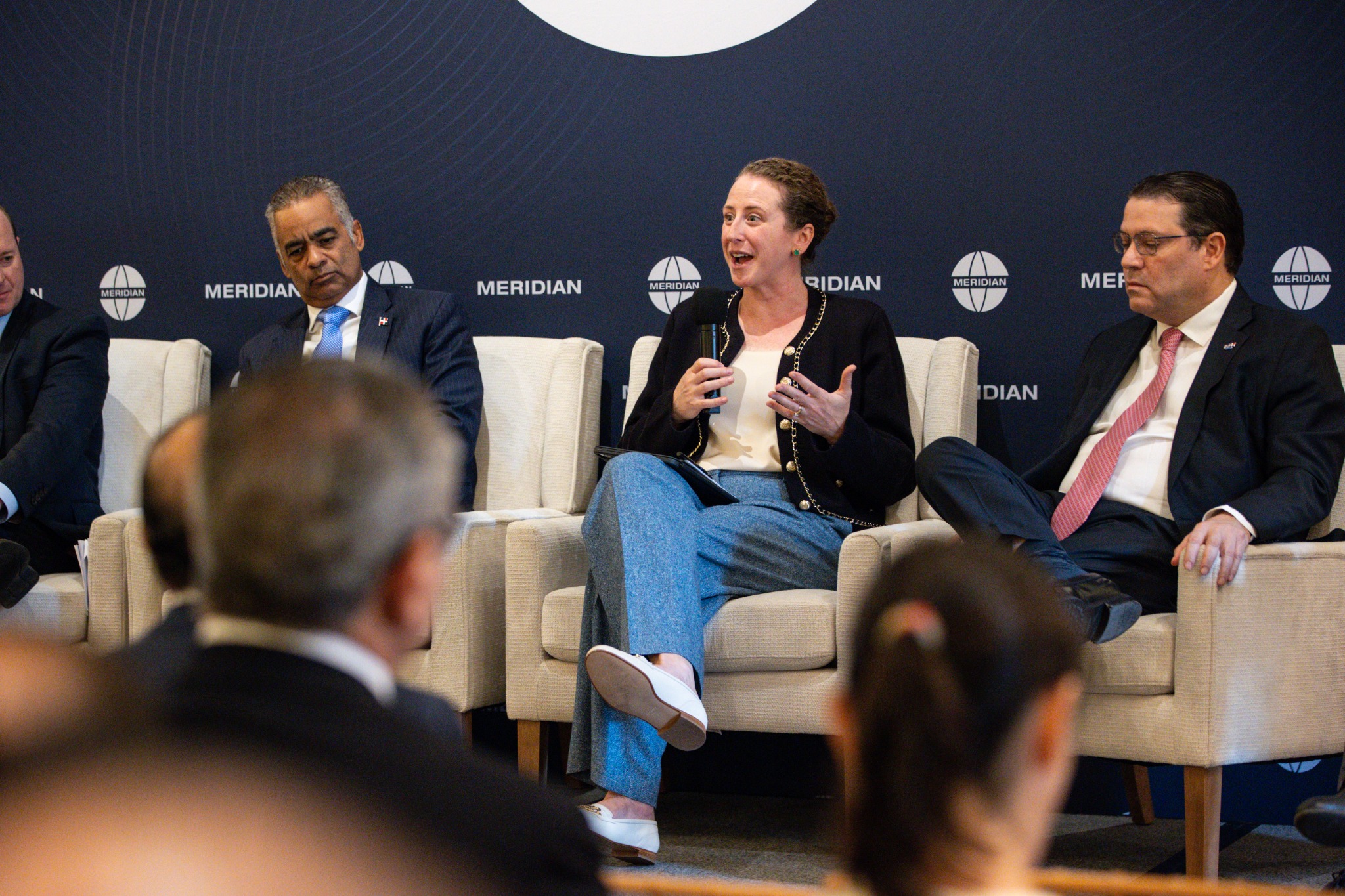
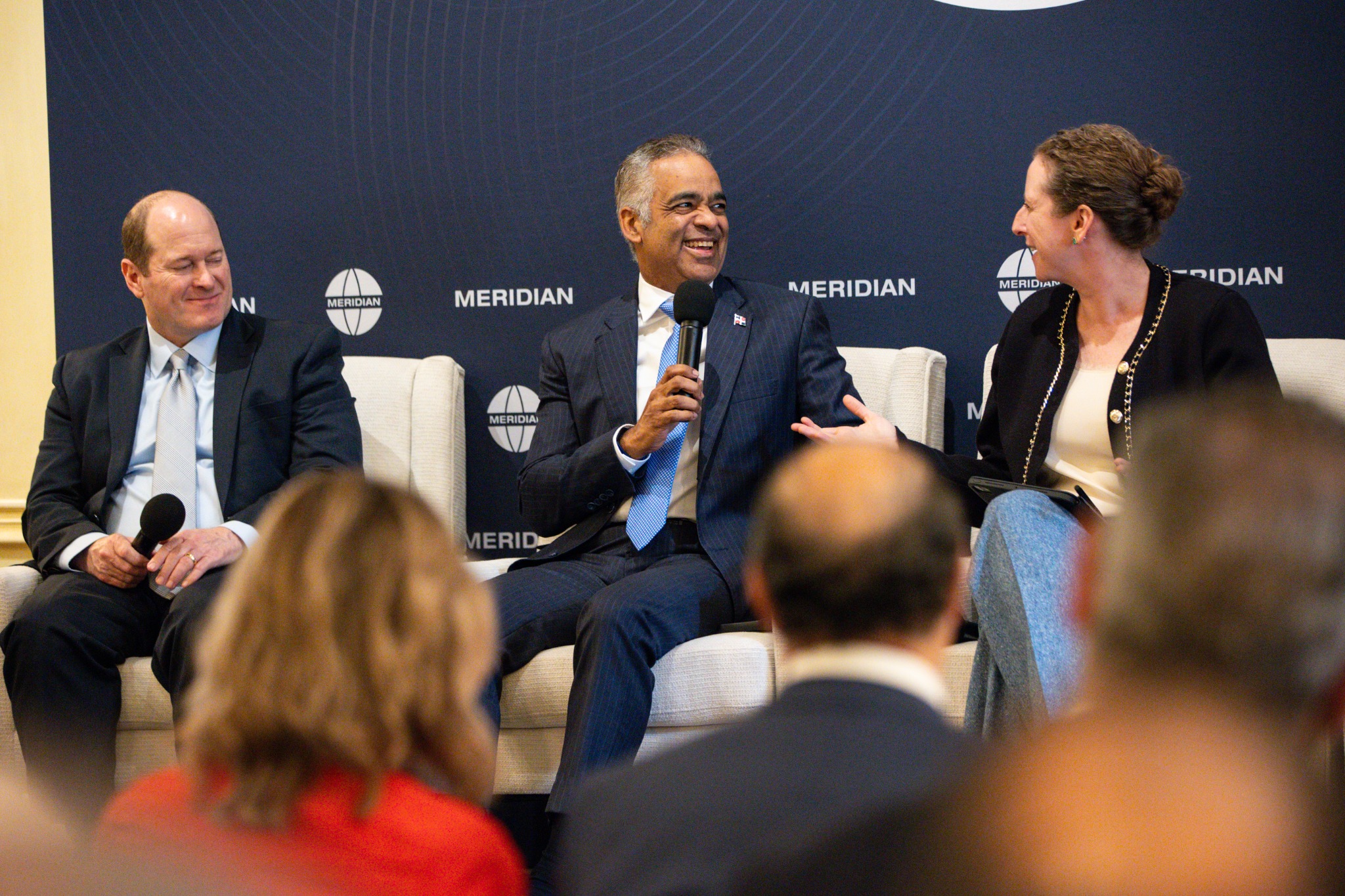
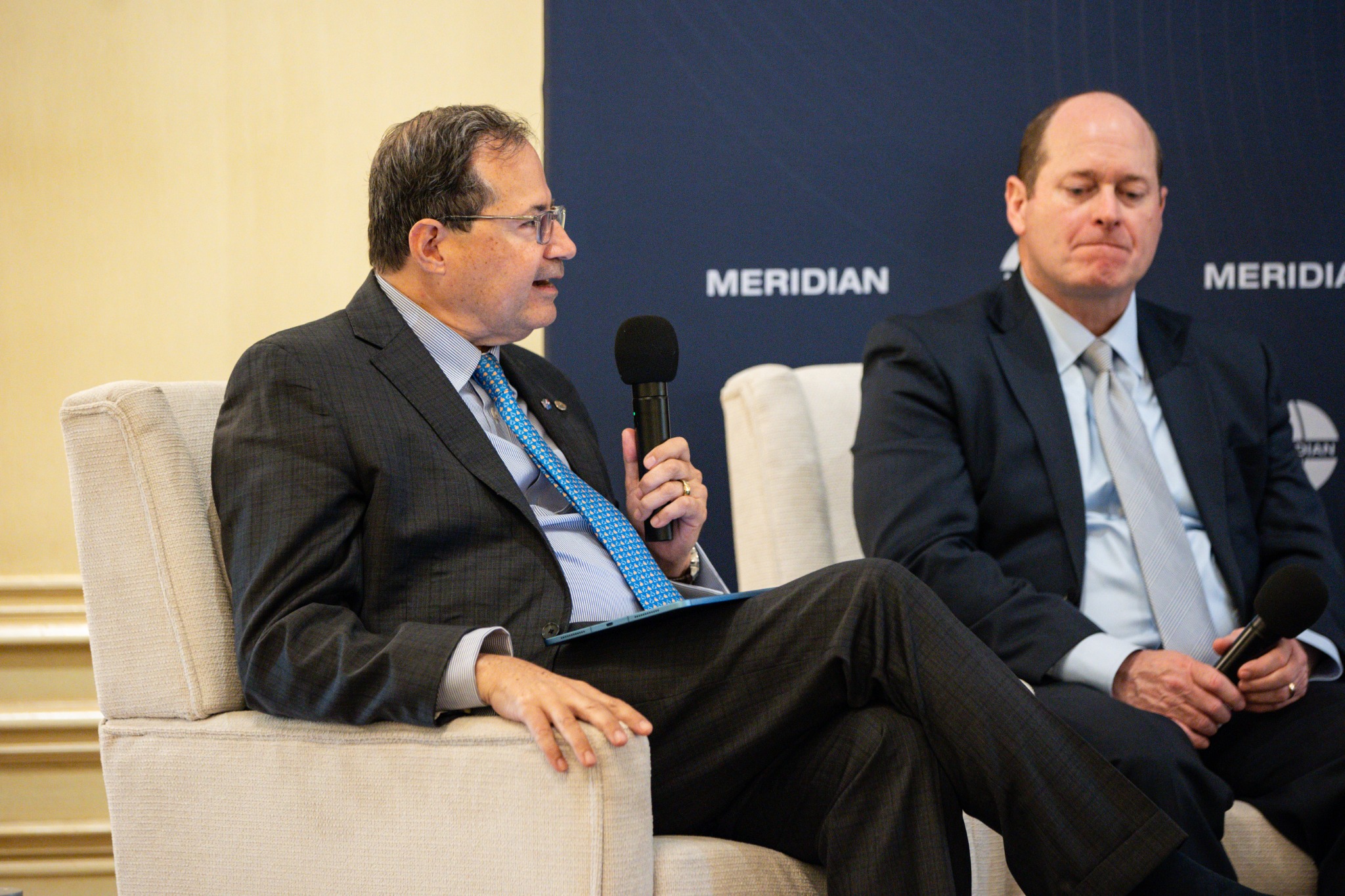
On September 28, 2026, Meridian International Center and the American Chamber of Commerce of the Dominican Republic convened Dominican Republic: A Trusted and Secure Partner for the United States, a Global Business Briefing on how the country can build on this momentum to strengthen trade, investment and regional competitiveness.
The conversation featured Eduardo Sanz Lovatón, Minister of Industry, Commerce and MSMEs of the Dominican Republic; Joel Santos, Minister of Energy and Mines of the Dominican Republic; Caroline Berson, Vice President of International Government Affairs at PepsiCo; Christopher D. Hess, Vice President of Global Public Affairs at Eaton; and Steven J. Puig, President and CEO of Banco BHD; with Diego Scharifker, Senior Director of Meridian’s Center for Corporate Diplomacy (moderator).
1. Faster logistics are strengthening the Dominican Republic’s role in U.S. supply chains.
Being close to the United States only matters if companies can move goods quickly and reliably. The Dominican Republic has shortened the time it takes containers to move through its ports from roughly nine days several years ago to under 48 hours today, while modernizing customs and making it possible to register a company in less than 24 hours. Those improvements, combined with strong port infrastructure and established trade ties with the United States, make the country better equipped to support companies looking to shorten and diversify their supply chains. The opportunity now is to turn that speed and proximity into deeper integration with U.S. and regional markets.
2. Energy expansion is laying the groundwork for the Dominican Republic’s next phase of growth.
The Dominican Republic’s economy more than doubled between 2010 and 2025, and electricity demand grew alongside it. Now, the country is preparing to support another period of growth by expanding natural gas and renewable generation, with the goal of providing cleaner, more affordable and more reliable power. Energy has already attracted more than $1 billion in foreign investment annually over the past five years, underscoring its importance to the country’s broader investment strategy. More capacity will be essential as manufacturing expands and new industries require greater amounts of dependable power.
3. Foreign investment is moving the Dominican Republic into higher-value industries.
The Dominican Republic is already known globally for tourism, but its investment base is becoming much broader. Medical devices, electrical and electronic components and other advanced products are now part of its export and manufacturing mix, while established companies continue to expand their operations in the country. PepsiCo, for example, has operated there for nearly three decades across a value chain that stretches from locally sourced agricultural products to manufacturing and exports throughout the Caribbean. This shift toward more sophisticated production gives the Dominican Republic an opportunity not just to attract more capital, but to capture more value from the goods produced there.
4. Critical minerals could create a new area of U.S.-Dominican economic cooperation.
The Dominican Republic is advancing exploration of its critical mineral resources at a time when secure mineral supply chains are becoming more important to advanced manufacturing and technology. More than 5,000 samples are being analyzed, with an initial resource analysis expected in November 2026 and work to determine reserves expected during the first half of 2027. The country has also signed an agreement with the United States to support cooperation on critical minerals and plans to launch five bids for projects by the end of 2026 and beginning of 2027. If those resources prove commercially viable, the larger opportunity will be building the infrastructure, technical expertise and investment needed to develop them safely and efficiently rather than simply extracting them.
5. AI can help the Dominican Republic build the workforce its next industries will need.
Moving into higher-value industries will require workers to grow alongside them. The Dominican Republic is looking at how AI tools can help small businesses and workers build new capabilities, while companies are investing in training that can move employees further up the value chain and into more technical, engineered work. That matters as the country pursues opportunities in advanced manufacturing, data centers and other technology-driven industries. Using AI to strengthen skills and productivity could help the Dominican Republic pair its advantages in location and infrastructure with the talent companies need to make longer-term investments.





Project summary
| How the Dominican Republic Is Expanding U.S. Trade, Investment and Supply Chains | September 2026 |
|---|
