

Celebrating Five Years of the Artemis Accords
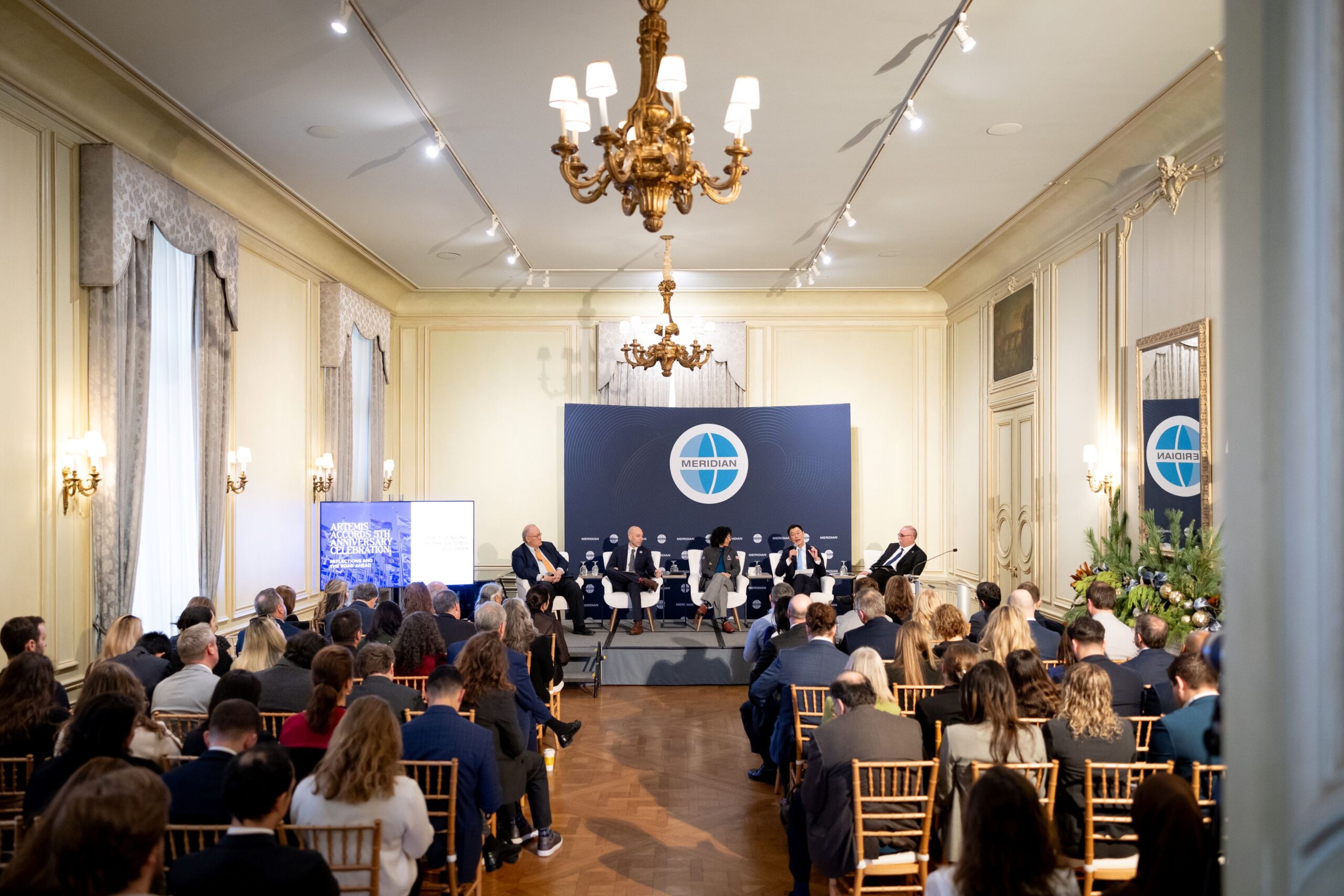
On December 11, 2025, Meridian convened global space leaders to reflect on the first five years of the Artemis Accords—one of the most influential developments in 21st-century space diplomacy. First introduced on October 13, 2020 under the Trump administration with eight founding signatories (Australia, Canada, Japan, Luxembourg, Italy, the United Kingdom, the United Arab Emirates, and the United States), the Accords were embraced and expanded under President Biden. Today, under Trump’s second administration, they continue to grow, reaching 59 signatories and many more expected in 2026.
This continuity reflects the Accords’ unique design. As Mike Gold, one of the co-writers/“fathers” of the Accord, explained, the Accords were deliberately structured as non-binding norms, enabling rapid adoption and broad participation without the constraints of treaty ratification. Their design reflects a recognition that space has evolved far beyond the bipolar context of the 1960s, with actors from every region now shaping the domain. This flexibility and global relevance have allowed the Accords to become a unifying framework for responsible behavior, transparency, and peaceful exploration.
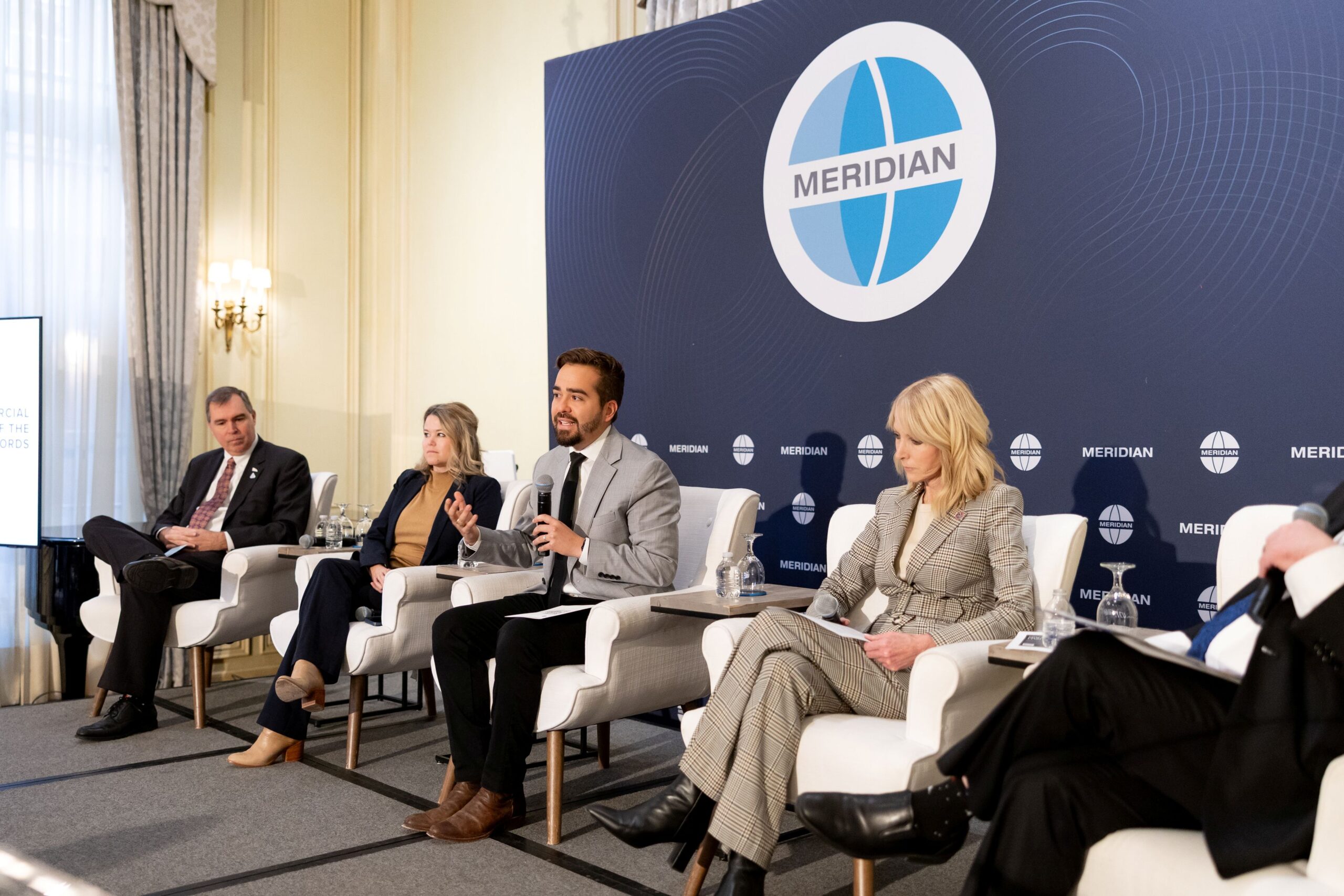
The gathering examined how the Accords emerged, expanded, and continue to shape global space governance five years on. Below are the seven major insights discussed during the convening.
Here Were the Top Takeaways from the Program:
1. The Accords Are Rooted in Shared Values and a Modern Vision for Exploration
Speakers emphasized that the Artemis Accords are fundamentally a values-based framework. Dr. Scott Pace, who served as Director of the National Space Council under the first Trump administration, explained that the Accords emerged from the recognition that today’s international space environment is no longer defined by a binary U.S.–Soviet competition. Instead, dozens of nations—large and small—are participating in orbital and lunar activities, making shared principles essential for long-term stability. Transparency, interoperability, safety, and peaceful conduct are not optional ideals but the foundation of sustainable exploration.
Dr. Bhavya Lal, who served as NASA’s Associate Administrator for Technology, Policy, and Strategy under the Biden administration, noted that the Accords are grounded not just in American values, but in a broader, optimistic vision for humanity’s future—drawing inspiration from Star Trek and the Khitomer Accords. She emphasized that the United States sought to “launch not just astronauts, but the values that make peaceful exploration possible,” a message that resonated deeply with early partners such as Japan. Yosuke Kaneko underscored that alignment on values was central to its decision to join, reflecting a shared belief that exploration should serve as a stabilizing and unifying force. This orientation helped establish the Accords as not merely a bureaucratic document but a philosophical commitment to responsible and aspirational activity beyond Earth.
2. Non-Binding Norms Enabled Rapid Global Adoption
A defining characteristic of the Artemis Accords is that they are not binding under international law. Mike Gold emphasized that this was an intentional choice, designed to allow nations to participate quickly and meaningfully without the political and procedural complexities associated with treaty ratification. This approach stood in contrast to traditional multilateral agreements, which often take decades to finalize and rarely achieve near-universal support.
NASA’s Amit Kshatriya reinforced that non-binding norms were essential in an era where technologies, launch cadences, and mission architectures evolve rapidly. By committing “in spirit,” nations can align on expectations, share practices, and adjust as operational realities change. Kshatriya noted that this flexibility allows spacefaring and emerging nations alike to coordinate early—before activities begin—reducing the potential for conflict and misunderstandings.
This structure also enabled extraordinary growth. In just five years, the Accords expanded from eight states to nearly sixty, creating the most diverse coalition ever assembled around a shared vision for the future of space.
3. The Accords Have Proven Remarkably Resilient Across Administrations
A major theme throughout the convening was the Accords’ resilience across multiple U.S. administrations. The initiative was launched under President Trump, faced immediate public uncertainty at the start of the Biden administration, and then was not only maintained but expanded significantly. Dr. Bhavya Lal reflected on a pivotal early moment when then-CNN reporter Kristen Fisher pressed White House Press Secretary Jen Psaki about whether the incoming administration would continue the Artemis program and the Accords. That moment forced a broader conversation about continuity—one that (quickly) ended with the Biden administration recognizing the Accords’ value in diplomacy, global engagement, and strategic alignment.
Now, under Trump’s second administration, expansion continues. While this continuity is rather unusual in modern foreign policy, it reflects the Accords’ ability to advance multiple U.S. interests simultaneously: strengthening bilateral partnerships, supporting commercial competitiveness, reinforcing democratic norms, and positioning the United States as a leader in shaping future space governance.
Several speakers cited Hungary, the Philippines, and Malaysia as examples of how nations have relied on the Accords as a diplomatic foundation. Hungary signed the Accords ahead of key discussions with the United States on Ukraine, while the Philippines and Malaysia joined at the direct request of the White House during the ASEAN summit, reflecting the strategic importance of the region. These examples demonstrate that the initiative’s value extends well beyond lunar activity and into broader foreign-policy relationships.
4. The Accords Provide Stability and Opportunity for the Commercial Sector
The commercial sector’s perspective was a major focal point of the convening, and participants emphasized that the Artemis Accords have become essential to long-term business planning. Alicia Brown outlined three components that industry relies on: transparency in mission planning, which helps companies understand operational environments; non-interference, which protects delicate activities and reduces risks; and open sharing of scientific data, which supports collaboration, innovation, and evidence-based decision making. Together, these principles create the predictability needed for commercial actors to pioneer new technologies and services in cislunar space.
Allen Cutler added that the Accords provide a stable framework that supports multi-year investment strategies. Because commercial space projects often require sustained development timelines and significant upfront capital, companies depend on clear, durable international norms. The Accords—by establishing a consistent governance environment—enable businesses to pursue ambitious missions with greater confidence.
Frank Justice further notes, “The Artemis Accords also validate international partnership opportunities for the American commercial space industry. It’s a signal that the U.S. government is on board with cooperation and collaboration opportunities with both the civil, commercial and sometimes even security space sectors of these nations provided that opportunities comply with ITAR and export controls.”
Dr. John Thompson added that the Accords do something no prior space governance instrument has done: they formally acknowledge the role of the commercial sector in shaping international norms. Industry is not just a beneficiary of the Accords—it is a partner in defining how humanity will operate on and around the Moon in the decades ahead.
5. Gateway Makes the Accords Operationally Real
Wendy Williams provided a detailed view of how the Gateway lunar space station brings the Accords’ principles into action. Gateway’s architecture is inherently multinational. It requires an unprecedented level of interoperability—shared docking systems, power connections, propulsion interfaces, data standards, and operational procedures. Williams explained that to make Gateway viable, partners are compelled to implement the transparency, coordination, and safety principles embedded in the Accords.
This means that every mission to Gateway involves the kinds of disclosures, technical integration, and collaborative decision-making that the Accords envision. Partners must align mission schedules, coordinate payloads, and follow harmonized safety protocols. Gateway becomes, in effect, the physical and operational manifestation of the Accords—demonstrating how diplomatic principles translate into real engineering practices.
Williams emphasized that the experience gained through Gateway will shape operations on the lunar surface and beyond. It sets the precedent for multinational logistics chains, shared habitation, and coordinated science, all governed through the values that underpin the Accords.
6. The Accords Advance Global Discussions on Resource Utilization
Another major theme centered on Article 10 of the Accords, which addresses the use and extraction of space resources. Valda Vikmanis explained that Article 10 clarifies how nations can conduct resource utilization consistent with the Outer Space Treaty. It affirms that extracting resources—such as water ice or regolith—is permissible, provided that activities are transparent, avoid harmful interference, and are conducted for peaceful purposes.
Vikmanis noted that the Accords have become a key mechanism for shaping the global conversation around resource governance. By bringing together a diverse group of signatories, the Accords create a platform for countries to share perspectives, develop common approaches, and build confidence in responsible practices. This has had direct effects at the United Nations Committee on the Peaceful Uses of Outer Space (UN COPUOS), where Article 10 created space for all UN member states—whether part of the Accords or not—to openly debate, question, and engage on resource extraction, helping clarify misunderstandings and reduce tensions around this emerging area of space activity.
As more missions prepare to engage in resource-related activities, the norms established by the Accords are becoming increasingly central to maintaining stability and building predictability in this emerging domain.
7. The Accords Give All Nations a Meaningful Role in Shaping the Future of Space
Finally, speakers emphasized the inclusivity of the Artemis Accords. Gabriel Swiney, the first person to put pen to paper on the Accords, explained when smaller or pre-emerging space nations asked why they should join if they are not yet conducting major space activities. His response is clear: “the Accords offer a rare opportunity for all nations to participate in defining space norms, rather than simply adapting to rules made by others.” In this way, the Accords democratize space governance, giving states real influence over how humanity expands beyond Earth.
Signatories meet regularly, creating a continuous process of dialogue, coordination, and norm refinement. Amit Kshatriya added that human spaceflight serves as a powerful unifier. Artemis, with its multinational crews, global scientific objectives, and shared exploration goals, inspires participation across borders and reinforces the Accords’ diplomatic strength.
The future of the Artemis Accords, speakers agreed, will be built on partnership—among governments, industry, academic institutions, and global organizations. As humanity prepares for a sustained presence on the Moon, the Accords work to ensure that exploration remains transparent, cooperative, peaceful, and inclusive.
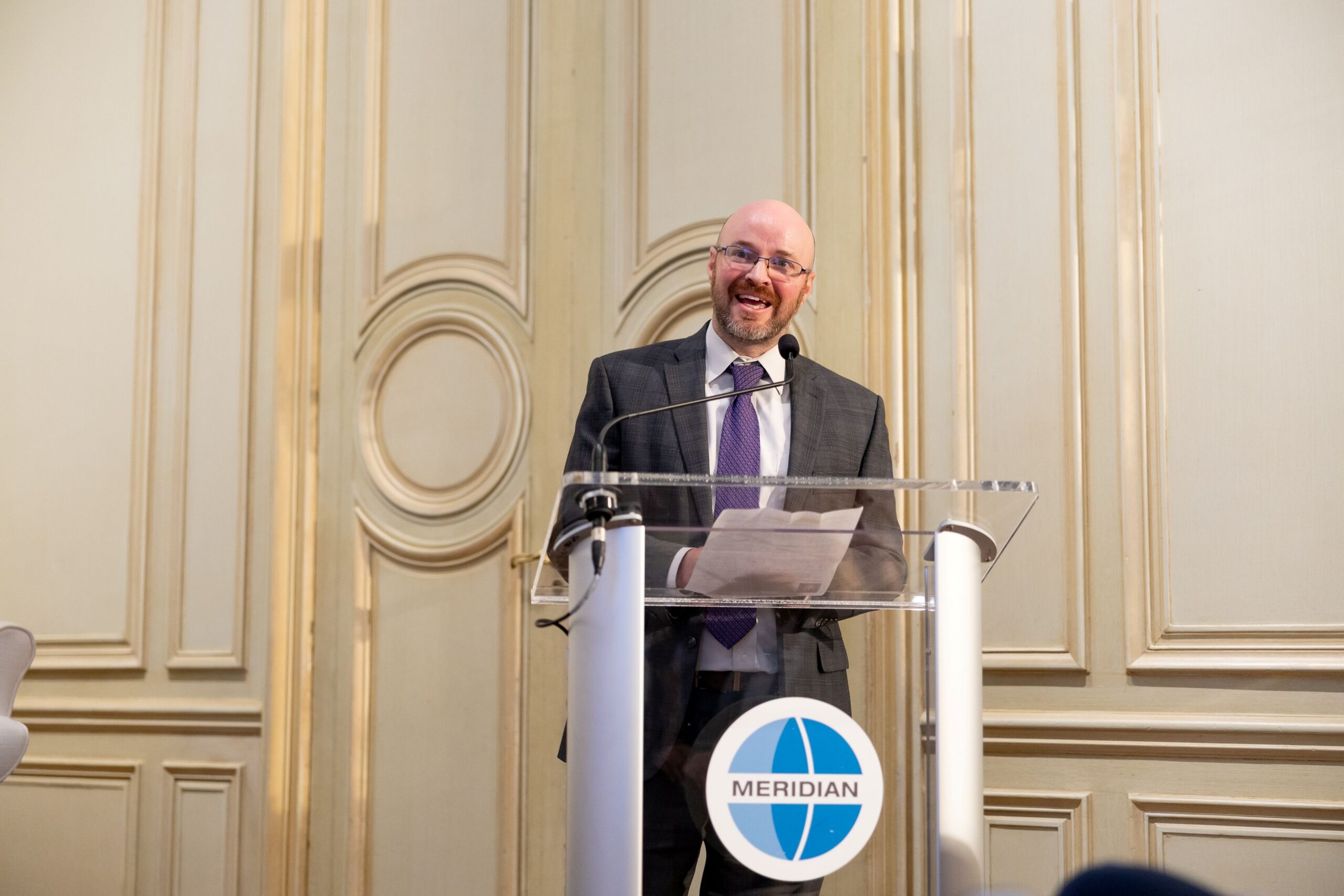
Speakers:
Alicia Brown, Executive Director, Commercial Space Federation
Allen Cutler, President, Coalition for Deep Space Exploration
Amit Kshatriya, Associate Administrator, National Aeronautics and Space Administration
Annabelle Dullin, Deputy Chief of Mission, Embassy of Luxembourg to the U.S.
Dr. Bhavya Lal, Professor of Policy Analysis, RAND School of Public Policy
Eddie Seyffert, Director of Civil Space, Blue Origin
Frank Justice, Vice President, Open Diplomacy Programs and Director, Space Diplomacy Initiative
Gabriel Swiney, Director of Policy, Advocacy, and International Division, Office of Space Commerce, NOAA, U.S. Department of Commerce
Dr. John E. Thompson, Senior Bureau Official - Bureau of Oceans and International Environmental and Scientific Affairs, U.S. Department of State
Kathleen Karika, Senior Advisor for the Office of International and Interagency Relations, Office of the Administrator, NASA
Mike Gold, President, Civil and International Space, Redwire
Natalie Jones, Executive Vice President and Chief Operating Officer @ Meridian
Dr. Scott Pace, Director, Space Policy Institute, The George Washington University
Valda Vikmanis, Director, Office of Space Affairs, U.S. Department of Space
Wendy Williams, Vice President and General Manager of Launch and Exploration, Northrop Grumman
Yosuke Kaneko, First Secretary & Space Attaché, Embassy of Japan to the U.S.
Project summary
| Celebrating Five Years of the Artemis Accords | December 2025 | |
|---|---|
| Impact Areas: | Science and Technology |
| Program Areas: | Technology, Innovation, & Space |
