See more on social: #MeridianSummit
Video not loading? watch here.Speakers:
T.H. Fred P. Hochberg | Board Chair, Meridian International Center
Deborah M. Lehr | Interim CEO, Meridian International Center
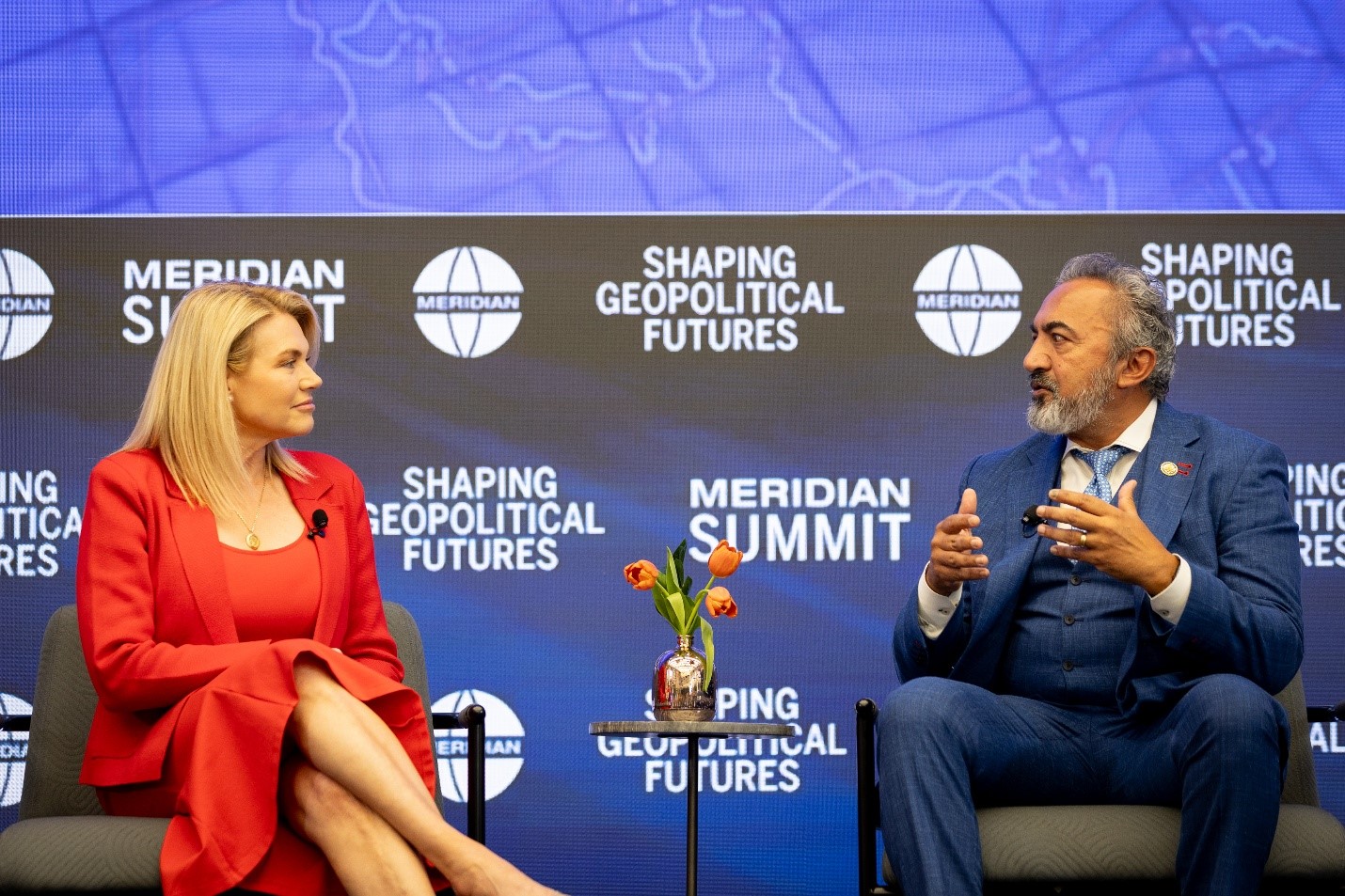
As global power dynamics evolved, the United States faced critical choices about how to lead, compete, and cooperate in a rapidly changing world. In this fireside conversation, Rep. Ami Bera, Ranking Member of the House Foreign Affairs Subcommittee on East Asia and the Pacific, explored what U.S. strategic leadership meant in an era of geopolitical uncertainty—from strengthening alliances and securing economic resilience to shaping the norms of emerging technologies. The discussion set the stage for how America and its partners could navigate shifting global futures with purpose and unity.
Speakers:
T.H. Ami Bera | U.S. Representative (CA-6)
Heather Nauert | Acting Under Secretary for Public Diplomacy and Public Affairs and U.S. Department of State Spokesperson (2017 - 2019) (Moderator)
Understanding how communities perceived their economic conditions, trust in institutions, and aspirations for mobility provided powerful context for geopolitical shifts. This data-driven spotlight highlighted exclusive global findings from the Gallup World Poll—tracking hundreds of key indicators across more than 140 countries—revealing trends in sentiment that shaped local, regional, and international agendas.
Speaker:
Dan Foy | Principal, Global Analytics, Gallup
In a world where geopolitical realignments and rapid technological change reshaped influence, the leaders who succeeded were those who could build trust, develop agile talent strategies, and deploy innovation with foresight. This session mapped the emerging nexus of trust, talent, and technology, exploring what kind of leadership the moment demanded. From cultivating next-generation executives to shaping international talent flows, the discussion examined how companies and countries leveraged workforce strategy as a new form of soft power.
Speakers:
April Miller Boise | Executive Vice President and Chief Legal Officer, Intel
Her Excellency Anniken Huitfeldt | Ambassador of Norway to the U.S.
Liz Landers | White House correspondent, PBS News Hour (Moderator)
Tom Monahan | Chief Executive Officer, Heidrick & Struggles
Awardee:
Mary T. Barra | Chief Executive Officer, General Motors (pre-recorded)
Speakers:
Natalie Jones | Executive Vice President and Chief Operating Officer, Meridian International Center
Omar Vargas | Vice President, Head of Global Public Policy, General Motors
As technology and increased global competitiveness reshaped multiple industries, manufacturing supply chains underwent a profound evolution. Companies redefined supply resilience and competitiveness by balancing simplified supply chains with global interdependence. Emphasizing collaboration and agility, this session examined how advanced industry ecosystems—where AI and electrification drove innovation, efficiency, and resilience—shaped the future of manufacturing. It highlighted successes, ongoing challenges, and technological and policy innovations driving resilient, competitive industry development, offering practical lessons and collaborative approaches that fostered sustainable growth and adaptability.
Speaker:
Shilpan Amin | Global Chief Procurement and Supply Chain Officer, General Motors
Steve Clemons | Editor at Large, The National Interest
With escalating cyber threats from sophisticated adversaries, securing America’s digital infrastructure became a critical national priority. National Cyber Director Sean Cairncross spearheaded an aggressive strategy to unify cyber policy, modernize federal networks, and foster strong collaboration between government and industry. These efforts included reauthorizing critical cybersecurity legislation, upgrading federal technology, promoting security and privacy by design, and streamlining regulations to enable effective defense. By aligning national capabilities and shaping adversary behavior, the United States aimed to maintain its leadership in cyber resilience and technological innovation, ensuring a robust cybersecurity posture. This conversation explored the complex coordination and policies required to transform national cybersecurity defenses amid evolving digital threats.
Speakers:
T.H. Sean Cairncross | U.S. National Cyber Director
Kellee Wicker | Vice President of the Center for Technology, Innovation, and Space, Meridian International Center (Moderator)
As energy access, digital infrastructure, and emerging technologies redefined national competitiveness, governments and industries worldwide reassessed the assets that served as leverage in global economic and strategic negotiations. This session explored how critical resources—such as AI capabilities, energy supply chains, and digital currencies—were deployed as geopolitical bargaining chips to advance economic sovereignty and influence in a complex and rapidly shifting international landscape.
Speakers
Jarrod Agen | Deputy Assistant to the President and Executive Director, National Energy Dominance Council
Jessica Dean | Host, CNN Newsroom (Moderator)
Nicole Isaac | Vice President, Global Public Policy, Government Affairs, Cisco
T.H. Summer Mersinger | Chief Executive Officer, Blockchain Association
In a world defined by rising economic fragmentation and intensifying national interests, countries recalibrated their strategies to safeguard sovereignty and secure advantages in an increasingly complex global economy. As multilateral trade agreements faced strain and protectionist policies grew, this session explored how these shifts reshaped trade relations, investment flows, and market stability worldwide. Panelists discussed the delicate balance between competition and cooperation, and what this evolving geoeconomic landscape meant for global prosperity and economic diplomacy.
Speakers:
T.H. Dina Powell McCormick | Vice Chair, President, and Head of Global Client Services, BDT & MSD Partner
H.E. Jose Manuel G. Romualdez | Ambassador of the Philippines to the U.S.
Paige Willey | Deputy Assistant to the President for Economic Policy and Deputy Director, White House National Economic Council
Deborah M. Lehr | Interim CEO, Meridian International Center (Moderator)
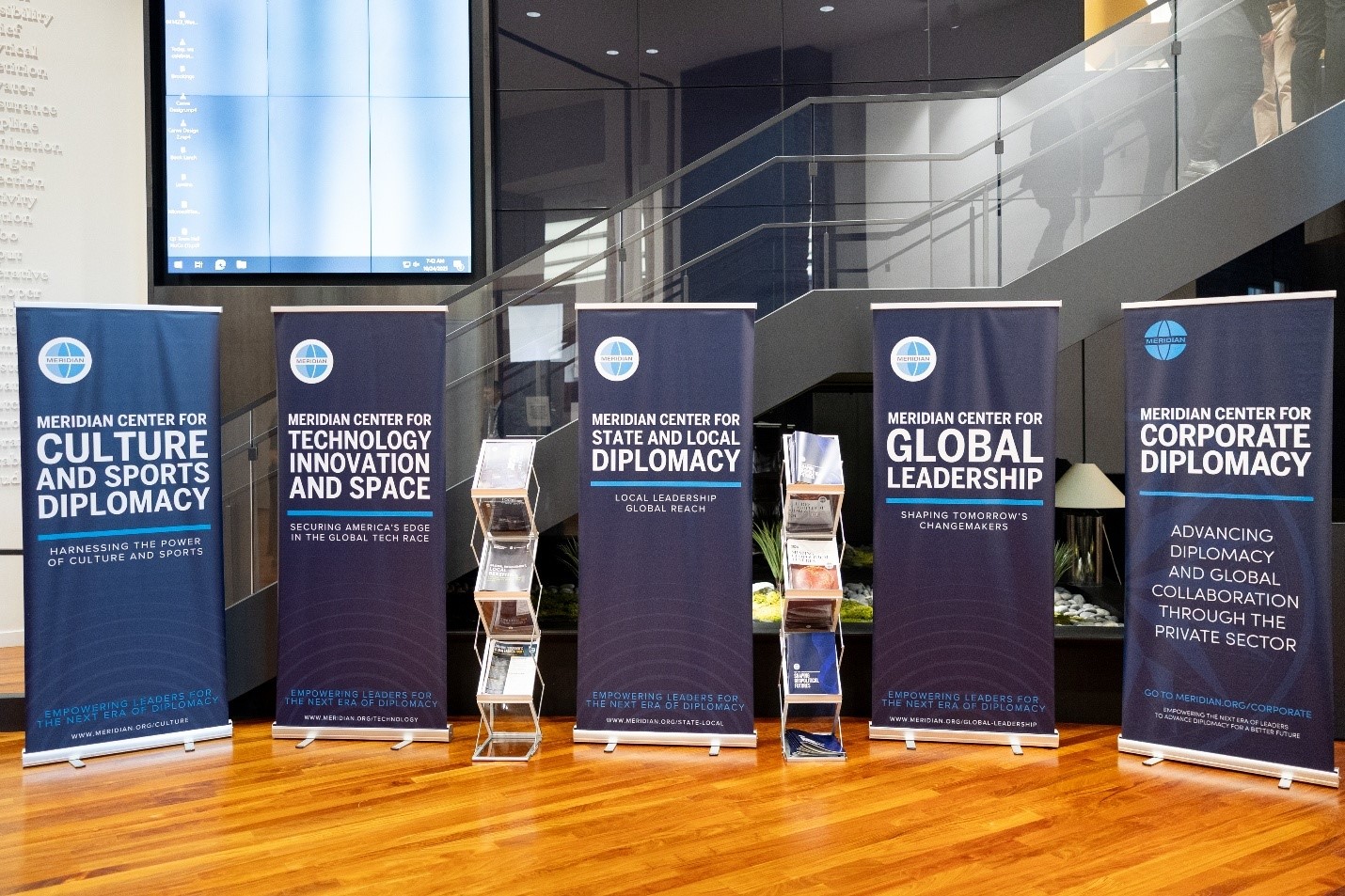
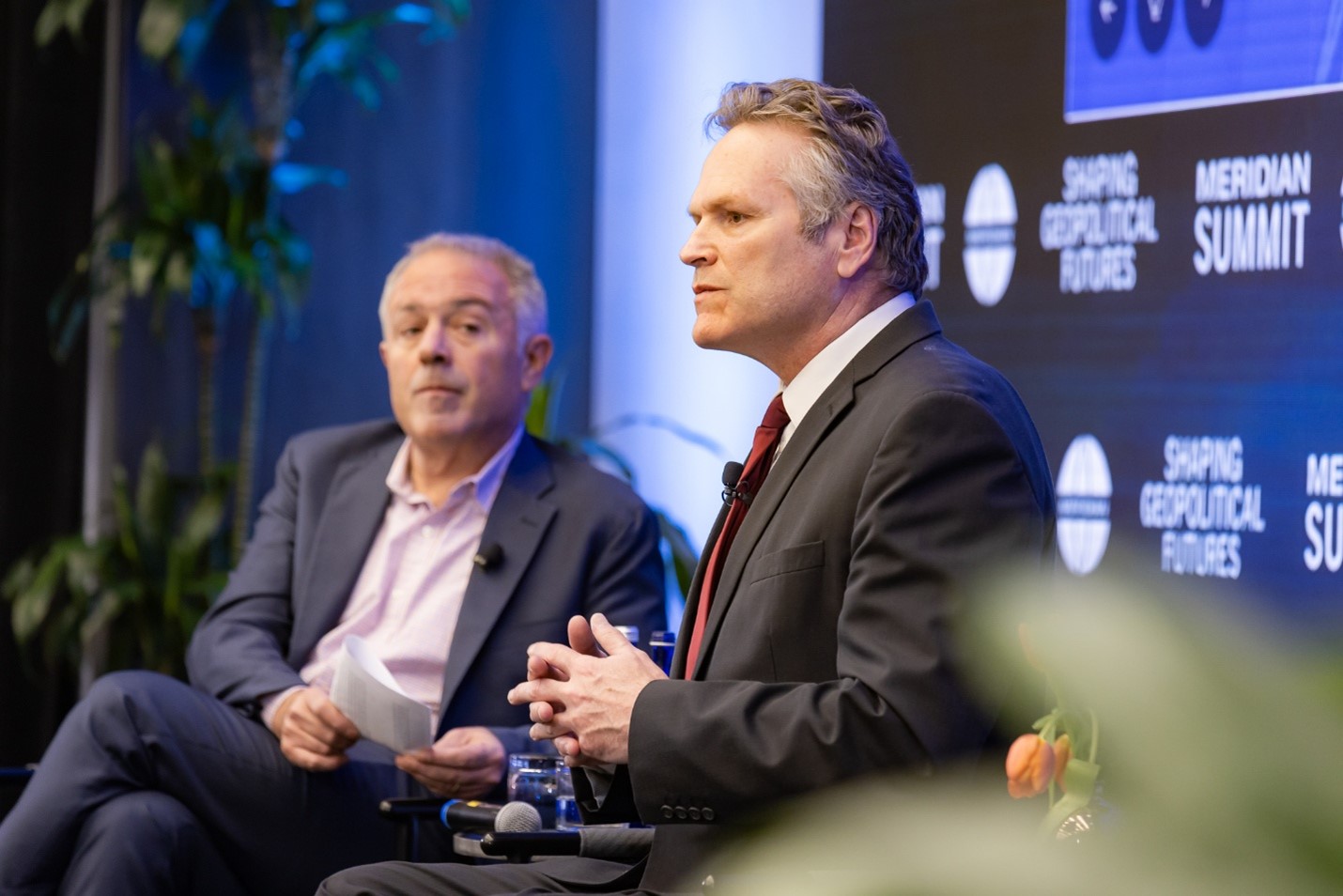
Under the America First framework, foreign direct investment became a driving force for U.S. economic renewal, empowering states and cities to compete globally by leveraging their regional strengths. From critical minerals and energy to advanced manufacturing, infrastructure, and technology, targeted partnerships with trusted allies repositioned local economies as essential contributors to national growth and security. On the day of the launch of Meridian’s new Center for State and Local Diplomacy, this conversation with Alaska Governor Mike Dunleavy explored how state and local governments translated national priorities into actionable strategies—unlocking new opportunities for investment, job creation, and American competitiveness.
Speaker:
T.H. Mike Dunleavy | Governor of Alaska
Edward Luce | U.S. National Editor and Columnist, Financial Times (Moderator)
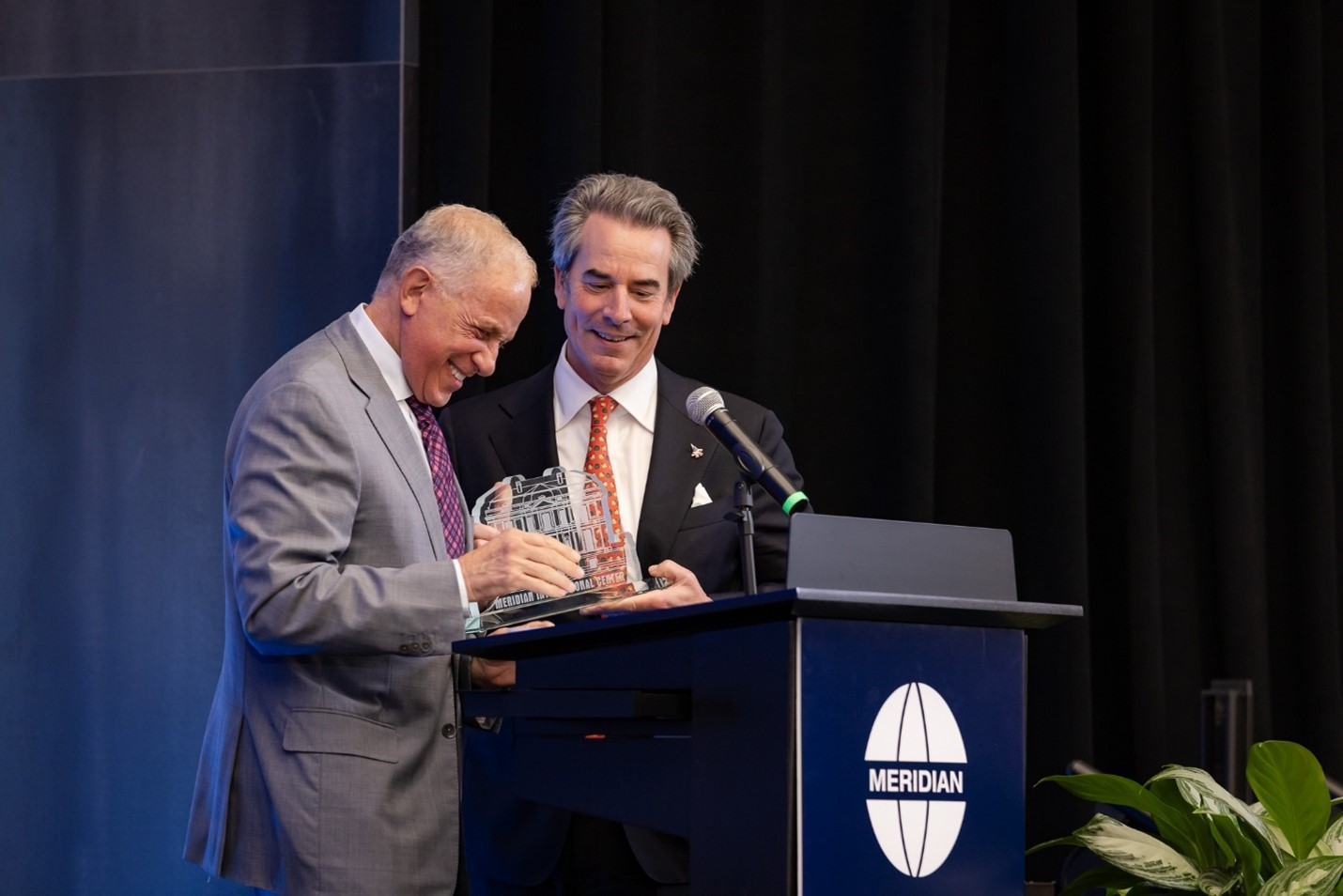
This tribute honored Ambassador Stuart W. Holliday in recognition of his 18 years as CEO of Meridian International Center. His visionary leadership was instrumental in advancing American diplomacy, building global partnerships, and strengthening Meridian’s role as a premier platform for international collaboration and cultural exchange. His enduring legacy reflected a deep commitment to fostering diplomacy through meaningful engagement around the world.
Speakers:
T.H. Fred P. Hochberg | Board Chair, Meridian International Center
T.H. Stuart W. Holliday | CEO Emeritus, Meridian International Center
The White House’s AI Action Plan aimed to cement U.S. dominance in artificial intelligence through innovation, setting international standards, investing in domestic infrastructure, and expanding exports of the American AI tech stack. This discussion explored how the plan reshaped technological independence and international influence through the export of integrated AI solutions—bundling chips, cloud infrastructure, models, and applications—as a cornerstone of tech diplomacy promoting free-enterprise values. It also considered governance challenges such as data sovereignty, trust, balancing innovation, and allied cooperation.
Speakers:
Ben Brody | Technology Reporter, Punchbowl News
Gerry Petrella | General Manager, U.S. Public Policy, Microsoft
Payments modernization became a strategic imperative for the Canadian and U.S. economies amid surging real-time transaction demands and growing global competition. Aging legacy infrastructure proved increasingly fragile and unable to meet consumer and business expectations for instant, seamless payments. This discussion highlighted how collaboration among fintech innovators, regulators, and policymakers accelerated the transition to a modern, secure, and inclusive payment infrastructure. It emphasized the geopolitical stakes of payment infrastructure as a tool of economic sovereignty and global competitiveness.
Speakers:
Bryan Bossin | Head of Government Relations and External Affairs, Interac Corp.
Bernard Boutin | Head of Corporate Affairs, Canada and LATAM, Intuit
Jacob Chappell | Group Product Manager, QuickBooks Payments Money Team, Intuit
Artificial intelligence transformed global industries and redefined the scale of energy demand. This discussion explored how next-generation, carbon-free energy technologies were developed to deliver reliability, resiliency, and sustainability on a global scale. It also examined how collaboration across the private and public sectors accelerated innovation linking energy advancement with industrial competitiveness.
Speakers:
Craig Sundstrom | Head of Energy and Sustainability Public Policy, Americas, Amazon Web Services
Dr. Ben Reinke | Senior Vice President, Global Business Development and Deputy Chief Commercial Officer, X-Energy
As global security challenges intensified, states increasingly deepened international and bilateral partnerships and developed new pathways for trusted defense and technology cooperation. This conversation explored how the United States and its allies deepened coordination on deterrence, nonproliferation, and capacity-building while maintaining rigorous safeguards on sensitive technologies. From nuclear-powered submarines to advanced cyber capabilities, the discussion examined how trusted partnerships expanded shared security objectives without eroding global norms—and how frameworks might balance innovation, transparency, and strategic stability in an increasingly complex defense environment.
Speaker:
T.H. Bonnie Jenkins | Under Secretary of State for Arms Control and International Security (2021-2024)
Roy Kapani | Chairman and CEO, SEACORP (Moderator)
| 14th Annual Meridian Summit |
|---|